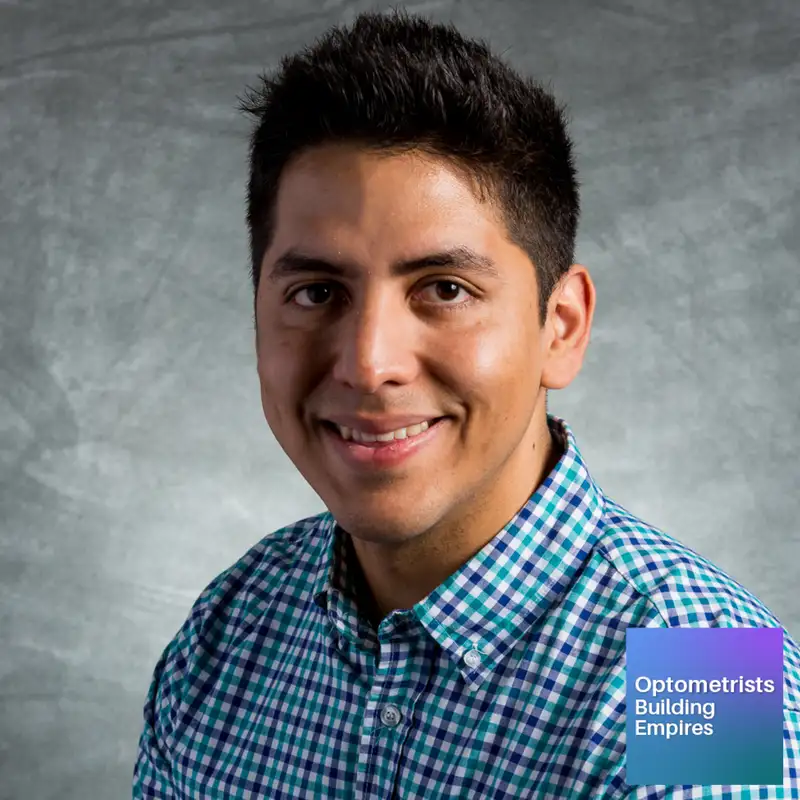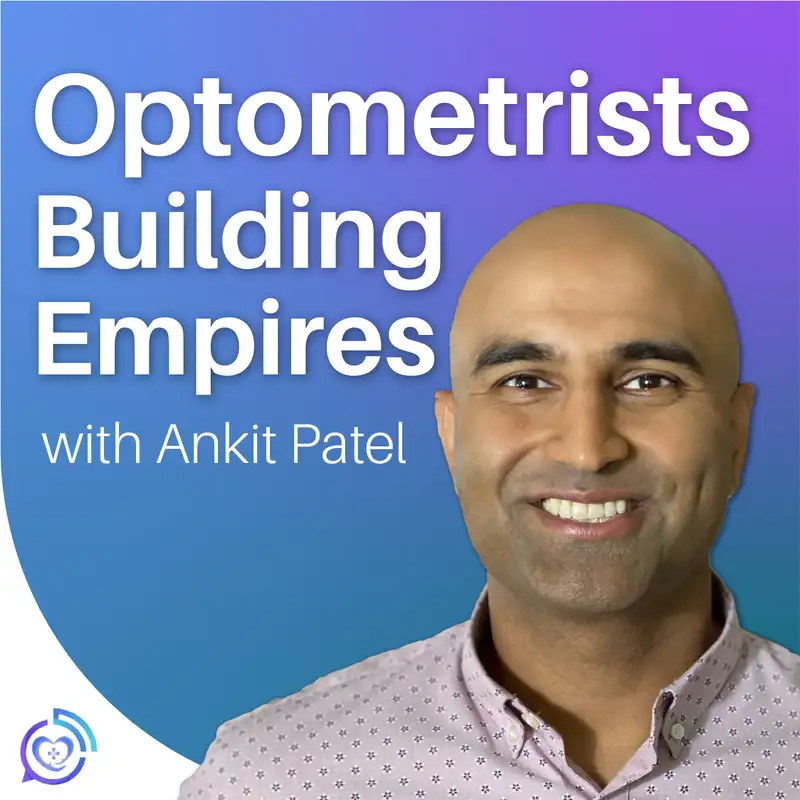
On the Other Side of Fear - Christopher Lopez - Optometrists Building Empires - # 078
OBE_Christopher Lopez
===
Christopher Lopez: [00:00:00] everything you want is on the other side of fear and man, I believe that. I mean, contrast that with, uh, with what, uh, a lot of other owners would do, which is hire now because they're busy they need to fill that spot and then end up regretting it 'cause it doesn't work
Ankit Patel: Yeah.
Christopher Lopez: whether we'd like to admit it or not, with the egos that doctors have, there is a cap to what we are able to accomplish without a, strong team behind us in partnerships.
chris_2_12-10-2025_200449: I
don't know if I've thought about this till you just ask.
I feel like I need to, I've needed to do that to make her sacrifice worth it,
This is Optometrist Building Empires, and I'm your host. I'm Kit Patel. Each week we'll explore the journey of practice ownership and leadership in optometry. Join us for insights and strategies from the top minds in our field. This show is sponsored by my business care team. My business care team helps your office increase revenues, reduce costs, and reduce staffing headaches.
[00:01:00] Let's build your empire together.
Ankit Patel: Today's guest is someone I'm excited to learn more about and introduce you all to. He's an impressive optometrist and entrepreneur dedicated to helping optometry students and early career od navigate their professional journeys.
He specializes in specialty contact lenses, anterior segment and ocular disease, low vision, rehabilitation, and dry eye management. He also publishes articles in leading optometry journals and contributes to ods on finance. Sharing his knowledge with the broader professional community. He is a career consultant and optometrist and co-owner at Green Banal Appleton, Wisconsin Eyecare.
Please welcome Dr. Chris Lopez.
Christopher Lopez: I'm happy to be here, Hunka. Thanks for inviting me. Yeah, it's, it's a interesting name. Ow, iCare and, uh, we have two locations outside of Appleton, Wisconsin. Three docs, me and my business partner, uh, are co-owners of, of the two locations.
Ankit Patel: [00:02:00] No, and thank you for clarify that. I think I might have stumbled a little bit on that. I was like, okay, I had to slow down a little bit to pronounce the city. Uh, You know, I'm excited to have you on 'cause I've met you before. We've dealt with ods on finance and just meeting each other conferences and you've got quite a impressive, uh, growth trajectory and a mini, I'll call a little mini empire for yourself.
Uh, so what was the most important thing that helped you grow your empire?
Christopher Lopez: The most important thing for the Empire I, I have to say. The most important thing is probably courage. And I think that sounds cheesy and I, I'm gonna take a step back 'cause I think there's, there's nuance to this and there's layers. I'm. I don't mean this in the heroic, uh, sense. You know, I'm not a hero jumping off, uh, planes and not, You know, going into burning buildings and rescuing people and not, uh, that, I mean, those are heroes.
That is courage. [00:03:00] But I think there's something courageous, uh, to getting outside your comfort zone. I think there's something courageous to, uh, uh, making put, uh, making yourself vulnerable. I think there's something courageous to taking risks and taking chances and buying into a business and, uh, and, and all of that. So I think without courage, I mean, you there, there's not a whole lot that you can accomplish and there's not, uh, any opportunity to reach your full potential in what you can do, uh, and, and achieve in, uh, achieve in life. a reader and one thing that, uh, uh, really stuck with me after I graduated there's a quote and it's, uh, um. Uh, oh gosh. Of course I'm blanking now that I'm on your podcast, but it is, everything you want is on the other side of fear and man, I believe that. I believe that a hundred percent. And that [00:04:00] has stuck with me ever since I read it the very first time. And, and that's true. I mean, think about anything that you, yourself have done or any, any of your successful friends or, or clients, anything that anyone has ever done, it's been.
Taking a chance. It's been having that first, uh, act of courage and um, and I think it's been working out well so far.
Ankit Patel: Nice. I like that. Uh, so, uh, You know, I think, um,
what was a time in your career when you. You had courage even though you didn't know the outcome. Can you share a story maybe of how you displayed courage?
Christopher Lopez: Yeah. Um, so we, uh, my, I I've had quite the journey, okay. My, my wife and I, my family. Now, I originally, I grew up in Southern California on the border. did my undergrad in Iowa. I went to Houston for optometry School, bounced around a little bit. We were on the East [00:05:00] coast and uh, and COVID hit, my wife and I, we were in Rhode Island and she wanted to be a little bit closer to family. We were just looking for the right opportunity. She grew up in the Midwest and we're like, well, You know, we gotta find the right opportunity. I knew I wanted to be an owner, You know, since, uh, since right after graduation, I wanted the autonomy. I wanted the opportunity to, uh, achieve financial independence, just be in control of, You know, my own destiny kind of thing. And so really looking for that opportunity and we ended up taking a chance and, um, moving to, uh, central Wisconsin. For the potential to buy, for me to buy into a practice. And that was a, a risky move. You know, that was, uh, we weren't sure if that was gonna work out and, uh, not to, uh, put, put a sad end into the story.
I ended up getting completely screwed over. With that move, but You know, everything's, uh, You know, you can a glass half full [00:06:00] kind of person. You can be a glass half empty kind of person. Uh, but I'm also a firm believer that, um, we can make the best of any situation. And everything is, everything is a learning opportunity. So, uh, even if you. Go into a situation like I did and end up getting screwed over, man, that's, there's still stuff you can learn from that. And, um, I mean, you can, even in that sense, there's stuff you can pull from that. Like, there's things that, uh, this is, for example, this is what I liked about this practice.
This is what I'm going to incorporate once I'm an owner. This is what I didn't like about this owner and what they do. I am not gonna do things this way once I'm an owner. There's always learning opportunities as long as you have the right attitude and the right mindset.
Ankit Patel: How'd you recover from that? 'cause you, You know, that was a courageous move to go out there and your biggest fear, I mean, a fear was probably realized like, oh shoot, it didn't work out. I, how'd you recover from that?
Christopher Lopez: It's, I think it's just grit, perseverance. I, I, I think [00:07:00] perspective is, uh, is important and, um, self-awareness is important and. I, I just think that we are capable of so much. Um. My, so I'm first generation, uh, like many of us, and when my mom came to the States, I mean, she worked in the fields in, in California and she, uh, eventually became a teacher.
She raised four of us on her own. And she would, uh, joke with us, You know, once we were older and all that, that, You know, we wouldn't last a day in the fields. And I mean, she's right. I, there's no way we would last a day, You know? So. Yeah, that sucked. Yeah, I got screwed over. Lied to all that stuff, but man, in the grand scheme of things, compared to like she had to go through to give us this opportunity, I can pick myself back up and move or find another opportunity that's not a big deal, uh, relative to what other people have to go through.[00:08:00]
It sucked. But, You know, with again. the right attitude, with the right mindset. Um, I learned a lot from that and I was, uh, I made sure not to repeat that mistake, but again, a blessing in disguise that led to another opportunity. I'm where I'm at now, and, uh, uh, wonderful practices, uh, with wonderful doctors in a, in a great location, uh, opportunity to buy into the practice where I'm in now, and, uh, couldn't invest for anything more.
Ankit Patel: Yeah. So talk, talk a little bit about, as you're going through growth path, uh, talk to us how you're growing, how you think about growth, because, You know, traditionally it's like, uh. Everyone knows about, okay, I wanna own multiple practices. I wanna have my own practice and grow it really big me. I wanna be a solo practitioner.
Me I want a multi-doctor. But yours is a little bit more around partnerships and growth. Uh, tell me about how you view growth and how you're playing to grow your, uh, I'll call it your empire, for lack of a better, better word here. I like that [00:09:00] term. So, yeah. How, how are you growing your empire?
Christopher Lopez: Yeah, so we, um, so the context is there were, there was two locations and, and two doctors. So I joined in, uh, still locations and now there was three doctors and it was a little. Cramped. Um, so when I decided to, to join full-time, I knew I wanted to, to do ownership. So, um, You know, the negotiation, you work things out, uh, be get comfortable with, with each other.
Um, have all those discussions. Make sure that, uh, everyone's on the same page. Make sure it's even gonna work out. Make sure it's what everyone wants. And once we're all agreed to that, then you have to start planning for the next moves. And the next moves is you have to grow. Because if you are, if you have offices set up to operate outta two docks, it's not set up to operate, You know, for three docs.
You, you, you need more space, more exam rooms, more pre-testing rooms, more uh, uh, staff. And more equipment and all that stuff. So we [00:10:00] had to grow and the um, so uh, uh, partnered in, bought in, and then decided to, uh, expand. So essentially almost doubled the size of our larger clinic and went through that entire construction phase. And once we did that, we were crazy enough to just. Renovate the other clinic, the satellite clinic, the smaller office. So then we did that. So it was maybe a year, year and a half of just constant construction work. Um, but what a blessing to have the best practice administrator on the planet to help navigate that stuff and, and have all the meetings with the, uh, contractor. Um, uh, and really navigate that situation. Patient, staff, um, uh, uh, perseverance, You know, uh, we were still able to operate, albeit on a slower schedule, but we still had some revenue coming in. Um, and once all the construction was um, complete, then we were [00:11:00] able to, we're are, we are now just getting to the point post-construction where we're able to crunch the numbers and see what we're finally able to. Uh, to, to, um, what we're able to generate based on three full-time doctors in a fully uh, go operation. And it's looking pretty good. We're excited about it.
Ankit Patel: That's awesome. And, and it's, uh, You know, I'm hearing a theme of partnerships and working together with people, whether it's with your practices, ods, on, on finance, or anything else you're doing. It seems to be, that seems to be a core value of yours, is working with people and. Uh, is, so is that accurate to say?
Tell me more about that.
Christopher Lopez: Yeah, I think so. Uh, which is kind of interesting 'cause I mean, growing up I was, I was, know, fiercely independent. I mean, I was, did most things by myself. Uh, I preferred not to work in a. Group project, I'd rather just do everything myself. If I did have a group project, I'd mostly do stuff myself [00:12:00] anyway, and I have other people tag a lotg. But, um, I dunno if something changed or in me or if it was just, um, manner of circumstance. Uh. Uh, having joined the ods on finance team, or the opportunity to partner into the practices I'm at now, but there, I mean, there are plenty of advantages to, to working in a partnership. Uh, there's disadvantages and, and the biggest disadvantages you hear from people, uh, primarily stem from people that have gotten screwed from a partnership, uh, that has gone bad.
You know, uh, disagreements, shady business. Practices stuff, not, uh, fully fledged out in their partnership agreements legally, stuff like that. But I mean, if you are on the same page with your partners and you are, um. Have all the appropriate understandings. If you guys are, uh, have all your legal documentation set up [00:13:00] appropriately, then I mean the, the sky's the limit because we are, whether we'd like to admit it or not, with the egos that doctors have, there is a cap to what we are able to accomplish without a, strong team behind us in partnerships.
I mean, I'm. We can, I don't know, we can achieve so much more with other people on the same page as us. I, I think, and, uh, I think what we are doing right now, uh, in our practices and what we are, are accomplishing with odis on finance is a testament to that.
Ankit Patel: Yeah. That's awesome. Hey, You know, I really like what you're saying about, uh, the team. 'cause I, You know, just talk me through this a little bit. You, you come, you have the courage to come to a brand new practice in, in, in the middle of the US where, You know, you're not as familiar, uh, much colder than Southern California.
So it's much more, and, and you, you go in with the idea of having a partnership with someone that falls through. How do you get back on the horse and say, I [00:14:00] wanna go back into this. Like, talk to me about why you chose to do that again versus saying like, Hey, I'll just do it on my own. Like kind of talk me through that journey, that decision.
Christopher Lopez: I don't want to say fearlessness because it's not like I'm. Uh, fearless. I mean, I, I think we all have fears. I'm not the bravest guy on the planet, You know, but, um, I don't, I don't know Anki, I, I think I am, uh, cautious, but I am decisive and I am not one of those analysis by paralysis people.
Ankit Patel: Hmm.
Christopher Lopez: Um, but I don't make rash decisions either. So I think there's, there's a balance between all that stuff, right? Like I, if I see an opportunity and, uh, it seems good, I'm not gonna, uh, You know, stew over it for six months trying to that idea around in my head. I'm going [00:15:00] to. Look at it, analyze it, sleep on it.
I'm gonna make a decision, and if it sounds good, then I'm gonna go for it. And if I'm gonna fail, I'm gonna fail hard and I'm gonna learn from it. I'm gonna get back up. I'm gonna, keep moving on. I don't think there's, in my mind, I think that's an appropriate way to, to go about life because, uh, I'm gonna learn one way or another, whether or not it's gonna work out sooner rather than later. Um, and I think. Maybe less regrets that way too because you're, you're, you're, you're taking action um, think that says something.
Ankit Patel: Yeah, I like that. It's, it's, um, um, how do you keep moving forward? So not going after the one perfect answer, but, uh, trying something, didn't wanna learn from it. Try something else and keep moving. Interesting. I like that. Uh, so let's talk a little bit about, um, some of the things that you, as you're growing now, you have your successful partnership, you have your other things that [00:16:00] you're doing right now as you're growing, uh, your businesses.
What's something you ran into that you were like, oh, I did not expect this to happen?
Christopher Lopez: Um. I will, I mean, I, I, I'll take the odis on finance answer for this and, um, and I'm, so, I'm gonna assume your audience knows, but odis on finance, so it was started by dat, and Aaron. In, in, uh, California, and then me and Julie fan joined after. So it's the four of us and we have, uh, a team now, uh, that that helps us out.
And we do a bunch of different things, essentially just providing resources to all of optometry and it's a lot of fun. And what was really interesting is starting off, um, I think it was really amazing support that we got from, from a lot. because it was, You know, we're new kids on the block and You know, people wanted to, to see us succeed. But the interesting part, and I [00:17:00] probably should have anticipated it more, but as soon as we got bigger, think other groups didn't like. How big we were getting. And then it turned from, uh, a desire for us to succeed, which looking back it was, You know, uh, uh, fake to now all of a sudden there's a target on our back.
And it was really interesting how quickly that occurred. And, um. So experiencing that, uh, was interesting and not that, You know, I mean, it's not, we're not losing any sleep over that. But I, I think just going through that, uh, uh, transition and seeing how people and organiza, uh, organizations change, uh, their attitude, um, I, I don't know.
That was interesting.
Ankit Patel: Yeah, it's, it's, it is definitely different, right? Uh, you don't get to see that type of competitiveness in local markets at the optometry level.
Christopher Lopez: Yeah. Yeah,
Ankit Patel: Well, that's, I [00:18:00] appreciate you sharing that. That's, um, I think that's kind of neat to hear, especially if someone is getting like really big outside of the local markets are gonna be some, You know, there's gonna be competition so it
Christopher Lopez: But I mean,
Ankit Patel: happens.
Christopher Lopez: That also kind of tells you that you're, you're doing something right,
Ankit Patel: Yeah. Yeah, I think so. Um, love that. Uh, so let's, let's shift gears a little bit. Talk about the practices like a little bit more. Right now, one of the biggest challenges around, uh, what fa people are facing are staffing challenges. What's, um, how are you all managing that and, and what are you doing?
What's your secret if you're doing it well? If not, You know, how, how are you doing your best to deal with it?
Christopher Lopez: Oh man. I don't know if they're, if anyone has a secret, I would love for them to, to spill the beans. I, I think if you ask, if you poll a hundred owners, I, I would be willing to bet 95 of them would say staffing is probably the largest issue in their practice. And I don't mean that like in a, a negative. [00:19:00] I don't mean that negatively towards, You know, people, the staff members in their practice. We have wonderful staff. I think we have a great team that supports our practice and our goals. I think they take, help us take the great care of our patients. We have a really strong team. Uh, we're really lucky to have them. Uh, but it's hard and especially, You know, in more rural markets, the applicant pool is smaller. So if we are looking to grow, for example, or looking to hire or someone, uh, leaves or they're moving outta the area, we have to replace them. It's realistically, it's harder to fill that spot. With a smaller applicant pool, than it is maybe in an urban market.
So, uh, uh, doing so is tough, especially if you are one that is maybe, let's say you're looking for someone with optician experience as opposed to training, um, uh, uh, from scratch. If you're looking for someone for, with optician experience in a, uh, rural market, I mean, how many candidates are you gonna have applying for that position?
It's, it's hard to, to do that.[00:20:00]
Ankit Patel: Yeah.
Christopher Lopez: Staying competitive from a, um, uh, compensation standpoint, uh, is becoming ever more challenging, especially given the fact that, uh, I'm gonna say the same thing everyone's been saying forever, and especially given the fact that vision care. Discount plans haven't given us raises in a gajillion years.
So how do we continue to be profitable, treat our staff, right? Uh, we all want to, we wanna pay our staff more. We wanna give them bonuses every year. How do we continue to be more profitable, generate more revenue with, uh, essentially declining reimbursements on an annual basis? It's, it's tough.
Ankit Patel: Yeah. Yeah, it, it's definitely not an easy one. Um, what is, um. You know, for, for the audience and, and maybe sharing some of your insights and thought process, what are some of the things that you've tried that worked, some of the things that you've tried that didn't work? That when it came to staffing,
Christopher Lopez: I think, [00:21:00] uh, any and all of the above. I mean, it's
Ankit Patel: I.
Christopher Lopez: To train. Someone, uh, from scratch because, uh, they can come in, uh, uh, open-eyed and you can kind of, uh, uh, just teach new habits. And I think it's, uh, it's a good way to go about doing things. Downside, obviously, is it, it takes longer. You know, and, uh, if you are busy and you're needing to move like this and you're busy like us and we're seeing three plus patients an hour, um, it can be a frustrating few weeks, months to, to catch that person up to speed. But it can work well and it's nice once that person is up to speed. Um, or you can hire with experience, which is nice because they can hit the ground rolling a little bit so you can, uh, uh, there's less training time. Downside is, uh, You know, if you hire someone with experience, they can come in with some bad habits. Um. Um, uh, potentially think they know how to do things better [00:22:00] than the way we are doing things in our office. And, uh, poor habits can be difficult to break or the idea in their head that this lens is better than this other lens when that's not really the way we do things in our office. Um. So I, again, I don't know, I don't know if there is a good rule for any of that stuff. And it's a preference thing. I am more rural, other markets are more I don't think there's a, a one size fits all model. We're also, uh, heavy medical. I mean, that's different from like a boutique. You know, some offices, um, pay opticians differently than front desk.
Some offices wear scrubs, some offices dress up. Some offices sell a thousand dollar glasses. I mean, uh, I think you kind of have to cater things differently, uh, and your staff differently depending on where you're at.
Ankit Patel: Yeah, and I think one of the lessons I learned was I needed people that could, I could work with and not necessarily the right person on [00:23:00] paper.
Christopher Lopez: Yeah.
Ankit Patel: Um, And so.
Christopher Lopez: you elaborate on that?
Ankit Patel: Yeah, so for instance, we have a little more boutique-y type office. Um, one of our offices is really boutique. One of 'em is like upper market, but not like ultra boutique.
Um, And so my wife wanted it that way, and that's her personality. But You know, when I was helping her run the offices, um, my background's engineering, so I'm very much like, Hey, get your stuff done right. Um, And so I, I had, and me personally, I just, uh, You know, for me to manage someone who is much more into the fashion side is difficult.
Uh, 'cause I don't know about that world. I don't think like that. I think more in terms of processes. So I had to learn a few things. One on paper, that person that's best to work in our office of optician would be, You know, maybe an LDO who's got a fashion background, You know, that looks like, looks a part.
Um, but those are folks that, You know, they kinda wanna do it their own way. And I had my own way of doing it 'cause it was a little bit different. We were trying to create a special experience and that was tough to work with. So we ended up just training folks ourselves. And now we have a gm. Who I'm really good with [00:24:00] working with, and he can hire folks that are the right people for the fit.
He can manage them much better than I ever was able to. Um, And so I've learned that, okay, if I can find the right people that I work with, I can empower them to do what they need to and they can empower their team to do what they need to. Um, that makes sense.
Christopher Lopez: about that? Because
Ankit Patel: Yeah.
Christopher Lopez: A really interesting point and I think that is something that a lot of owners, um, uh, od or not struggle with is delegating. Was that difficult for you? 'cause you talked about your GM and empowering them and, and them doing that. Was that a difficult process for you or maybe
Ankit Patel: Um,
Christopher Lopez: uh, wife to get to the point where you felt comfortable delegating some of those responsibilities?
Ankit Patel: was, is, uh, I don't know if it was a was, it might still be is. Um, well, so, You know, here's what someone told me about entrepreneurship, and you probably feel the same thing at times. Um, a lot of times the entrepreneur or the owner of the business. What they see it as is when they have a patient that gives a bad review or bad experience or You know they have a bad financial day.[00:25:00]
a lot of times they think of, oh my goodness, I'm gonna lose ev all my business. They're gonna tell everyone, or I got a bad review. Everyone's gonna find out. And that's gonna cause me to lose my business and I'm gonna be homeless. Right? So you go from like a one bad financial day or one bad review and all the way to I'm gonna be homeless.
Christopher Lopez: Spiral?
Ankit Patel: That's extreme. Yeah. It's a spiral, right? And so it's tough to break outta that. So if you're going to give up control of that And so, uh, you have to be able to trust the person. Um, And so I think that's why I go back to, I had to find people that mesh well with me first. 'cause I had to be able to trust them.
And what were those things for trust. Um, over, and it's, it's still a challenge, right? I have other businesses too that, You know, like my business care team, and in there it's like, uh, You know, the trust looks different than it does in the offices. Um, with the offices, the GM and I, we worked side by side for about six months to eight months.
I was selling glasses with him, making sure he knew the job. I trained him. He, he, he never, he wasn't from the industry and then he got his own training and we continued to send him to, to training. Um, but it, it was building that trust over [00:26:00] years. And I, it was also a switch in my mind. Um, I realized what business I was in, right?
Optometry, brick and mortar optometry stores. Um, they usually don't have hockey stick growth and we, our practices have been around, we've bought existing practices, some of them around for 30, 40 years, And so pretty mature practice. And so getting five, maybe, maybe a little bit more than that, maybe 10% growth is huge for a practice that that size.
Uh, and that old, And so the hockey stick growth type companies, you want a high standard. You wanna make sure people are moving fast and you can kind of say, Hey, this isn't working out. You find someone else. With our business, it's very service oriented. It's very people oriented. Stability matters a lot.
And so having, uh, so I shifted my mind saying it doesn't have to be perfect, it just has to be stable. And people have to, You know, has the patients have to be telling me good things. Um, And so I tell people now, and this, I got this from Amazon actually. When anecdotes don't match up with data, believe the anecdotes.
And I kind of shifted my mind away from data to anecdotes. So like, what are the [00:27:00] patients saying? You know, you can tell me all day until your face is blue. You know, you're blue in the face that, You know, the data says all this, but if, if a patient says this, I'm gonna, You know, kind of tend towards, there's something here that we're not capturing.
What is that? And so combined with the, um, just trusting someone in longevity, that's been a game changer for both my wife and I. Um, And so we've, we've seen, we, we've actually seen a much steeper, uh, we've actually seen a pretty significant growth. In the last couple of years because of that. And, You know, we were also patient with our staff, meaning that we would only, You know, we were operating on less than, uh, two doctors or two locations for, for a little bit of time because we were trying to find the right doctor and it paid dividends for us long term.
'cause that is a huge hire for us. And then with, uh, and she's great. The new doctor's fantastic. And the staff, same thing there. It's like, Hey, we're gonna work with you and we're gonna keep up with you and we're gonna develop you as long as you have the right behaviors and the right uh, attitude.
Christopher Lopez: Yeah, but I mean, contrast that with, uh, with what, uh, a lot of other owners would do, which is hire now because they're busy [00:28:00] they need to fill that spot and then end up regretting it 'cause it doesn't work
Ankit Patel: Yeah.
Christopher Lopez: So, I mean, it's that, can you. Bear with it and, and be patient, uh, to find that right fit. But, uh, but yeah, that's important.
I I will, sorry, I'm kind of switching gears. Um, 'cause you, you mentioned, You know, some of the questions earlier. I will share something that we do in our office that I was admittedly not skeptical, but a little maybe hesitant, uh uh, at first. But it has paid dividends is, and this is not. Zero credit to me.
It's all of our, it's
Ankit Patel: Yeah.
Christopher Lopez: Credit to our practice administrator, uh, um, business manager is we do something called brain styles. You know, people do like the IMTJ or the Myers-Briggs or all that stuff.
Ankit Patel: Yeah. Or.
Christopher Lopez: Yeah. Yeah. All the personalities. So, so, and, and Brain Styles is one of those where it breaks you down and it, it's similar, it breaks you down to like the [00:29:00] analyst or the um, uh, statistician or, or whatever.
And I'm very much on this corner. I'm like the numbers analytical person, And so is my business partner. And our practice administrator is a very, um. Uh, I need, uh, check marks and, uh, and, and very organized and, uh, almost all of our staff members were in this other corner
Ankit Patel: Hmm.
Christopher Lopez: And it was really important because this corner. Takes and receives feedback entirely opposite than me and my business partner, which is different from our practice administrator. So going through that brain style process allows us to
Ankit Patel: Excuse me.
Christopher Lopez: Much more effectively with each other because we are able to give and receive feedback in a way that we prefer to give and receive feedback.
And I know to a lot of, um. [00:30:00] uh, uh, boomer listeners. That sounds touchy-feely kind of thing. And believe me, I am not emotionally, uh, um, sensitive perhaps, but, but it makes a difference and you kind of, you have to, 'cause if that's what your staff is composed of, you have to meet them where they're at. But that's made a big difference is, is, it doesn't have to be brain cells, but any way that allows you to better, more effectively communicate with your staff and give them feedback in a way that they are more receptive to, allows for better communication, and it allows for growth and allows them to and that overall is better for the office.
Ankit Patel: Yeah. I, I I love that. That's actually really good. Yeah. It took me, it took me a lot longer than I probably should have to come to that realization. So Sounds like you got there much faster than I did in my, my career, so that's good. Good for you all. That's awesome. so Chris, tell me a little bit about what you're excited about in the FU for the future of, well, I'll, I'll, [00:31:00] I'll ask two questions. What are you excited about for the future of OD and what are you excited about for the future of your own practices?
chris_2_12-10-2025_200449: Oh, great question. So what I'm excited for, for our own practices is, um, growth and, and improvement. I am, I'm very much like, I just, I, I love. Continuous growth and, and improvement. I've always been that way and I, I probably attribute that to having grown up playing sports my whole life. I played everything, soccer, baseball, football, basketball, played football in college.
And um, so it's just like con you have to get better. If you're not getting better, someone's gonna take your spot. You're not playing, You know, and I think that just, it was drilled into me, so I have zero tolerance for complacency. Zero patience for mediocrity. I just, I don't have that in me at all. So, and it, it doesn't really matter what that looks like, uh, whether it's just maximizing both of our offices, [00:32:00] whether it's getting to 50 offices in 20 years, I don't, I don't know what it looks like.
Um, and I don't think it really matters as long as we just continue to grow and, um, get better every day and continue to, to make plans. Me and my business partner, uh, Dr. Craig Silt, we meet, uh, continuously. We're always thinking of new ideas, implementing new things, continuing to, to do little things to grow the practice.
I don't, what, what I think is important is I don't think owners have to have grandiose ideas to take it from one practice to a hundred practices and retire and become a billionaire. I mean, read atomic Habits. It's just, it's the 1% every day. It, it can be little things. It can be, uh, You know, implementing retinal screenings.
Just do one little thing, one little dry eye thing, one little staff improvement. Um, more, better staff training. Um, I mean, just little tiny improvements, more doctor meetings so you can implement more dry eye treatment [00:33:00] protocols. We're just gonna keep getting better in whatever way, shape, or form that looks like.
Uh, I'm excited for growth and improvement. And for ods on finance, uh, I don't know how much I can tease here, but man, we got, we got some plans. We have. a lot that we're already doing. Uh, we have a lot that's continuing to, uh, be built out. The, probably the two biggest projects that they, they're launched already, but that they're growing a lot are the merchant services.
And I think that launched just over a year ago on, I think there's like 750 practices already. It's crazy. I mean, it's just, it's blown up. So we have the, the lowest rates already. Uh, we beat like 99% of the rates. And, and if you're not on it, you, you and your wife should probably, uh, switch. But, uh, merchant services is, is the big one.
And the other thing is the brokerage services.
Ankit Patel: Hmm.
chris_2_12-10-2025_200449: So brokerage, it's honestly, it's kind of a, a nebulous, um, dare I say shady, uh, industry. 'cause there's a [00:34:00] lot of, um. Uh, interesting things that go, uh, go on in the, in the brokerage industry. So, uh, Aaron and I and the team, we have, uh, an, an attorney Justin Morgan on the team.
He acts as a broker. So we launched a couple months ago, I think within a, a month of launching. We had like 15 practices signed on already. So that is growing quickly and we are making these matches, matching buyers and sellers. Almost every day. So the brokerage services is growing very quickly. Um, and that's making a dent in the market already.
So I'm excited to see where merchant services and, and the brokerage continues to go.
Ankit Patel: That's awesome. Uh, yeah, I think that's super exciting. I think you're right that, uh, the ods are just gonna get better at, at, uh, expanding the scope. We hear that a lot, and I
chris_2_12-10-2025_200449: Yeah.
Ankit Patel: What you guys are doing at ods on finance. Full disclosure, my business care team is a partner with you all, but I I love your. your group. So, um, it's fantastic for any [00:35:00] ods to be a part of. And then, um, in full disclosure, you and I have actually talked about a couple practices for purchasing. And
chris_2_12-10-2025_200449: Yep.
Ankit Patel: You were great to work with in those as well. So,
chris_2_12-10-2025_200449: Yep.
Ankit Patel: You know, again, that's, um, an unsolicited unsponsored. So I just wanted to tell you have good job you all doing.
So, um, so Chris, tell me, uh, should we, let's shift gears a little bit. Tell me a story. You kind of hinted a few. Uh, gimme a story to you that resonates with you emotionally, that made you who you are today.
chris_2_12-10-2025_200449: man, it's, it's, it's probably, it's, it's probably how I grew up. But like I said, my, and, and I've never shared that. I'm, I've never, I don't think I've ever shared that, You know? Uh. Publicly. But yeah, I'm, I'm, so, I'm first gen. My, uh, my mom came to the States and, and she worked in the fields.
And I, I don't say that regrettably have no, there's no, uh, shame in that at all. I'm proud of her, You know, uh, if anything. So she came over here and, um, she, uh, worked in the [00:36:00] fields and all that, and she was the only person in my entire family to go to college and to this day. The only people that have ever gone to college are me, are my mom and me and my siblings, You know, of all the cousins and all that.
So, uh, she is my inspiration and to raise four of us on her own. Looking back, I was like, man, I don't know how she did it. 'cause we played all the sports. I was like, how did she take us to and from, and we played everything. Basketball, baseball, football, all that stuff. So I think, um. Being raised by a, a, a single mom like that, um, who was a teacher.
I mean, I knew I was going to school. I knew I was getting straight A's. I knew I was gonna college. And I think that, um, I always knew I was gonna be a doctor. I knew I was gonna be successful, uh, in whatever way, shape, or form that manifested. But I always, I always knew I just needed to work hard [00:37:00] to, um. To make something on myself.
And I think at the time I felt like if I did that, it was because, um, it was so that I could make my mom proud of me. And, You know, my mom and everyone's mom says, well, I'm always gonna be proud of you anyway. You know, uh, like all moms are gonna say that. But man, now that I think about it, I don't know if I've thought about this till you just ask.
I feel like I need to, I've needed to do that to make her sacrifice worth it, You know? So I think that's what makes me who I am is just a result of how I was raised and, and by whom
Ankit Patel: No, I thank you for sharing that. I, uh, I'm, I'm technically first, second generation. I think I, I was,
chris_2_12-10-2025_200449: I.
Ankit Patel: Generation, technically I think coming to this country too, my parents similar story. sort of like, Hey, You know what, parents sacrifice a lot. So I feel like I kind of have to kind of make it work.
So I definitely can [00:38:00] empathize with you on that one. It's, it's definitely different. So,
chris_2_12-10-2025_200449: Yeah.
Ankit Patel: Thank you for sharing that. I really appreciate that.
chris_2_12-10-2025_200449: Yeah, absolutely.
Ankit Patel: so let's, um, share some of your wisdom to your younger self. So what advice would you give yourself, uh, going, knowing what You know now? Go back in time to when you first graduated od school, what advice would you give to yourself?
chris_2_12-10-2025_200449: I don't, I don't know if I would have any advice to give. I feel like any advice would be, any ad advice would be like, uh, uh, in, in hindsight, like I would've could have, should have done things differently. But I almost feel like that would be looking back on, uh, on things with some form of regret. And I don't know.
I feel like things happened for a reason. Like I said, I've, I've, uh, been screwed before a couple of times. And,
Ankit Patel: Yeah.
chris_2_12-10-2025_200449: Uh, and moved across the country and gotten screwed and, but yeah, I don't know. Things happen for a [00:39:00] reason. They're, they, you can take 'em for lessons learned, uh, get back on your feet, keep moving forward, learn from it.
Take it for what it is, get better and move on to bigger and better things. So, I don't know. I don't, yeah, I don't know if I would give myself any advice. Just keep, keep moving forward.
Ankit Patel: I like
chris_2_12-10-2025_200449: Be, be, be gritty, persevere.
Ankit Patel: Bigger. Be gritty. Yeah. Keep doing what you're doing. So
so Chris, if people wanna reach out to you and find and connect with you, where can they connect with you?
chris_2_12-10-2025_200449: Yeah, I, I'm pretty active on the ods on Finance Facebook group. They can find me there. Send me a message. Um, I'm fairly active on LinkedIn, uh, so they can find me, find me there. I'm not too active on any of the other other. Social media. I think I'm like an old, I'm an old grandpa. Honestly, I, I don't, I don't do tiktoks, I don't do Instagram, Twitter, I don't do any of that stuff.
But, uh, yeah, LinkedIn, Facebook, um, those are primarily, they can send me an email. I don't know if you put my email in the show notes or anything like that, but I'm happy to, [00:40:00] excuse me. I'm happy to. Have conversations with anyone through the ods on finance stuff, man, we're, we're talking to ods Lit literally every day.
We get hundreds of emails, messages, text messages, uh, every single day. And, uh, we wanna be a resource to everybody. Everything we do is just to give back to the community, provide resources for everyone. Um, that's what we're here for. So happy to, happy to help any way we can.
Ankit Patel: That's fantastic. I, I appreciate that. And we'll, we'll put the contact information in the show notes for, for
chris_2_12-10-2025_200449: Cool.
Ankit Patel: Uh, well, Dr. Dr. Chris Lopez, thank you again for being a guest on the show.
chris_2_12-10-2025_200449: I am happy to be here. Thanks for the invitation. Appreciate it.
Ankit Patel: Yeah. And, uh, one of my biggest takeaways from today is, um, yeah, You know,
chris_2_12-10-2025_200449: I.
Ankit Patel: What you want is the other side of the fear, and you gotta have the courage to go through there. And You know what? It may actually not, it may actually, your fear may come true, but guess what? You can just try again. Right. That was a bigger, I think that was a bigger insight I took away from this conversation.
I was like, Hey, just try again. Try keep learning and keep moving forward.
chris_2_12-10-2025_200449: [00:41:00] You know what, that's, uh, that's a great point. Not to extend the conversation too long, so I know we gotta wrap up. But if you, if you, if everything wants, on the other side of fear, if you fail and you get back up, you realize. Wait, that's how, that's how bad it was. That's it. And it is, it almost, it becomes easier to fail and then you realize that's not so bad, and then, uh, then it gets easier.
Then you, you, you'll realize how much more, uh, you'll be able to accomplish. Yeah. So I mean, it's not a bad thing.
Ankit Patel: No, I love that. Thank you. And,
chris_2_12-10-2025_200449: Yeah.
Ankit Patel: audience. If you learn something or laugh, please share the podcast with a friend and make sure to hit the subscribe button so you don't miss an episode. And if you see the link at, in the show notes to book a meeting, uh, I'll send a free copy of my book, optometry Redefined to you. And thank you again, Chris, for being on the show. This has been another exciting episode of Optometrist Building Empires. We'll see you next time. Take care.
That's a wrap on another episode of Optometrists Building Empires. [00:42:00] Thanks for joining. For show notes and more Visit Building Empires live. This show is proudly sponsored by my business care team. My business care team was born out of staffing challenges. My wife and I faced together managing multiple optometry locations.
We refined our approach at classic vision care and now offer our expertise dollars. If you're experiencing challenges with staffing and you'd like to set up a discovery call, we'd be happy to help you and connect you with the right resources. We'll see you next time.
Creators and Guests