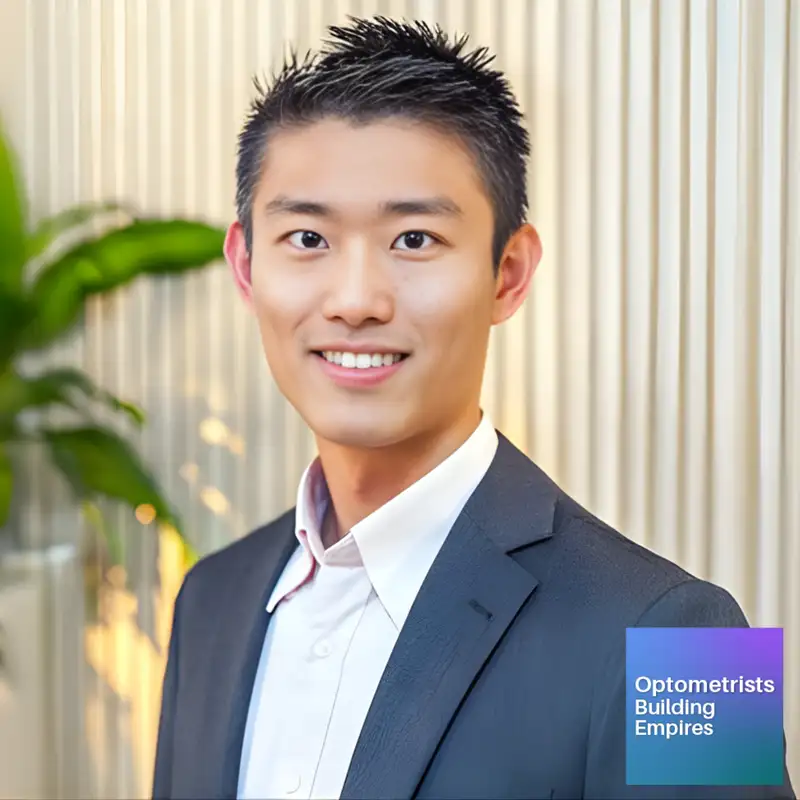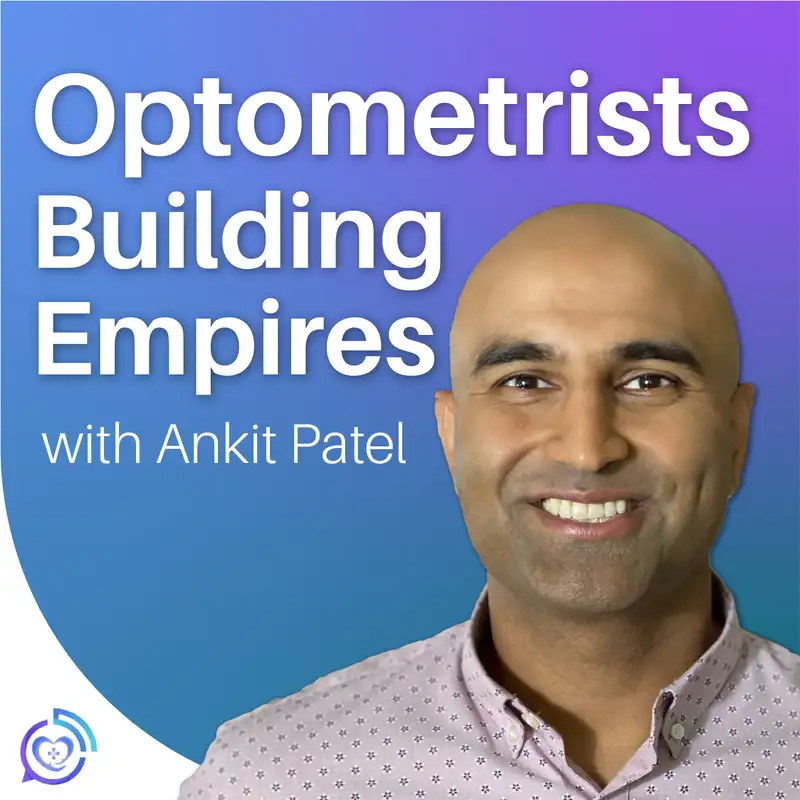
Why Impact Matters More Than Scale - Kevin Chan - Optometrists Building Empires - Episode # 079
OBE_Kevin Chan
===
Kevin Chan: [00:00:00] there's still Alon of like, um, misconception and skepticism from, You know, for public, especially parent ask me about why this. have been talked about,
the first question is not about whether you can see properly. It's about how, how your vision impact your social life, your daily activities. And sometimes they may not even realize how, what does a normal vision look like?
the biggest mistake is not to make the mistake. If you're not able to make the mistake, you're not able to really find out what you're truly lacking. Where your, um, deficiency lies into
This is Optometrist Building Empires, and I'm your host. I'm Kit Patel. Each week we'll explore the journey of practice ownership and leadership in optometry. Join us for insights and strategies from the top minds in our field. This show is sponsored by my business care team. My business care team helps your office increase revenues, reduce costs, and reduce staffing headaches.
Let's build your empire [00:01:00] together.
Ankit Patel: Today's guest is someone I'm thrilled to learn more about. He's a distinguished optometrist who specializes in myopia management, pediatric optometry, specialty contact lenses, and ocular disease. He's emerged as a leading voice in the global conversation around myopia, sharing insights on national and international stages, including his well-known TEDx talk myopia global epidemic.
His leadership extends across the profession through his roles with Johnson Johnson Vision and S Lord's Myopia Task Force, as well as frequent con contributions to major conferences and publications. He's senior clinical director at Treehouse Eyes and Medical Co-ed, editor of Review of Myopia Management.
Please welcome Dr. Kevin Chan. Kevin, welcome.
Kevin Chan: Thanks for having me and
Ankit Patel: Yeah, I I love your background. I love how you've grown your empire. 'cause it's, it's different than, than the traditional growing multiple locations. So tell me more about what was your secret and what was the most important thing that helped you grow your empire?
Kevin Chan: [00:02:00] Yeah, that's a great question. And to be honest, there's probably no definitive answer. I mean, I mean, obviously every individual have their own story. You know, to tell story is actually pretty simple and kind of straightforward. To some people it can be boring as well. did not grow up in the medical family.
You know, I have no, uh, family member who is the medical industry. I'm actually the first generation, um, uh, person who end up being Optometrists in the entire family. So I have no, um, You know, footstep to follow. I kind of create my own path and, um, as my startup with my career, You know, there's so many. Things I still haven't had a chance to really explore what I really wanna do, what my passion line into. uh, but thankfully there's Alon of like, You know, people around me, You know, who provide me, You know, really great support, mentorship, and that's where it related to, to, to where I am now. I'm [00:03:00] fortunate to have other opportunity to mentor other people, You know, students and residents and, uh, so yeah, I feel very fortunate to, I wouldn't say it's an empire, but I really create something that I, I truly enjoy and this is the path that, You know, everyone needs to kind of trap in their own way.
Ankit Patel: Yeah, I like that and. I'm curious, um, as, as you were growing your expertise, you, You know, you, you're really an, a world class expert in myopia. What were things that you ran into that you didn't expect?
Kevin Chan: Yeah, so when it comes to expectation, there's Alon of like, You know, in a clinical practice, I'm sure many practitioner can resonate with that. You know, there's no single patient walking in for the same chief complaint. You know, we as a clinician need to kind of, You know, um, self-diagnose and make sure you troubleshoot it based on individual need.
And even with, You know, in the realm of myopic management, there's actually no single, uh, [00:04:00] foolproof method to really, um, tackle every single patient. With, uh, for example, with a minus one mile coming in, You know, even though they share the same characteristics, but sometime you do need to think outside the box and really be able to listen to what they truly experience and struggle.
And especially when we're dealing with pediatric population, there's still so many things that you have to, like, beyond the hard skill that you learn in school. You also have to kind of exercise and implement the soft skill, um, that you learn through interactions.
Ankit Patel: Yeah, I like that. And I'm curious, I, You know, you got a, a TEDx platform. I, it is interesting 'cause I actually saw your TEDx talk at some point when I was just curious about myopia control, um, before I even knew you because I, so I was excited to have you on the show. Um. Did you get any resistance from the public or did you get social media can be really kind of tough, right?
Because you, you put yourself out there. What, what kind of feedback and did you hear and what were things that you heard that you maybe not have expected? Or did you not get that? Was it all [00:05:00] positive?
Kevin Chan: Yeah, when I first got an invitation to do the TEDx talks, I was, I felt very surreal. I didn't realize there's such opportunity out there, especially in the eyecare community. And, uh, yes, definitely there's, there are certain, um, resistance and hesitancy or even skepticism about what an eye doctor can provide, You know, on a TEDx platform. kind of because in, in my, um, in my year, You know, they were selecting, You know, different people, uh, representing different, uh, industry including healthcare, You know, business, technology back then, You know, I did my TEDx talk in 2019 and back then the, I, I mean the AI industry wasn't very bloom booming back then.
So, um. You know, fast forward, You know, right now we're seeing Alon of like, ai, You know, driven, You know, technology and including AI industry has been somewhat, You know, being the beneficiary about for, for ai. And, You know, going back to, to my experience as, as a, as a [00:06:00] tech speaker, You know, there's Alon of things that the public may not even aware.
You know, there's such a thing as myopia or treatment for myopia. And there's still Alon of like, um, misconception and skepticism from, You know, for public, especially parent ask me about why this. have been talked about, You know, from my eyecare experience when I went to the, I see the eye doctor, no one ever told me about that.
And so that is something that is truly wide opening and um, and I want to fill the void, You know, as a speaker to be able to fill the void. And hopefully we can provide, You know, general public more, um, information that is really credible and be able to help, You know, the next generation.
Ankit Patel: Yeah, I love that. Um, what are some of the common, so you, I'm gonna, we're we're gonna, if it's okay, I'm gonna ask you to kind of share some of your myopia expertise, uh, because I think that listeners really appreciate that. 'cause there's Alon of folks listening who do have, uh, myopia specializations in their practices.
What are some things that you [00:07:00] see? I'll ask two questions and you can decide where to answer first. One question is, what do you see are the common mistakes that, uh, beginner myopia practices do and more? And what are common mistakes that you see more advanced myopia practices do that are like, okay, well, You know, you can modify this to get better results for your patients or better, uh, uh, make it a better, uh, business for you as well.
Kevin Chan: Yeah, I think I will start off by addressing the first question about what are the common challenges or, You know, mistake that You know, clinician may encounter. And I think I also, I myself as a clinician also learned through mistakes. And, but I appreciate the fact that I have, I'm driven to be able to make mistake and I'm rela relentless about making mistake. don't want the mistake to be my hindrance of future success. um, I think when I started my career and just like many of you in listening, You know, I think the [00:08:00] biggest mistake is not to make the mistake. If you're not able to make the mistake, you're not able to really find out what you're truly lacking.
Where your, um, deficiency lies into my deficiency back then was the lack of confident of treating myopia. And when a kid come in, You know, I, I'm not really sure, I wasn't sure, You know, how to handle the situation where kids were crying, parents were, You know, skeptical and there's nothing that could be, um. channel into the, the mindset about myopia. And, uh, so, but I keep going. I kept going and I really truly believe, You know, that is something that is gonna be helpful and kind of change the trajectory for the kid, You know, in the next 10 to 20 years down the road. So I. I trust my gut feeling and I know that this is gonna be, You know, gonna be channeled through conversation and repetition.
I think [00:09:00] another thing that I myself have, have learned as a clinician is that, You know, don't worry about or don't be scared of repetition, Actually have found that if you don't repeat yourself over and over again, You know, it would actually take at least five to six times, You know, for the same, um, message to be, You know, conveyed. To your recipient, no matter as a parent or kids or whoever you're talking to, it takes at least five to six times repetition, You know, to be able to get the message across and be able to, You know, um, the message into action.
Ankit Patel: I like that.
Kevin Chan: And that
is something that I learned, You know, through my failure, through my mistake. um, and sometimes clinician find that, oh, I need to gather so many different information from A to z. In order to make the best treatment plan. Definitely. I agree and I think information is key to facilitate your action, but I think sometime, You know, [00:10:00] clinician also be, uh, feeling like they are being paralyzed by so much, uh, decision making just because of the abundant information available, especially, You know, in the era of AI these days. You can simply feed the, the, the, the prom, You know, into the, to the source. And then you can get hundreds and hundreds of prom back. You know about what you can do for certain thing, not just limited to myopia. sometimes I found that clinician needs to exercise their own, um, You know, and their own mindset and be able to kind of filter out some of the information, um, uh, uh, generated by the ai. Because the lack of, um, the lack of decision making usually comes from, ironically speaking, comes from the abundance of information available. It kind of paralyzed our mindset about what we can do, what what can be done to best serve the patient. But sometime, You know, you have to go back to the basic and figure out, am I truly listening to my patient?
You know, what are the chief complaint? You know, is [00:11:00] the AI going to be able to filter all these, um, nuances
Ankit Patel: Yeah.
Kevin Chan: Me figure out the, the best, um, treatment plan for my patient? So I think in the realm of myopic management, I think I. I've learned from the moment mistake don't be bogged down by the fact that you have so much information out there and you read something from this source and that source just because of that, You know, it kind of hinder you from doing anything for, uh, for the kids because, uh, right now I feel Alon of clinician are still hesitant. pursuing, You know, the full, um, my okay management in full force, they're still kind of dabble into, You know, oh yeah, I heard about this, but I don't know whether this is gonna be working or not. So that's why I decide not to, You know, jump the gun or, You know, dip my toes into the, the water. But that is actually doing the case of the service in the long run. I think at the end of the day, I would recommend, You know, um, clinician to be able to, um, You know, trust your gut [00:12:00] feeling and be able to do something. You know, even though you are starting, You know, for this journey, for Myop opinion management. Don't be afraid, don't be shy about, You know, just because you don't know anything doesn't mean you shouldn't be taking any action for the, for the patient.
Ankit Patel: I like that. And You know, I'm not a doctor, but in other decisions like this I always look at what's the potential di downside if I take an action and what's the potential upside? And in this case, it sounds like the upside's way better than any kind of potential downside that you may do. With, with any kind of myopic treatment.
And it's interesting 'cause you said something, especially with AI and overwhelm information. I, I heard a quote one time, you tell me if this resonates.
Kevin Chan: Hmm.
Ankit Patel: Mastery is simplicity on the other side of complexity. So you can say like, eagles, mc squared. Right? Such a brilliant, simple, uh, state or F equals ma.
Right. But this is on the other side of like, oh, it takes, there's Alon of information that goes into creating this formula. 'cause it's on the other, simplicity on the other side, complexity. Um, is that kind of what you're saying is like, Hey, You know what, yes, you kinda have to understand all the information, but You know, be able to make a [00:13:00] decision and to get through that complexity, you've gotta actually try and, and, and, and see what works and do activities versus not doing anything.
I.
Kevin Chan: Yeah, so I absolutely agree with your analogy about, You know, um, the, the irony between complexity and simplicity. I think the best thing to do things well is not about make things complicated. Just because you can showcase how complex this the eyeball is. You are, You know, using the theory of, um, myopathy focus to explain to the patient, yes, it show you, You know, how complex the eyes are or show the parent, You know, how, how, how, um, smart you are. But at the same time, if you're not able to digest and be able to, um, You know, um, get into the core or the simplicity of the, the message, You know, nothing will stick. And sometimes parents just, they, they actually respond not by the intellectual understanding, but more to do with the cognitive, You know, um, resonance [00:14:00] from your message. And I think the challenge and also the, the good exercise for, for me and for other clinicians to do is no matter which field you're doing, You know, no matter it's myopia management or any, You know, sort of glaucoma care or any other sort of eyecare in, uh, uh, sector, you do need to be able to filter the message based on how much You know, and be able to simplify things and make a really emotional connection to your audience. And I think that's all also how I learn. Through my TEDx, um, experience when I talk to so hundreds and hundreds of audience, You know, you don't expect everything will stick, but what stick is actually how you create a connection with your audience, even though you guys, we are strangers to each other, but I think this bridge is really difficult to to, to bri to build, You know, and you did need to take experience and be able to learn from your own failure to do so.
Ankit Patel: Yeah, I like that. That's good insight. Uh, so why, [00:15:00] why, why go down this path, uh, that you went down? What drives you specifically around myopia and specifically being such a deep expert? Like where does that come from?
Kevin Chan: Yeah, that's a great question. And um. I think
Ankit Patel: I.
Kevin Chan: Back to the, the notion back about a decade ago when I first start with, You know, the, the field of management. was a no back then, and I don't really know, wasn't sure what, this is the path that I wanted to dive into, but as I learned more and more about the industry and I learned that myopia could be back then, You know, 10 years ago, back then I was thinking, You know, myopia management could be the next frontier. The next wave, the, the, the, the source of our revenue. obviously we also have the opportunity to make a big difference, transformative difference for our young kids You know, we're not just taking care of the patient for that specific timeframe, but we're doing something that will actually [00:16:00] change the course of, You know, their development, You know, over the next 10 or 20 years later. And I think that is truly rewarding for me to, to kind of. Be the first person witnessing, You know, how the kids grow.
Ankit Patel: Yeah.
Kevin Chan: Fast forward 10, 12 years later, I'm still seeing, witnessing my patient, You know, from, from their, You know, um, um, stage and to the point where they start telling me that, oh, I'm going to college.
You know, that is really humbling experience to, to, to help the kid, You know, from a startup, You know? Uh, so I think that is my driving force of how we can, You know. Make a difference for the next generation.
Ankit Patel: I like that. Uh, so curious, what are you most excited about for the future of optometry? Myopia control, uh, maybe your own practices, maybe even treehouse eyes. Like tell, tell us what you're excited about the future.
Kevin Chan: So the future is definitely [00:17:00] endless. And um, as I mentioned earlier, You know, we're just tapping the, the tip of the iceberg in the field of market management. I think with the help of AI and other technological events, I think there's so much things we haven't even explored. You know, for example, I just recently did a lecture about, um, You know, how we utilize, You know, epigenetics. As one of the discipline that we can expand further. You know, for those who are not familiar with epigenetics, it's actually the, um, like a joint discipline between, um, how we analyze genetics and, uh, incorporate with the environmental factors to make the best clinical decision for our patient. Right now we're just talking You know, um, what kind of, uh, resources or evidence, You know, are out there to support market management. On the other hand, we also have data to support environmental changes can actually shape how the eye develop over time. What if we [00:18:00] can combine, You know, using, You know, AI technology to be able to combine these two discipline together and really make a well informed decision, not just about guessing, but really understand how each individual can, You know, can, can, can be impacted by the environment. And that way we can actually do a cocktail approach for our patient. For example, You know, uh, if we're able to use AI to help facilitate a decision making of how much atropine You know, we're doing with the patient, or how we, um, utilize Orthokeratology to modify the design to be able to best customize for the treatment outcome. And I think that will be the near future, You know, for, for the next, uh, generation.
Ankit Patel: I like that. That's pretty good. It's, um, I, it, it, there's Alon of exciting technologies coming out and Alon of exciting things, so that's, that's gonna be cool. Um, wish, I wish, You know, we had this when I was growing up, so.
Kevin Chan: So do I. Mm-hmm.
Ankit Patel: Yeah. Are you pretty, are you, uh, [00:19:00] heavy myopic.
Kevin Chan: I myself, I'm a minus five mile
Ankit Patel: Okay.
Kevin Chan: And, uh, so I definitely can echo and, uh, how the kids. You know, grow up, You know, back
Ankit Patel: Yeah.
Kevin Chan: Know, and, um, when I see a patient coming in without correction, when they're already myopic, You know, the first question is not about whether you can see properly. It's about how, how your vision impact your social life, your daily activities. And sometimes they may not even realize how, what does a normal vision look like? They thought that walking around with a minus three diopter supposed to be normal, but they don't realize what is considered normal or not. So I think that that truly resonate, You know, coming from someone like me, You know, as a Mayo, I'm sure many listener can, can, can relate it to that as well.
And I think that would actually make the case even more compelling. You know, as a clinician, you understand where they're coming from and if you cannot speak from from their own language, it's really hard to connect [00:20:00] emotionally.
Ankit Patel: Gotcha. I like that. Um, so let's shift gears a little bit. Uh, I'm curious to learn more about you personally.
Kevin Chan: Yeah.
Ankit Patel: Tell me a little bit about, um, what makes you tick. Like, tell, tell, gimme a story that was really formative for you, that made you who you are today.
Kevin Chan: Wow. That's a really profound question. And I think, um. That is something I, I'm still exploring and I don't, may not have a good answer for, for this. And I think, like what I said, I am, I can consider myself as an experimental person and I don't mind making mistakes or trying something new, even though you would probably encounter some roadblocks, but that actually opened up new opportunity to, to let yourself You know, what your. are where your limitations would be. And um, if you were to [00:21:00] ask me what really shaped how I am today, and I think it's about the, the, the relentless and be able to make failure to be my fuel for going further. And I think many of you probably have heard, um, a term called grit. And it's more than just perseverance. And it's actually something I think based on the definition of grit and the psychologists actually, um, define it grit as something that, You know, you per and through challenges and not giving up. And I think growing up as a male, and I definitely understand what the challenges are and how I can channel through the challenges. um, no one is perfect. And sometimes I found that, um, uh, being a clinician, You know, in this specific field, there's still Alon of roadblock that I may have a [00:22:00] hard time, You know, explaining to my colleagues who may not be familiar with this field. But I'm, I've been doing my best to really educate my peers, um, my patient, and hopefully one day, You know, myop management will no longer be a novelty. It's something that we can all communicate with the same languages. Uh, because right now I'm, I'm seeing that, You know, there's still Alon of misconception within the healthcare industry about myopic management. Is this something worth doing? It, is this something that, You know, that could actually transcend, You know, to the next generation of eyecare? Um, but for me personally, I think one thing that I learned the most through my career is, You know, um. Do not, do not give up. It sounds cliche and very, You know, um, just something that, You know, if you keep, You know, saying that I cannot do it or I don't have enough information to achieve this, and I think you are just gonna be [00:23:00] stuck, You know, at where you are. Um, so I think, yeah, so that, that is something that I truly propel me to drive me to where I am today.
Ankit Patel: I like that. Excellent. Um, and what if you were to go back in time, give younger Kevin advice right out of OD school, what advice would you give to yourself? I.
Kevin Chan: Yeah. So a lesson learned through my career is, um, I was thinking one day, You know, if I were, should I not be an optometrist? What would I be? And is truly profounding. Um, at that time I wasn't aware, You know, optometry even a thing back in the old days. You know, if you just ask a younger Kevin Chan, I may not even answer you.
You know, I want to be, become a optometrist. I actually have, um, an aspiration, uh, when I growing up, You know, I want to be an architect. [00:24:00] Because I like structure, I like organization, and I know being an architect requires Alon of resilience and, um, super organizational skill. And, but the reason why I, I changed course to be, to become an optometrist is I think through the of being, um, You know, aspiring to be an architect. I learned that, You know, healthcare can truly make a difference for. One another, I think the one-on-one interaction truly make, make myself feel like this is something I truly want to, to get into, You know, get connected to one, one another, and be able to truly make a, uh, impact for my patient.
Ankit Patel: I like that. That's good insight. That's good insight. Um, and, And so, uh, You know, I'd like to, uh, You know, we we're starting a section in our podcast, uh, a shout out section. [00:25:00] So who, You know, give you an opportunity to kind of recognize peers and other people in the industry that you see doing good work. Um, is there anyone in particular that you feel does really good work that you'd like to maybe shout out on the podcast that, hey, if you're interested in diving deeper.
You can go and check out these folks or maybe contact these folks or just maybe some good resources for other folks to, to, to, to get connected to.
Kevin Chan: Yeah, so I think, um. If you're talking about people who I look up to, You know, there's plenty of them, You know, throughout my career. And I'll first start off with the, You know, organization for which I feel like, um, truly instrumental for my career development. You know, one of which is the, um, American Academy of Orthokeratology and myopic Control, A-A-O-M-C. that is something that I have, um, since my development of my career in this field in Myop management, I truly have benefit Alon [00:26:00] tremendously from this organization. A OMC, I think it's not some, uh, um, just a common, um, name for many folks, uh, listening. it's not as common, because it's a so-called a niche, um, for, for eyecare industry. But in fact, Alon of, uh, people actually get into that and they can, they cannot, You know, stop, they cannot stop going for this event because, um, it truly, You know, provide you Alon of resources and, You know, uh, head starters to be able to help you. How to get started with this myop management and be able to get comfortable in this field. And like doing primary eye care, there's still Alon of nuances that, You know, clinician need to, You know, find a way to, You know, um. Be able to finesse in the, in the journey. um, so we're not gonna get into that, You know, nitty gritty stuff about how to differentiate between primary care and providing MYP management for, for patients.
You [00:27:00] know, that's not the, the scope of the, the talk today, but actually encourage people, people to kind of get into the A OMC organization and learn more about what they can offer, how they can really, You know, differentiate yourself. You know, as a, as a clinician and also as a individual personally.
Ankit Patel: I like that. Thank you for sharing that. And, and Kevin, if people wanna get in touch with you, where can they find you?
Kevin Chan: Well, definitely. I welcome any questions and You know, uh, interaction with me. You know, you can contact me by emailing Kevin Chen dot o d@gmail.com.
Ankit Patel: And, and we'll put that in the show notes along with some other connection points for you as well. So,
Kevin Chan: Thank you.
Ankit Patel: yeah. Well, uh, again, Dr. Kevin Chan, thank you again for being guest on the show.
Kevin Chan: Thank you so much. I could appreciate it.
Ankit Patel: Yeah. And one thing I like to do is reflect on what I learned in this process. I learned two things. One. That you can build an empire, even if it's, even if it's writing one publication, that's an empire for [00:28:00] some folks, right? Uh, or being a TEDx talk is an empire along with just try mitigate your downside, but just try it.
Get into action. Don't wait till you have all the information. Just keep trying. 'cause that'll help your patients in the long run. And so thank you again for, for sharing those insights.
Kevin Chan: To sum up, I, I will also conclude that, You know, there's take home lesson through my career is being, You know, building an empire is not a big word. You know, I think Alon of folks still out there, You know, they don't. don't believe that, You know, oh, I can really build an empire. I think empire to my knowledge, is not something, You know, tangible. Rather it's actually something that, You know, you have to believe in what empire means to you. To me, You know, empire is not something you build, You know, uh, um, 30 practice location, You know, nationwide, You know, or achieve [00:29:00] something no one ever achieved. You know, I think. Empire in my is more to do with how you can overcome your obstacles and be able to make an impact for other people, no matter.
So person, a patient, uh, uh, uh, your, your family member. You know, I think building an empire is very personalized and no one can actually speak for you what an empire means to you. an empire is simply like, You know, it's not about doing a tele stop, it's not about writing an article. It's about what I have achieved or going to achieve, You know, to make an impact for my patients. And at the end of the day, you want to make a difference for one another because that's the essence of why we become an optometrist, You know, at the very beginning.
Ankit Patel: I love that. That is great insight, and thank you again Dr. Chan, for sharing that, and thank you.
Kevin Chan: having me.
Ankit Patel: Absolutely. It was a pleasure and thank you. Audience. If you learn something or laugh, please share the podcast and please make sure to hit the subscribe button so you never miss an [00:30:00] episode. Also, if you use a link in the show notes to book a meeting, I'll ha be happy to send you a free copy of my book.
Optometry Redefined. Thank you again, Dr. Chan. This has been another exciting episode of Optometrist Building Empires, and we'll see you next time.
Kevin Chan: Thank
That's a wrap on another episode of Optometrists Building Empires. Thanks for joining. For show notes and more Visit Building Empires live. This show is proudly sponsored by my business care team. My business care team was born out of staffing challenges. My wife and I faced together managing multiple optometry locations.
We refined our approach at classic vision care and now offer our expertise dollars. If you're experiencing challenges with staffing and you'd like to set up a discovery call, we'd be happy to help you and connect you with the right resources. We'll see you next time.
Creators and Guests