Stop Chasing Prestige - Nathan Heilman - Optometrists Building Empires - Episode # 090
OBE_Nathan Heilman
===
nathan-heilman_2_03-31-2026_125916: [00:00:00] but I'm like, yeah, this is not, this is what I set out not to do. What the hell am I doing?
I, I felt like I needed to prove myself, not only to myself, but the rest of the medical community, that Optometrists are good, knowledgeable, conscientious, You know, healthcare.
Practitioners,
right?
Nathan Heilman: what
I didn't expect, You know, was really just how hard, uh, the people management part of running a practice was. Just the human resources piece.
This is Optometrist Building Empires, and I'm your host. I'm Kit Patel. Each week we'll explore the journey of practice ownership and leadership in optometry. Join us for insights and strategies from the top minds in our field. This show is sponsored by my business care team. My business care team helps your office increase revenues, reduce costs, and reduce staffing headaches.
Let's build your empire together.
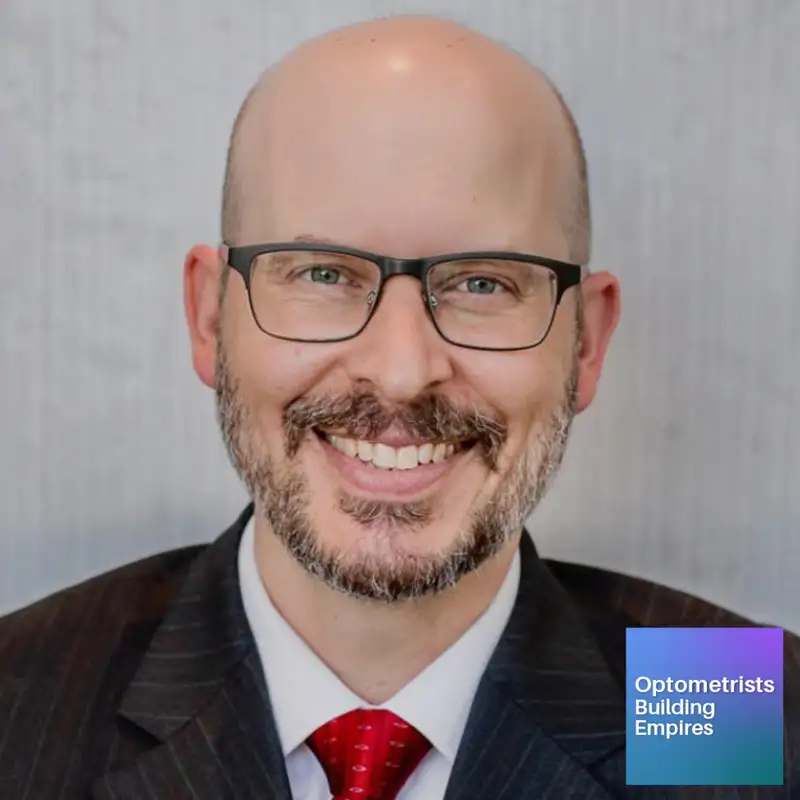
Ankit Patel: Today's guest is someone who's got a really interesting story He's an optometrist, [00:01:00] healthcare care leader and eye disease specialist. He previously led one of the US Navy's largest optometry departments
while serving as an officer. He now runs and leads a primary care
clinic providing comprehensive vision and
medical optometry services. He's president at River Valley Eye Professionals. Please welcome Dr. Nathan Haman. Nathan, welcome.
Nathan Heilman: Hi. Yeah, thanks for having me. Appreciate it.
Ankit Patel: uh, you got a super interesting background. Something decided, You know, excited to, uh, dig into it. Um,
Nathan Heilman: Thank you.
Ankit Patel: so what was the most important thing that helped you grow your empire?
Nathan Heilman: Uh, really it, it was the support system that I was kind of able to build around me along the way. Um, You know, no, no one person I, I think can go this kind of journey alone. Uh, I used to kind of think that, but uh, all the the individuals around me, including my family. You know, mentors, uh, that I was, uh, lucky enough to meet, uh, the team members that I was able [00:02:00] to sort of bring aboard and, and were kind enough to kind of stay on all these years, uh, as well as a professional network that, uh, I ran into a little later in, my career. Um, all of those really helped me to expand my perspective and, and, build something here that, uh, I could continue to
grow and, uh, I knew that would continue to endure. Uh, well after I was gone,
Ankit Patel: Yeah, I like that. Uh, And so tell me a little bit more about what that means. Like when, when, was there a time that the, uh, it was difficult to keep those people around you or when they really came in, like they were really like saved?
You know, helped you transform, like, gimme, gimme a
story that really resonates with you viscerally about how that helped you.
Nathan Heilman: Uh, I, you.
know, it sounds cliche, but it, it really revolves around, Uh, the time of the pandemic, right? when everything was shut down and we had to really drill down everything we had into just. Myself, uh, my office manager in an optician. [00:03:00] Uh, we were the only three, You know, running, uh, what was otherwise a three to, to four doctor clinic at the time. what I learned is that just having sheer grit and determination and You know, sure sort of a will to live, uh, if you? will, is, is, is often not enough to sustain, You know, something that is bigger. Than you. And one of the biggest sort of shifts for me kind of came as realizing, yeah, there's, there's no way I can do this all alone. and I kind of said, okay, if we're gonna continue to do this after everything, the dust settles and, and we can continue forward, I I need to rethink how I approach things. 'cause putting myself all into that, You know, it's a one-way ticket to burnout.
Ankit Patel: Yeah.
Nathan Heilman: It was kind of during that time I kind of had this sort of, not an
epiphany, if you will, but just a real realization that yeah, any
hard worker, You know, that's, any optometrist I think [00:04:00] in, in our, uh, particular profession, they're a hard worker.
They're smart people, You know, they really are determined, You know, to make a go of things. And by and large, I think we're raised to kind of think that settling on ourselves as the most reliable piece of that is, is kind of where you go. But a major shift for me actually came after reading a, a book that was introduced to me, uh, by a, a colleague, and it's called the E-Myth Revisited by Michael Gerber.
Maybe you read it, but, uh, it's kind of a broad, You know, reaching, You know, topic of why, You know, most, what is it 70, 80% of small businesses in the US
fail. And uh, the major thing that I took away from it is that you can have a really ambitious, very intelligent, You know, uh, absolutely tireless individual. That starts a business for altruistic reasons, but unless they are able to surround themselves with.
individuals, other individuals and systems that they can build that can sort of run themselves independent of that [00:05:00] individual, all you end up really owning is a job. You don't
own a business, you just basically own the job.
And so that's where most people wind up saying, okay, I've built this business. It's really successful. I can't sustain this. And eventually it
ends up failing because they don't scale properly. They don't build the systems that run the business, or they don't recruit people to run those systems properly. They're the people and the systems that it just fails. that was the biggest thing for me that says, okay, if I can't do it myself, what do I need? And so at that time too, I was lucky enough to be introduced to a professional peer group. that
made me realize that, uh, I still needed to surround myself, that people who were smarter than me, um,
that were going through some of the same challenges that I was.
And that was a game changer. Uh, I I, no longer felt like I needed to be. the smartest person in the room or feel like I had to go it alone. Uh, with their help, I was able to take my [00:06:00] practice to a much higher level of performance and, and growth. And uh, I really learned an absolute tongue them about how to really make an optometry practice specifically, uh, successful.
Ankit Patel: Can, can you tell me a little bit about, I don't know if you can share information, like what group was it or just curious what, what.
Nathan Heilman: Yeah, sure. I'm happy to. Yeah, no, it was the Kleinman, uh, performance Partners was the group I was originally introduced to. Um, just a great premise where, uh, I don't know if you're familiar, I mean, many docs listening
might be already familiar with this, and there are similar, You know, groups out there to it where you kind of put a group of doctors. Uh, fellow Optometrists from around the country, different parts of the world into a room, and they all kind of bring current issues, problems that they're facing in their practice and say, this is what I need help with. And all the other doctors in your peer group sort of sound off and provide insight and advice. To how to solve that problem. 'cause maybe they've already dealt with that problem, uh, and
Ankit Patel: Yeah.
Nathan Heilman: It. [00:07:00] Maybe they dealt with that problem and they failed and they learn from your difficulties and your challenges. And so together, putting all that into a room can be a
tremendous vehicle, for growth and, and just knowledge expansion and, really just being comfortable dealing with all the different. that you have to be as a practice owner. I mean, you, you have to be sort of a babysitter. You have to be a mentor, you have to be a You know, a good financial, You know, guy or gal, You know, it, it, all these hats that you wear can be a
tremendous burden. When we're clinicians, we're trained
doctors and, You know, it's again, it kind of sounds cliche, but we really aren't trained as well as we probably should be, You know, for entering the world of business.
Ankit Patel: Yeah. Yeah.
I, I think that's a really good insight. And I know like was IDOC Vision Source, I think they all have some group, but there's also o outside groups as well. So that, that's a constant theme we keep hearing is like mentorship and, and [00:08:00] getting help and support.
Um, so a, as you. are growing your practice, what's did you run into that you didn't expect?
Uh, You know, the proverbial like, oh, You know, everyone's got a plan until
they get punched in the mouth, right? And so, yeah.
Nathan Heilman: Yeah. Uh, what I didn't expect, You know, was really just how hard, uh, the people management part of running a practice was. Just the human resources piece. Um, especially when you have, you know, a larger practice You know, like I now, You know, I. have roughly about 20 individuals, You know, uh, outside of just providers in our practice that kind of make the system go and dealing, You know, with all of the individual personalities, learning what motivates some individuals and demotivates others, and just trying to keep them all focused.
On a common goal, is, is extremely challenging and I found that to be really the most challenging pillar, [00:09:00] um, to surmount uh, trying to build the practice here. And it's actually one of the reasons, You know, why I, You know, kind of chose to go a different direction eventually. 'cause it's, it's, it's a challenge.
It's tough unless you can find a good office
manager too. And that's always difficult to find as a
trusted first mate
that can run your ship when you're just trying to take an app.
Ankit Patel: Yeah. Yeah, those are definitely hard. Uh, And so tell me about, uh, you, you kind of alluded to it, but what are you doing now?
Nathan Heilman: What I'm doing now is I actually ended up, Uh, after quite a bit of introspection and, uh, analysis, decided to sell, uh, my practice to a management services organization, uh, almost, uh, nine months ago now. It's been about nine months and it's been going well. but uh, I did that Not just to sort of take a step away and say I give up, but to form more of a strategic partnership to help me continue to focus on what I do well. Uh, and that's You know, really be a clinician and help to mentor, You know,
my associate doctors [00:10:00] here. Uh, but I I wanted to kind of do three things, uh, and to, it helped me to maintain the legacy of my practice. Our name, our, our brand didn't change with the sales, so we are still. You know, river Valley Eye professionals we're not, uh, my eye doctor, we're
not, uh, some other, uh, name that, uh, a private equity firm comes in and sort of bestows upon us.
We didn't change in terms of who we were.
Ankit Patel: Hmm.
Nathan Heilman: Was really important to me was to
maintain the legacy of, of the practice that, You know, I, and, and my
predecessor, the, the gentleman I bought the practice from built. Uh, the second thing is I wanted to be able to provide an overall better benefits, uh, you know, and, and to upward mobility, uh, opportunities for my staff.
Uh, 'cause my staff are. Amazing. They're, they're just a really great group of people. I've been blessed to be surrounded
by just really good natured, hardworking souls who I wanted to be able to provide more to than I felt that just as a small business owner individually could do [00:11:00] with just the way the market and, and the way the, uh, business environment, especially in optometry, is changing. Um, and then the final reason that I wanted to make this change, uh, was it was just probably because of the overall market pressures and things like
that. I was seeing, You know, kind of coming down the pipeline for a larger practice like mine, able to transition it successfully to. An individual or group of individuals privately was not looking as simple, especially in my area of the world. So I'm,
I'm kind of in a suburban location
sort of. It's kind of suburban, rural, finding individuals that want to live and work and sort of invest themselves in
this smaller community has kind of proven to be difficult. So
Ankit Patel: Hmm.
Nathan Heilman: The other thing that kind of drove me. to say, look, I think I need to take advantage of this partnership opportunity now. you. know for those reasons. Otherwise, I'm gonna have to make a harder decision potentially down the road.
Ankit Patel: Yeah, that's a tough decision, right? And [00:12:00] so so so tell me a little bit about what, um.
Uh, how has the transition been? Like what do you see? Like, what are you most excited about as you continue to grow? Like, yeah, tell me more about that.
Nathan Heilman: Yeah. Uh, I,
mean obviously any, any change is hard.
Um, there were some definite systems changes that, uh, challenged, uh, staff a bit. uh, and I've asked a lot of my staff over the years. Uh, I'm kind of an individual that's always looking for a bigger, better way to, do things. I never just sort of settle, uh, for the status quo.
Ankit Patel: Mm-hmm.
Nathan Heilman: I think they were already a little impatient with me, but
it's like, oh, here we go. Dr. Hyam is changing something again. but this was a bigger animal that really kind of changed, um, the systems where our optical. and large is now, You know, run by an outside entity. Uh, the ordering, uh, the actual inventory management, you know, all of
that is just now independent of my influence. And, You know, quite frankly, I'm not a big optical guy. I never was. I don't like. [00:13:00] Dealing with optical, I think it's a means to an end. So that wasn't something that broke my heart to let that go,
but it was actually something that my staff
really liked. I, I realized after the fact. So that was hard for them to sort of swallow it, and in a way it made them feel like I didn't appreciate what they were doing. And, uh, I, I tried to make it as clear as possible. It wasn't about that, uh, it was about making sure that we can maintain a healthy. you know, optical And and and, and practice in a retail setting that's becoming more and more
competitive. Not only now,
but many years down the road. And I've actually seen that that's paid off.
Uh, we're doing well. Our capture rate actually improved. Um, our overall profitability in the optical has remained level, if not improved. So, uh, it was a gamble. Uh, but it actually,
I'm really excited to see that that is something that is flourishing. After the sale and not, You know, dwindling
opposite to what I was hopeful of.
So that, that's the one thing that I'm really [00:14:00] happy to see is
that that's going well. And, uh, to be honest, the clinical side, You know, just taking care of patients day to day hasn't changed a bit.
Uh, it's almost like nothing changed. So
Ankit Patel: Yeah.
Nathan Heilman: Kind of a smooth transition, um, smoother than some. of the biggest challenges I hear other offices that have, uh, partnered with this group face is changing their EHR. Hmm. we have a revolution. We've been using it for, oh, about 15 years now. uh, when I found out that I didn't have to change my EHR, I'm like, sold. Just show me the money. Uh, I, I
Ankit Patel: Yeah.
Nathan Heilman: Sure that this is easy. And that really made all the difference, was having the EHR that they wanted and not having to make that transition.
'cause if you've ever gone through an EHR change,
Ankit Patel: yeah.
Nathan Heilman: Know,
Ankit Patel: Yeah.
Nathan Heilman: Yeah, it's awful, right? It's not easy.
Ankit Patel: Yeah. And I have a little bit of a technical background, so I think that's, uh, it is still kind of a pain. So
Nathan Heilman: helps, but yeah, it's still not only just for you, but it's just staff
Ankit Patel: team.
Nathan Heilman: And
Ankit Patel: Yeah.
Nathan Heilman: Everybody to navigate through [00:15:00] that.
Ankit Patel: And that's the, You know, on a side note, that's usually the, um, the test is like, okay, how much does the staff complain about the new system after a weekend? Right? Uh, and, and
Nathan Heilman: right.
Ankit Patel: That's, so the last one we switched to it, actually, knock on wood, as was easy enough. So I think we're, we're good. We're good for a while.
So,
Nathan Heilman: Awesome. Good.
Ankit Patel: um, yeah. So, so tell me a little bit about, um, you talked about a little bit, right? Um, I think folks are having trouble with staffing. Uh, You know, so what, what, what is it that, um, how, how are you all dealing with that now? How did you deal with it? What are some successful strategies? Because it sounds like that's a really important strategy for you as the people.
Nathan Heilman: Yeah, it's, it's, it's quintessential, You know, to just our brand here. Uh, 'cause the one thing I hear from patients time and time again is it's just every time I come here, I just really think you have the best staff. You're just the nicest people. I just really want you to know that. And I, I take that really to heart, say thank you.
I'm glad to hear that you like him as much as I do. Um, but the strategy is really when you interview. [00:16:00] I don't interview somebody for skills. I interview somebody for just, are they, do they have the right personality? Do they have the right traits? Because you can train skills, right? But you can't necessarily train someone to have the soft skills, You know, to have the emotional intelligence, to have the right way that they handle themselves with patients on a day-to-day basis. pick that up just from having a conversation about anything. And so we've actually brought in a number of individuals that, uh, really had no prior training, but they had just the right traits that we thought would blend well with our group that everybody kind of gets along, if you will.
That's, I think that's important, but not only that, just how do they relate to patients. Um, do they have common sense? Do they have a way of. Broaching uncomfortable subjects in a way that is, again, emotionally intelligent and, uh, [00:17:00] validates the individual without being defensive, You know, without, uh, jumping to conclusions.
So that is how I think we were able to build a good group of people, is we just shopped around for the right personality traits.
Ankit Patel: Hmm. I like that. So you, um, is there, uh, a specific like secret sauce that you look for? Like, how did You know that they, they weren't like the wrong.
Nathan Heilman: Oh, it's a good question. I, I would just put it down to guts. It's just kind of a gut feeling, not only from myself, but I also, You know, have a couple other higher, You know, level staff that I've trusted to, to kind of give me their insights as well. And right after an interview we can kinda look at each other, said, yep, yep.
She's, she's. That that's the person that we want. Uh, and we've definitely taken people with lesser experience, lesser skills for those that have those personality traits that we just kind of have a feeling for. We just know
Ankit Patel: Okay.
Nathan Heilman: Gonna fit well and we're willing to take a chance on, [00:18:00] versus somebody that's like, okay, they're more skilled. But I also have kind of found That individuals with less skill are more malleable to your way of doing things. If you are looking for individuals that have greater skill sets and sort of set in their ways,
sometimes it's difficult for them
to blend into your system, Say, well, I know you've done it that way for 20 years, Edith, but what we need to do here is just if you can do it just a little bit differently, we we'd appreciate that.
And
sometimes people just don't budge. Like, no, I'm doing it my way or the highway. And it's like, well, okay, well then we have another decision we have to make.
Ankit Patel: Yeah. Yeah. I, I, find that really true as well. Uh, You know, and I, and looking for,
uh, not they, they may not be expert or, uh, in, in what I'm looking for, but they've mastered other things, right.
They're able to learn. Yeah.
Nathan Heilman: Yep, yep. They just have, uh, those qualities that are just kind of, those soft skills, those intangibles. Uh, that you just sort of have a gut feel for? I, I can't [00:19:00] explain it any better than that. I'm certainly not the right guy to talk to about human resources, uh, yeah, that, I think that's really, that guiding light has just kind of been that internal sixth sense of yeah, I think you fit the bill. I think you're gonna fit in well here. And some have worked out And And some haven't, but they've always been individuals for the most part that have self-selected. If this is not the right thing for them, they say, You know what? Thank you for the opportunity, but I'd like to be on my way. I've been fortunate enough not to have to fire, uh, too many people, You know, over the years.
Ankit Patel: Yeah. Oh, that's good. That's good. Um, I, yeah, I think that's the, not many people
can say that, so it's.
Nathan Heilman: it's been. I've been fortunate. Yeah, I've been lucky.
Ankit Patel: so, so you, you're kind of transitioned to being, You know, just being a doctor right now. Right? Uh, what, what, what's, what's, what's in your future? What are you looking forward to? What are you playing on doing? Uh, what, what does
that look like?
Nathan Heilman: I still figured it out, to be honest with you. Um, uh, I just kinda like being sort of just, uh, [00:20:00] more of just in the, in the chair again, being able just to focus primarily on patient care. But yeah, beyond that, um, Looking to do a little bit more of, uh, the administrative portion, the consulting work, uh, kind of the that's not in the lane, but kind of be the mentor for the younger up and coming docs to kind of give them guidance on the how toss, um, you know, sort of being the sage that, that, uh, is, is always present, but not doing.
I, I'm doing more of the guidance, but I'm not doing the doing Um, and one of the opportunities that I have with this, uh. Net, uh, network that I partnered with, or this
buyer that I partnered with is, uh, the practices that, uh, join this network within the state fall, kind of under, uh, my PC, if you will. So I would, uh, be an overseer of their office as well. So I'm kind of looking forward to doing that, instead of just being in the clinic and then just having free time to take advantage of other interests I have, You know, like, uh, [00:21:00] I, I enjoy cycling just to kind of get out and, uh. I do a little bit more of that. Uh, I enjoy photography, uh, very amateur, but I do enjoy it and I'd like to, You know, dig in a little bit more with that and just having more time to spend with my kids, uh, because, You know, it's a demand on your time when you're running a business. uh, they've made a lot of sacrifices. They're, they're one of the reasons that I'm here, but they're also one of the reasons that, uh, I wanna take a step back and, and have more time to to watch them, especially as they move out, go to college.
I wanna be able to attend. The sporting events, I want to be able to attend, You know, all the activities and, and then to moments in life that pass you by so quickly and say, shoot, man, I, I, I don't wanna miss that.
Ankit Patel: No, that's great. I think that's a, You know, it's interesting. So I'm
looking at your arc, uh, and, You know, you start off military,
Nathan Heilman: Yeah.
Ankit Patel: Uh, and we'll talk about that here in a second. I'm curious about that. But then you get out, you, you have your private practice,
Nathan Heilman: Mm-hmm.
Ankit Patel: Uh, you're like, You know what, I think I can grow this, right?
Let me see what I can do here. Let me do my own and try it out. And [00:22:00] you're like, You know what? I think after a time I'm, I think I know what I really wanna really like. And I want to go through the next phase of my life, which is, You know, I'm gonna move, You know, still practice, but not be the primary point, not owner of the practice, but I still want to be involved and then kind of figure out what the second or third stage in the career looks like
Nathan Heilman: Yeah, a
Ankit Patel: is.
Nathan Heilman: Yep. That's pretty much it.
Ankit Patel: And then look, I, I, that's a pretty cool arc that I don't hear as often, right. Because I don't think people have as, sometimes it's like we feel stuck, right?
It's like, do I have, I just, I have, to stay here. Right. Or we, we were forced to sell when we don't wanna sell. Right? Because like, it's different. Yeah. And it's like, okay, what now? So that's actually seems to be a pretty common arc with a lot of Optometrists
actually. They started practice, They sell it, and then they have a second
career after that or a third career.
Right?
Nathan Heilman: Right, right.
Ankit Patel: So it's kind of neat to hear you go through that. So. Um, now I'm curious. The, the navy, uh, it's, I, I knew a few doctors that, that did that, path. Curious, what was your experience? Why the Navy versus, uh, going out in private practice? Talk to us about that a little bit.
Nathan Heilman: So, [00:23:00] um, going into my senior year, You know, of college, actually toward the end of my senior year of college, I was just expecting to just fly into optometry school. And of course, the biggest anxiety that I had at the time was, how am I gonna pay for this?
Ankit Patel: Yeah.
Nathan Heilman: Uh, so I'm looking at, You know, financing options, talking with my parents, things like that. And then, uh, one day a recruiter happened to show up on campus and he was from the Navy and they
were offering, uh, something called the Health Profession Scholarship Program. And so it was just a program that offered either a two to four year. Uh, repayment of your educational costs in return for three to four years of active duty service. so I never pictured myself as a military guy. I gotta be honest. I have plenty of mil folks that, uh, in my family that served in the Navy as well. So that was kind of another influential factor. Uh, but, uh, I talked with my father and he said, You would be a fool. Not to apply for [00:24:00] this and his, I mean, he was just, he looked at me like, in a way he's never
looked at me, said You'd be a fool to not do this.
What are you thinking? So I'm like, okay. And I thought I'd have, You know, a pretty minimal chance of getting it. 'cause I think they only gave out like four to six scholarships that particular year. So I thought, You know, what the hell, I'll give it a I may not get it, but at least I can say I gave it the old college try. And much to my surprise, after going through the whole process, which was kind of arduous, there were multiple interviews, essays, physical examinations, you name it. It was pretty arduous application
process. I get a phone call one morning says, You know, Hey, Nate, uh, I, got some good news for you. I, uh, you were offered one of the scholarships, and I, I was just sort of like shocked. I, I
didn't really even know what to say. Cool. So, well, so what's next? He says, well, you have to let me know within 24 hours whether you want it or not. So I'm like, okay, um, let me get back to you. 'cause uh, I was just sort of not even expecting that news at all. [00:25:00] And it, it's a pivotal thing because you're committing. You know, the next eight years of your life to school and, and, and the military. And I'm thinking, am I a military material? Like, can I do this?
And so I, You know, uh,
consult my family members and friends and
they all said the same thing. It's like, why wouldn't you do this? And so, yeah, I threw caution to the wind and then, uh, took what was before me, kind of saw it.
Tried to see the opportunities before me and take advantage of them, not see the negatives, but all the positives and it worked out great. Uh, I, it's one of the best decisions I was I ever had the opportunity, uh, to make.
Ankit Patel: Yeah, that's, that's, uh,
You know, it's interesting 'cause I think, um, when, when you talk about like, um. Timing. 'cause I think I've heard people go in after school as well. Right? So they don't necessarily Yeah, yeah. To help pay off their debt. Um, that, that, that sounds like a common path as well. So I think especially now with loans being as high as they are, it's
not a
uncommon thing.
Nathan Heilman: there's an opportunity out there that people are presented [00:26:00] with, I would always encourage You to look at that because, uh, it, it's just a tremendous way to free You of that debt burden and give you a place to practice
right
Ankit Patel: Okay.
Nathan Heilman: Without having to worry about where am I gonna go, what am I gonna do?
Am I gonna do a residency or not?
You
Ankit Patel: Yeah.
Nathan Heilman: Kinds of things. Uh, so it was just sort of. and it just made it so much easier. And the experience that I had while I was in, I, I stayed four years. I was at the Great Lakes Naval Training Center. Great Lakes.
Ankit Patel: Mm-hmm.
Nathan Heilman: They had three different kind of commands there.
There's three different boxes that the Great Lakes Naval Base has. They've got a recruit training command,
They had the Naval Hospital, uh, command, and then they had, uh, the, uh, like a naval
training school where they had different, um. Uh, educational
tracks for individuals going into different, uh, occupations within the service. So it was kinda like a big naval college,
a hospital and a recruit training command all in one. and, I got to practice in all those environments, especially the hospital one was great,
Ankit Patel: Nice.
Nathan Heilman: I saw
[00:27:00] stuff that, uh, You know, I had never dreamed of seeing,
um, even in the recruit training command. So it actually wound
up being a wonderful clinical experience
Ankit Patel: Uh, and it kind of leads me to my next question, Nathan. Is, uh, share with me a story that was formative for you, like made you who you are today. So it could have been the military, it could have been before, but yeah, give, gimme a story that, that, that made you who you are.
nathan-heilman_2_03-31-2026_125916: yeah, there, there's one that always kind of comes to mind, I guess, uh, when, when I'm kind of asked similar question. Um, and, and it's not necessarily one particular story. But, um, it's just kinda one that just encompasses how I was raised and, uh, You know, and the parents that I had and how they, how they did their thing.
Uh, so I always kinda look at my father really as sort of the individual who I modeled myself after. Uh, he was a physician And so I kind of learned early on what it was like to be, You know, in, in the world of medicine. And I always looked up to that and thought this would be kind of a, a really cool thing to do.
You [00:28:00] know, looked at what he did, uh, was, was really important and, and really, You know, valued. Um, and I always wanted to do something with my life of value. And so I thought, Hey, how nice would this be? But at the same time, I, I looked at his life and, and how medicine sort of took him over, right? It, it was all encompassing.
He, he, You know, ate, uh, he breathed, slept and, and ate work. I mean, he was just a workaholic. And that was something I didn't want. Right. So I was able to kind of see the good and, and maybe the not sof favorable part of being a physician. So I didn't wanna be a physician, but I knew I wanted to be something in, in the, the medical field.
Um, and I, I was always kind of, I don't know the, the brainy kid. I was always naturally just kind of good at school. Um. It wasn't even something, it was, there was a pressure there, You know, to perform well. 'cause I thought there was some kind of standard I had to live up to. Um, but uh, when I was going through, [00:29:00] You know, high school and you kind of go through these aptitude tests where they try to place you into different careers, I kept getting the result that I was supposed to be like an engineer or something.
I'm like, engineer, what the hell is that? I don't wanna be an engineer. That sounds so boring. Uh, but, uh, knowing that and knowing that I wanted to do something in the medical field, I also had, uh, a family friend, a friend of my parents who was an optometrist in, in the small town I grew up in. And so I just kind of asked and I said, Hey, You know, I'm kind of interested in something, You know, in the medical field, and I don't know much about this eyecare stuff.
Uh, can I come and just hang out with you a day or two just to shadow you? Uh, this was in high school and he said, sure. So I, I spent a couple days with him and I fell in love with it. I just kinda like. This is amazing. I get to do all the, You know, medical tinkering. I get to do all the numbers and, uh, stuff and how my brain works.
Uh, and I also kind of get to take care of people, uh, and, uh, do the other part that I always saw myself doing. And it was a really great [00:30:00] marriage of, uh, kind of what I wanted. Um, but it was really through sort of observing, You know, how hard my father worked, uh, where I always kind of felt the obligation.
I don't know if it's the right thing to do, but I wanted to live up to what I thought, You know, were his and others expectations of me. And so that's kind of what formed me into just being who I am. I'm, I'm, I'm a hardworking person. I, I'm, I'm dedicated. I, I, I just want to take care of people. And, uh, at the, at the same time, I think a lot of us that are in the healthcare field, we, we, we value that, but we also value being appreciated.
For what we do. And uh, that's something I wanted to do too. I wanna do something of value that I felt like was being appreciated. And so here we are. Yeah.
ankit-patel_14_03-31-2026_135916: good. Well, I'm glad that, that it worked out. So, uh, knowing what You know now, what would, what advice would you give to your younger self coming right out of OD school or even in your case? Uh, we could also shift it to either OD school or [00:31:00] right out of the military. 'cause you both, you both, You know, you kinda had a, it was a pretty clear path from OD school, the military, but at the point of the military school, then I was like, what do I do now?
nathan-heilman_2_03-31-2026_125916: No, I think it would have to be after the military, You know, kind of what next kind of a thing. Um, and the advice that I would give myself at the time was not to chase prestige. Um. Because one of the mistakes I, I think I made, I feel that I made was chasing a job, chasing the prestige of a job, You know, coming out of optometry school and, and maybe other people feel this too, I don't wanna speak for everybody else, but I, I felt like I needed to prove myself, not only to myself, but the rest of the medical community, that Optometrists are good, knowledgeable, conscientious, You know, healthcare.
Practitioners, right? We're not just lens flippers. We're not just glasses and contact lens pushers. We, we take care of people in a very unique, very special way, [00:32:00] and I didn't think that I would be able to provide or be able to provide that level of higher care in certain practice settings, right? So instead of looking in a location.
Because that's what I, I, I even tell, uh, students that I've, I've, I've been lucky enough to teach and, and other, You know, kids that kind of come through and say, You know, should I do optometry as a career? And I said, You know, you can do anything you want. But I say, the one thing that I would always recommend you do is find out where you want to be.
Where in the world do you want to end up? First look there, and then that's what's gonna make you the happiest long-term. Because if you just chase a job. What you're gonna end up doing is probably finding out, okay, the job's nice, but I hate it where I live. I don't like the culture, I don't like the location.
I wanna be closer to family, whatever it is. But if you're in a location that you enjoy eventually, I think the, the career opportunities will, will eventually come. [00:33:00] But I chased a job and I, I ended up five years, uh, in a different location working for an ophthalmologist, and, uh, I thought it would be. A good learning opportunity and it was, but it was also just a grind and it was miserable.
I mean, I'm working 60 plus hours a week. I'm working, this was during the height of, You know, when LASIK was still very popular, And so we're seeing, I don't know how many 30, You know, cases in a day working from like eight in the morning until 10 at night, just laser, laser, laser, laser, and it was miserable.
I'm like, this is not a life. And so, yes, I learned a lot, but if I had to do it all over again. I, I would pick a location first and find an opportunity within that location,
ankit-patel_14_03-31-2026_135916: You know, it's interesting too 'cause like, um. You almost repeated the pattern that you did want to, uh, experience with your dad, right? Working 60 hours, that's all you did was chasing the work. It's interesting our patterns of behavior just come
nathan-heilman_2_03-31-2026_125916: A hundred percent. A hundred percent. Man. It was just like, it was kind of what I knew, but I'm like, yeah, this is not, this is what I [00:34:00] set out not to do. What the hell am I doing? And so, yeah, that, that's what I would change if I would change anything.
ankit-patel_14_03-31-2026_135916: So and I, and this is you. You don't have to answer this if you don't want to. Just curious how much of that prestige chasing led you to start a business? When maybe do you feel like that was something you wanted to do, or is that more prestige chasing for you?
nathan-heilman_2_03-31-2026_125916: No, I always kind of saw myself as wanting to, You know, run and own a practice. But the other part, when I looked at this prestige, right when I came out of the service, I didn't see my coming out of the service as being very attractive to private practice owners. Right. Um, 'cause You know, I, I guess I looked at private practice from a small community, You know, needing to have a strong medical background.
And even though I did, I didn't think it would translate well on a resume. And so I felt like I needed to have more experience under my belt before I saw it. What I saw as a very prestigious, You know, kind of [00:35:00] pinnacle of, of. Practice, clinical practice is, is owning your own. Who was gonna think I was worthy, You know, to run and own my own practice when I just had the limited experience that I had at the time?
'cause it was only military, it
wasn't in the private sector.
ankit-patel_14_03-31-2026_135916: Yeah, it's, You know, it's interesting. Um,
nathan-heilman_2_03-31-2026_125916: yeah, I didn't think very highly of myself.
ankit-patel_14_03-31-2026_135916: yeah, I was gonna say almost like you're not feeling enough the whole time. It's like, man, and now it's interesting 'cause like you're probably one of the, um, uh, it sounds like people really come to you for your expertise in your area and your
nathan-heilman_2_03-31-2026_125916: Uh, I've been, yeah, like I say, I've been very fortunate and, You know, just kind of follow the guiding light and, uh, sometimes through stumbling and making a mistake and falling down a few times, it's, it's really how do you get back up and, and start over. Um, so I had to, and I, it was a good thing that I went through what I went through, uh, because it did help me to really, fully realize that I wanted to do it.
My way, right? I wanted to actually provide care to individuals in a way that I saw fit that wasn't dictated by someone else that was telling me how [00:36:00] long to work, how many patients, to see what I was supposed to be prescribing or not. I didn't want that dictated to me. And so that's really what drove me to, to private practice in the first place.
Uh, but I also obviously, You know, saw it as, uh, the best way to secure. You know, a, a financial future as, well as, uh, professional, You know, fulfillment.
ankit-patel_14_03-31-2026_135916: No, I think that's, I think that's absolutely fair, right? Uh, I think that there's other reasons other than like, Hey, status to start a business And so,
nathan-heilman_2_03-31-2026_125916: Yeah, yeah,
ankit-patel_14_03-31-2026_135916: now.
I I'm, last thing I, I want to ask you here, 'cause I'm curious, is, uh, would you ever do it again? Would you, maybe down the road you non-compete ends maybe, maybe you wanna move to the beach, I don't know.
Um, but You know, like, would you ever start a new practice again somewhere else? Yeah.
nathan-heilman_2_03-31-2026_125916: Would I do it? Yeah, I would do it again. Um, it's been a ride. Uh, You know, there's definitely been obstacles, there's been challenges, You know, but nothing that's not survivable. Um. [00:37:00] And I don't think that I would've enjoyed, You know, doing things a different way. I, I really don't regret anything. Um, so yeah, I'd do it again.
Um, maybe a little bit differently, maybe a different location, You know, other than, You know, cold wintry, uh, Minnesota, but I love the Midwest. Um, um, so this is home and, uh, yeah, I I wouldn't do it. I, I wouldn't do it differently.
ankit-patel_14_03-31-2026_135916: Yeah, I, I think that's, um, that's really insightful, right? After all these journeys, these ups and downs, it's like, Hey, You know what, would I do it again? Yeah. Uh, so that's, that's, that's telling.
nathan-heilman_2_03-31-2026_125916: Yeah. Absolutely. Sign me up.
ankit-patel_14_03-31-2026_135916: Yeah. Absolutely. So, well, so, so Nathan, if people wanna reach out to you, learn more about you or your company, where can they find you?
nathan-heilman_2_03-31-2026_125916: Yeah, uh, you can find me on LinkedIn. Um, you can find me on Facebook as well. I kind of tinker around on that, but LinkedIn's probably the best way, You know, to reach me. You know, in that sense. Um, I can provide you. With my link. I don't know what it is offhand, but, uh, it'd be Nathan Heman. Uh, I'm in Northfield, [00:38:00] Minnesota.
My practice is River Valley Eye Professionals. Um, so look me up. Uh, gimme a shout. Happy to speak
with you further if you would find it helpful.
ankit-patel_14_03-31-2026_135916: Yeah. And we'll put those in
the show notes for folks too so they don't have to search around for it either. So,
nathan-heilman_2_03-31-2026_125916: sure.
ankit-patel_14_03-31-2026_135916: So, Nathan, thank you again for being on the show.
nathan-heilman_2_03-31-2026_125916: yeah.
You're very welcome. Thanks again for having me. It was great.
ankit-patel_14_03-31-2026_135916: Uh, You know, I learned, um, from, from our conversation is that, uh, life is sometimes goes in waves, right? And so, You know, you have your expectations. Sometimes you can do the exact opposite of your expectations, like working 60 hours a week when you didn't want to, but that was part of the journey and, You know, uh, and the journey, if you really appreciate it, you don't mind doing it again.
Like you just mentioned at the end, right? So it's like being, being, uh, happy and content and being, um, at peace of where you are and then obviously surrounding yourself with the right people. It sounds like that was a key for you to have That, sense of happiness through.
nathan-heilman_2_03-31-2026_125916: that, that was the key. You know, just kind of being humble enough to, to, to figure out, hey, I don't know it all. Uh, I will never know it all. And [00:39:00] so who's gonna, who's smarter than me, that can help me to make me a better me and, and make my practice a better practice? And, and that really, yeah, uh, ended up being a great decision.
So good luck to everybody else out there.
ankit-patel_14_03-31-2026_135916: Yeah. And, and thank you audience. If you learn something or laughed, please share the podcast with a friend and make sure to subscribe so you don't miss an episode. And if you click on the link below to book a meeting, I'll send you a free copy of my book, optometry Redefined. Uh, thank you again, Dr.
Haman for being a guest on the show. This has been another exciting episode of Optometrist Building Empires, and we'll see you next time.
That's a wrap on another episode of Optometrists Building Empires. Thanks for joining. For show notes and more Visit Building Empires live. This show is proudly sponsored by my business care team. My business care team was born out of staffing challenges. My wife and I faced together managing multiple optometry locations.
We refined our approach at classic vision care and now offer our expertise dollars. If you're experiencing challenges with staffing and you'd like to set up a [00:40:00] discovery call, we'd be happy to help you and connect you with the right resources. We'll see you next time.
Creators and Guests