Stack Your Strengths - Jennifer Tabiza - Optometrists Building Empires - Episode # 084
OBE_Jennifer Tabiza
===
[00:00:00]
Jennifer Tabiza: This web developer basically created nothing and took all of our money.
Right? So it was the first time I was like severely scammed I don't think Optometrists yet have valued tech for the things it can do for your practice.
There's really no way to bring your visions to the world if you can't already see it. Coming to fruition if you can't already see the success.
I think humans would be better if we created more and consumed less.
I always say that
This is Optometrist Building Empires, and I'm your host. I'm Kit Patel. Each week we'll explore the journey of practice ownership and leadership in optometry. Join us for insights and strategies from the top minds in our field. This show is sponsored by my business care team. My business care team helps your office increase revenues, reduce costs, and reduce staffing headaches.
Let's build your empire together.
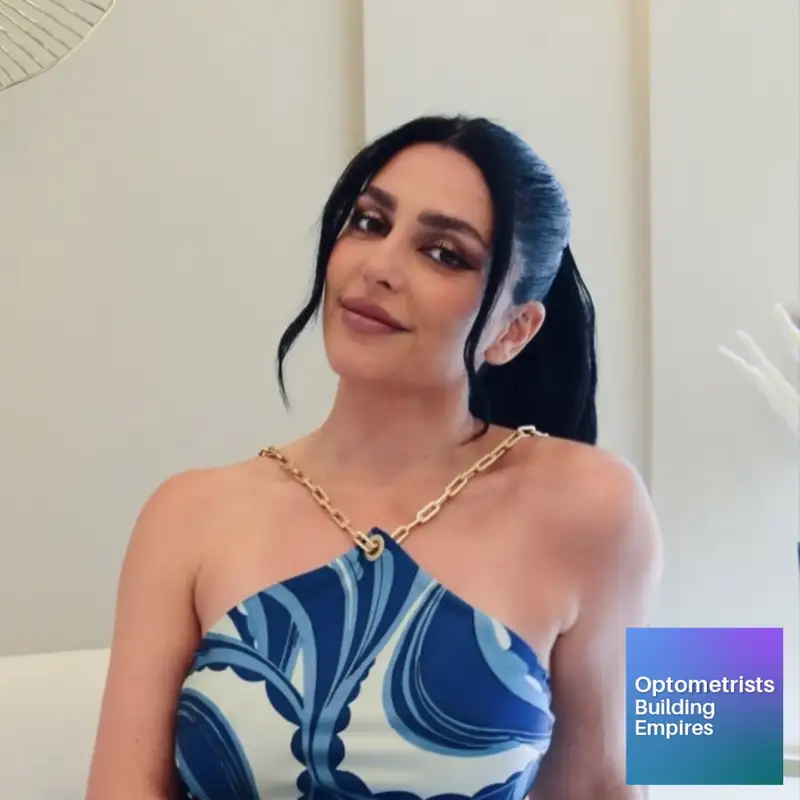
Ankit Patel: Today's guest, I'm excited to introduce you all to. She's a board certified optometrist and nationally recognized dry eye specialist with more [00:01:00] than 15 years of experience treating complex ocular surface disease. She's one of the only Optometrists in the US offering a fully integrated ocular aesthetics program, combining eyelid rejuvenation, collagen renewal, tear film, safe cosmetic guidance, and functional eyelid health. She's a visionary, entrepreneur and co-founder of Dr. Contact Lens, a pioneering SaaS platform, and the founder of a luxury medical spa that is redefining modern aesthetic wellness. founder and medical director of Eyecare and Aesthetics. Please welcome Dr. Jennifer Tobia.
Jennifer Tabiza: Thank you.
Ankit Patel: Welcome.
Jennifer Tabiza: Thanks for having me. I appreciate it. It's exciting to be here.
Ankit Patel: I you're, you're quite, uh, quite the entrepreneur.
It's, it's, it's, uh, really impressive reading your background and,
Jennifer Tabiza: you.
Ankit Patel: You a little
Jennifer Tabiza: Thank you so much.
Ankit Patel: yeah. And, and with that, what was the most important thing that helped you grow your empire?
Jennifer Tabiza: Well, um, a couple of different things, but I think the main thing is that [00:02:00] I really. Figured out what my zone of genius is, and then I kind of based everything that I built on. That meaning for anybody. Right. Figure out what's natural to you. Obviously a lot of us are Optometrists, so what's natural to us is healthcare, taking care of people.
But is there a secondary one? For me, it was. Brand building and brand building was just exciting for me. It was something that I loved. I was like, I want an idea and then I wanna create a whole identity behind it. And that's what I ended up doing. I took my healthcare as like the main zone of genius, and then I essentially built businesses instead of chasing ideas, I was just building businesses that kind of filled in the gap of what I felt was missing.
So I bought my eyecare practice. And I felt there was a technology missing. So I built Doctor contact lens. Once I built doctor contact Lens, I was like, okay, I wanna build a community. So we built Tefi, which is tech companies within our industry. We host events. [00:03:00] Um, and then I built my med spa, which branched off of my dry eye practice.
And then lastly, I started doing consulting and coaching last year, which was really fun. Helping doctors basically do the same, like giving them the tools to build aesthetic practices, dry eye practices quickly without having to like learn the long and hard way. So everything I did branched off of like what I consider to be my zone of genius.
And everyone has one, at least one, right? It's like you probably have a couple and you just, that's your core, and if you build everything off of that. You'll be successful. You don't wanna like just chase a random idea because then you have no passion behind it and you can't build an empire behind something you don't really care about.
Ankit Patel: That, that's a really cool approach. So it, it's almost like you're skill stacking. It's like, Hey, I'm really good at this one thing.
Jennifer Tabiza: Yeah.
Ankit Patel: What can I, okay. I'm gonna be a doctor. Great. I love this. Great. What? I also like cosmetics. Okay, awesome. Oh, I have a
Jennifer Tabiza: Yes,
Ankit Patel: for this technology.
Jennifer Tabiza: Exactly.
Ankit Patel: Spill this sas.
You know what? I'm already in
Jennifer Tabiza: Yes.
Ankit Patel: Space. Let's put some [00:04:00] other people together
Jennifer Tabiza: Yeah.
Ankit Patel: So it's just stacks on top of each other.
Jennifer Tabiza: does, and you realize that once you open one business and you're successful, a lot of the philosophies overlap, right? Like what I learned at Doctor Contact Lens, I applied to my med spa, I applied to my coaching business. It was just, you have to learn how to market yourself. And you have to be willing to put yourself out there.
You have to be willing to be seen and not worry about what happens next. You know, you just kind of throw yourself in and the more you do it, you get more comfortable and then, You know, I'm sure I'll be, I'm sure this, these five things won't be all I do because it's now just a process for me. I'm like, oh, here's an idea.
Let me go through my process to bring it to the world.
Ankit Patel: I love that. So as you are growing your quote unquote empire and, and you've done it really cool different um, were something you, what was something you ran into that you didn't expect?
Jennifer Tabiza: I think that I didn't expect the [00:05:00] level of complexity in selling a product. You know, sometimes we all love what we do and we think if we bring it to the world, everyone will love it too. But the key thing that I had to learn that was difficult for me was making sure people understood the offering. And it seems so simple to someone who's created the vision, right?
Because it's in your mind and it's obvious and I use it and it's great, but your messaging, I've learned so much about. Proper messaging and I'm still learning to this day. I invest in understanding marketing and brand voice all the time. I'm constantly reading, listening to podcasts, You know, I'm always trying to learn what else can I do to make my vision really clear to people?
Because there's so much messaging out there, it's easy to get lost, uh, when you're wanting to. Present something to the world because everyone's presenting something to the world. So I think that that is the key thing that I had to learn. And it's not an easy, it's not always as easy as it sounds.
Ankit Patel: [00:06:00] Yeah, I, and, and I, and I love that honestly, very, it, it's, I you have a sense of humility, right? It is like, Hey, I'm gonna get basically punched in the mouth, but I'm gonna keep getting back on the horse. So, so talk about why, why keep going, right? Because like, it's difficult to do some of these,
Jennifer Tabiza: I mean.
Ankit Patel: Going.
Jennifer Tabiza: Keep going because it keeps life interesting. I don't wanna have a monotonous life that's predictable. I want to have challenges that help me grow. I feel like that's what we're all doing on this planet. To be honest, some of us don't necessarily always have the time or the energy to challenge ourselves.
We have families, we have things going on in our lives, how things, but. There is always room for growth in our personal journeys, despite everything around us, and business is one of the best ways to learn about who you are in this world because everyone is their own personal brand. If you're on the internet, you can see that, right?
Everyone has their own unique voice, own unique offering, and you never know what you offer and how it might impact somebody else's life, even if [00:07:00] it's only one person. That's still profound. It's still like a butterfly effect on, on the. Collective. So I think that, You know, yeah, it's, it's challenge. I, I don't like to not be challenged and I don't like to not create, I think humans would be better if we created more and consumed less.
I always say that we consume too much and it just, it's like a toxic loop. If you're always creating something you don't need to consume as much. So I've noticed that about myself.
Ankit Patel: Yeah, I, You know what? I will say from personal experience, it's a lot harder to create than it is to consume.
Jennifer Tabiza: course, of course it takes that brain power, the brain juice, but, uh, it's there. We all have it. We're all giving it, You know, we just have to exercise it. It's like a workout. When you start working out, you get used to it. Your brain is the same way, so you just gotta challenge your brain, and your brain likes to do new things.
It's never done before. That's how you create new, new neuro pathways in your mind. So. You know, you can become [00:08:00] a, an athlete, so to speak, of becoming resilient and learning how to challenge yourself, but it's worth it. It's always worth it.
Ankit Patel: How do you approach learning? Because like a lot of this seems to be learning is a key fundamental skill, maybe a zone of genius for you as well, but like how do you approach
Jennifer Tabiza: Information. Yeah, I, I'm a huge sponge for information in general. I don't think, I always, I think there's two important things if you're going to bring things into the world, one of them is. Always learning, right? Leaders or readers is a great quote because it's true. If you're not a big reader. Listen to podcasts.
Listen, listen to the book. I'm actually a big audio book person because I'm very busy. So on my drives, I'll either listen to music, which is always good for your energy too. Or I listen to a book, there's really nothing else that I do. So you realize you do have a lot of empty space to. Take in information.
You just have to find the best way for you to gain, gain information. I even scroll on TikTok. I [00:09:00] follow a lot of great business coaches on TikTok and I love to watch their little clips, whatever it is that gets that information in. And the other best way to learn is to share what you learned. So I, You know, I the I post.
On LinkedIn, what I've learned, not really always for somebody else, but for me. So I, I can glue that into my mind and really understand it. And then of course, it's great to hear what others think as well about what it is that I'm sharing. So, um, I've been doing a little bit more of that lately because I feel like I'm finally at the point in my life where I've gathered enough knowledge and.
Experience or, okay. I can really, I feel like I have some solid things to share. Um, but I've spent the last 10 years being a, a very serious student of business marketing, branding, personal branding, all that kind of stuff. ~Don't mind my dog. Sorry.~
Ankit Patel: I, I think, um, that seems to be a common theme with a lot of folks we have on here is the, the learning and liking to learn. Interesting. Kind of keeping the antenna [00:10:00] up, right? It's like, oh, what's out there? What's interesting, what's cool?
Jennifer Tabiza: You know, most Optometrists probably like to learn because we all went to school. So I think we all have that in common, and sometimes you want something different to learn other than disease, and I think it's okay to expand your horizons beyond that because there's so much, there's so much information available to us now on the internet, so we might as well.
Go after it and see what it brings to even the way you provide healthcare. Everything affects everything, You know, so what you learn about business can affect your relationships, it can affect how you provide care, all that kind of good stuff.
Ankit Patel: Yeah, I like that. And, and in your, I'm just curious, you do consulting work, You know, I, I'm guessing helping practices get up to speed on aesthetics, things like that. But you also work in terms of like, hey, what, what is your, what is your passion? Like, what are you interested in? Like, what do you like to learn about?
Is that a part of the, like how you deal coach and, and work with folks too? I'm kind of curious about that.
Jennifer Tabiza: I absolutely am a student of manifestation energy, human psychology, all of the things that not only drive us. But also how do we [00:11:00] bring forth our visions into the world? So I don't know if you've heard of Neville Goddard or Napoleon Hill. These are great teachers of energetic manifestation mindset coaching, right?
How do you 'cause, because if you learn something great or you wanna bring something great to the world, you also want to properly know how to believe in it, execute it with the best energy that you can provide it. Everything is energy in this universe anyway. So if you have a great idea and you don't have the right energy behind it, it won't really end up circulating within the universe correctly.
So I, I love, I love that kind of information because Napoleon Hill is really famous for saying you have to see it before you achieve it. There's really no way to bring your visions to the world if you can't already see it. Coming to fruition if you can't already see the success. Because behind most of what we do, we wanna be validated with success.
Success indicates to us that what we [00:12:00] brought has value and that we should keep going and we should keep offering more. And I think that most people have a lot to offer. It's just about making sure. That people can find that information, get it from you, believe in it the way you do. That's the energetic part of it.
So I like the mix of the two in terms of what I like to learn.
Ankit Patel: Yeah. You know, I, I remember doing a, I was doing my master's program in org development, organizational development.
Jennifer Tabiza: Okay.
Ankit Patel: One of the things we were studying about it for positive psychology was, uh, what are some things that really cause change that people to take action and go after these big picture visions?
And there were two key things that fit into that, which you're kind of saying is hope and efficacy. Hey, you have to believe that you can do it. And, and, and then the other thing is like, oh yeah, I, I feel optimistic about it. Right. And those are seem like the two key ingredients that kind of tie in with your, your idea of like, your concept of like Oh yeah.
Vision, right. As part of it. Right. You get, like you said, you have to, you have to see it, you have to believe it has to kind of buy into it somehow, right? Yeah.
Jennifer Tabiza: And somehow [00:13:00] you have to learn how to ride the wave because there's no human way to be positive all the time. So you have to find a way to reset your nervous system to rebel. Believe in yourself. That's why reading is so great, because the moment you feel doubt or fear or, oh, this idea isn't gonna work when you read.
Again, and you read that next book and you get reminded that it takes perseverance and resilience for things to happen. It kind of gives you that ammunition to keep going. Most people don't necessarily have a strong cheerleader in their life, so that I think my books are my cheerleaders. Not that I don't have anyone saying Go, go, go.
But the human psyche needs a lot more than probably our friends and family can always offer, especially if you're bringing a vision to the world, especially if you're building a big business or. Even a small business, it doesn't matter. Um, there's ebbs and flows and it's when you're ebbing that you really need something to lean on.
And I find that information [00:14:00] is a, a great coach, honestly. And. Also have those people to help you out. You know, I have business coaches and consultants that I work with all the time, and I work with different types because they have different information to help coach me on. I've invested a lot in that as well, and I find that that's always, always been worth it.
So, You know, if there's something you wanna do in a certain industry. Find a great coach in that industry and invest in learning from them and having someone to guide you through it. That also is something I think that is really, most people that are very successful have, have used in their, in their path of entrepreneurship.
Ankit Patel: Yeah, I like that. Um, I wanna shift gears and talk a little bit of tactics
Jennifer Tabiza: Okay.
Ankit Patel: A lot of folks are having challenges right now with staffing, staffing challenges with their offices. What are you seeing both from your consulting, your, your software and your own practices of how people are dealing with that?
Or maybe you have some secret sauce that, that you're doing well or maybe you're struggling as well with it. Like can [00:15:00] you share some stories around that?
Jennifer Tabiza: I do, people pay me to help them with that. So I'm happy to give some free advice. So I never do job listings. I always recruit. And one way that it can be really great for you to recruit is first of all, build a community, whether it's on Facebook or LinkedIn or YouTube. Start to create a community with other Optometrists or if you're in any industry with people in the industry because you can then start to have a place to be like, Hey, I'm hiring, and people know who you are and can spread the word.
The second thing that I do is I never ever list a job on ZipRecruiter or Indeed I do the opposite. I will actually use something called Resume Finder on these platforms, and I will put in the key words of exactly what I'm looking for. I will have ai. Scan all the resumes, give me like the top 20 clients and then I offer them a job via text or, or an email.
Um, so those, those are easier ways to do it. Now, I shouldn't use the word easy. It takes a lot of work and effort. Right now I'm actually working with someone who we are [00:16:00] working to hire someone for his dry eye business, uh, patient care coordinator, which I believe you should always have if you wanna expand fully into aesthetics and.
Um, he's having a little bit of trouble, right? It, it's, it's because it takes, it does take some diligence and some time, but you can actually find someone pretty quickly when you look this way versus let me just do a job post and hope that somebody good shows up eventually. That's, I think, the big mistake in hiring Optometrists run a small business and they don't realize that big businesses typically recruit.
That's very, very common. If you need a good optician. Go offer great opticians in other places. Physicians, you never know that maybe they're happy, maybe they live far from the office, you don't know. So you've gotta put the energy in. Um, but I always find people, oh my gosh, if I need to hire someone, it never takes me more than two weeks because I usually use these modalities to find someone.
Ankit Patel: Gotcha. That's interesting. I like that community aspect. That's really cool. [00:17:00] I haven't heard that one yet. That's really.
Jennifer Tabiza: Yeah.
Ankit Patel: How long does it take to build the community? Like, how long did it take you? How long do you typically see people take to do that?
Jennifer Tabiza: You know, a community is something that takes a lot of nourishment. You have to not only consistently provide your voice, but you also want to engage with others who are providing their voice that you enjoy. And this is something I've done over the span of 10 years. I pretty much started really creating a community when Bria and I started FY about five years ago.
And this created a community amongst. Me and all of the other tech founders within Eyecare, and that's a really great community for me because I offer tech. They offer tech. There's so much overlap for us, so we can always be a resource for one another. With the Optometrists, I think there is a strong optometry community already, which is great.
You just have to kind of jump in. They're posting on Facebook, they're posting on LinkedIn. They wanna learn more, they wanna do more. Everyone is looking for their own niche. Practice, which I think [00:18:00] is the absolute right move for 2026. If you are not building a niche practice right now with all the changes in the world, you're really not securing your practice against the changes of the future.
So whether it's myopia management, aesthetics. Dry eye vision therapy, behavioral optometry. These are things that are resilient to some of the upcoming changes we're seeing with tech and also the way people view healthcare. They want customized healthcare, otherwise they don't want it at all, and they'll go the cheap and easy route.
So if you're not offering a really curated experience, you're basically just going to be left behind with the masses as the world moves forward.
Ankit Patel: That is gold right there. I think you just hit it on the head. That's brilliant. Um, and optometry is a unique position to, to do that. That's actually a really great way of framing it.
Jennifer Tabiza: Yeah,
Ankit Patel: it's not curated, then there's no differentiator and they're just gonna go after the It's commoditized.
Jennifer Tabiza: yeah. Everyone knows you can get an online eye exam now. So if, what is the difference to a 20-year-old at this point? And [00:19:00] they didn't grow up with? Healthcare being what it was when we all started practicing. I shouldn't say we all, I'm of the millennial generation. We've been practicing 10, 15 years, so things were different even when we started, and it's going to change, You know, not to scare anyone, but actually to rather motivate them to think about what can they do if robotics are taking over a lot of the mundane things.
What can I do that a human would really find value in? And that's how we have to think crazy enough is what. Can a robot not do for another human? That's what I wanna do. And that's how we all have to think and it's, people can say it stinks and it's not fun and all to think this way, but it's just reality.
So you gotta always flow with it. What are you gonna do? You can't control it. So you gotta learn how to do the best you can with what you're presented with in the world.
Ankit Patel: And what are some things, let's build on that. What are you excited about for the industry? Right? Can you expand that a little bit more?
Jennifer Tabiza: You [00:20:00] know, I'm actually very excited about the dry eye movement happening and the opening to aesthetics becoming something Optometrists can do because I've done it myself. I started my dry eye practice maybe eight years ago, and then I dry, I started the Med Spa full scale med spa four years ago, and it's more than just a quote unquote med spa.
We do wellness, regenerative medicine, aesthetics, things like that. Things I'm passionate about and I. Never knew I would have the door open for me to open a business like this. A, it's something I'm very passionate about, but B, what I realized was once I learned how to run an optometry practice and the other things that I do, that it was really no difference.
Opening up a practice in a different field. I am not the medical director and I'm not the provider. I am just the driver, the owner. I know how to operate it, and I have the patients that wanna come to it. So a lot of doctors think, how can I offer aesthetics if I wasn't even trained in it? The answer is you [00:21:00] don't.
You hire people that do, and you've already got the foundation to set it up. You have a practice that people come to, so there's this. New wave happening of us being able to help them with eyelid issues, uh, skin wrinkles, tightening, You know, the things people do care about when it comes to their appearance and they feel the only other option might be a plastic surgeon, but.
You have tools like the Opti Lift or Opti Light or radio frequency. There are so many things you can do now, and I think that everyone should be trying to figure out how to incorporate it in their practice because it's something people want. And the other great part is we don't have to worry about insurance, which is a real big relief to our industry.
So
Ankit Patel: Yeah.
Yeah. So you're in the tech space too, in the industry. Where do you see tech going? You've kind of hinted at that. What, what do you see as, yeah.
Jennifer Tabiza: You know, tech is interesting right now in eyecare. I don't think Optometrists yet have valued tech for the things it can do for your practice. [00:22:00] Most business owners right now, uh. Optometry practice. Business owners are over the age of 35, so that means that they opened it or they bought it in a time that was really different than right now.
And having a meaningful small business or practice, or even if you own 12 locations at it's not so small, it really doesn't matter. What's happened to a lot of us is we've hired all these people and we feel like, why do we have people? If we're just gonna have tech do everything, And so they keep the people and then they don't invest in the technology.
And the bummer about that is you don't realize how much more people can do now that we have these assistants to do the busy work for us. Humans don't like mundane tasks. There isn't any human that likes it. There really isn't. There's no such thing as someone who is obsessed with data entry or obsessed with insurance verification or obsessed with processing contact lens orders manually.
So the thing about it [00:23:00] is people are now wondering, well, if I invest in all these technologies, what is my staff gonna do? Your staff's gonna connect with your patient. And get referrals and keep them coming and give them a warm and inviting experience. They're not gonna be worn down and tired. My staff is barely on a computer.
They are talking to my patients the entire time. They're sharing experiences, they're selling product, they're talking about their family, You know, whatever it is. Those moments that create the connection between new practice and the patient. That happens because of humanness. So I think that's important for Optometrists to start to shift their mentality because when we started selling Doctor Contact Lens, that was a very common comment.
They're like, well, if Doctor Contact Lens is gonna do all of our ordering for us and all of the automation, and they never have to come back to see us to to manually order it, what's my staff gonna do? And I realized that they haven't really fully conceptualized. Shift of what does it mean to use [00:24:00] technology and still have value to the people that I have in my practice?
And I think there's more, you give them more value and you also give them a more sound mind because they're not gonna be spending the rest of their life doing these horrifying, mundane. I, again, I don't know anybody that likes doing administrative tasks, You know? And if they do, they're probably the type who prefers to be home working on their computer, not with people anyway.
Right. So. We have a business of connecting with people. That's what optometry really is at the end of the day. Everyone knows that. And so it allows you to do that, and I think that's a really important reframe that we all need in this industry.
Ankit Patel: Yeah, I like that. Hey, You know, there's, uh, my background's in lean manufacturing and, uh, in that world there's a concept, uh, called judoka.
Jennifer Tabiza: Okay.
Ankit Patel: Japanese word. It basically means, uh, automation with a human touch.
Jennifer Tabiza: Yeah,
Ankit Patel: and the core
Jennifer Tabiza: that's perfect.
Ankit Patel: And the core. concept is, um, hu robots work for humans, not the other way around.
And [00:25:00] manufacturing, it tends to be everything gets built around the automation versus like supporting the humans. But I think, um, healthcare is more human focused anyways. I think that's a really helpful
Jennifer Tabiza: Yes,
Ankit Patel: we try to take. It's like, okay, well yes, this is great. Now we need to be able to, now, what can the staff do to develop that connection, that world class service?
What are some unique things that no one else is doing that we can do?
Jennifer Tabiza: Correct.
Ankit Patel: We have this time.
Jennifer Tabiza: And if you look at any top performing business and you see their reviews, it's always about something to do with the human connection. It's very rarely, oh, they had this tech and I was so impressed. So it's not gonna build your business in that way. It's going to give your staff the ability to become a, a huge connection to every person who walks into your business, and that's how your business actually grows.
So it's kind of. It's like a bridge. It's a bridge to creating more human connection despite what we think. So yeah, I think it's, it's been a game changer for us. We have so much time to connect with our patients because nearly everything I do is [00:26:00] automated. And, uh, I didn't start out that way when I started practicing.
That's why I created Doctor Contact Lens. I calculated how many minutes the staff takes to order. By the time they dispense it and bill it and invoice it, call them to pick it up. It was like 25 minutes in order. And I was like, geez. I mean, and contacts per box are not the most profitable thing, so you have to sell 'em in volume anyway.
You have to sell it in volume in order to make money. So I was like, this is really crazy. I would rather be doing a lot of things with that half an hour, and that's why I built it. So, You know, and it did change things a lot. You know, the patients were ordering from us again instead of going to other vendors online.
Asking for their prescription. I mean, it still happens to a small degree, but we have a 90% capture rate, so it's pretty good.
Ankit Patel: That's really
Jennifer Tabiza: Yeah.
Ankit Patel: Uh, so I wanna shift gears a little bit. Well, tell me a little bit about yourself. So can you share us a story that was formative to you, that made you who you are [00:27:00] today?
Jennifer Tabiza: Well, there's so many to think about. I think that one of the stories that really impacted. My journey as a human, but also as an entrepreneur, sort of both was one of the first times I made a huge investment in myself and I crashed and burned from it. So Bri and I had designed this platform, doctor contact Lens, and we put our life savings into it, and this web developer basically created nothing and took all of our money.
Right? So it was the first time I was like severely scammed and also. Really pushed to a choice. Do you believe in it so much that you've tripped and fallen, right? Are you, are you gonna get up or are you just gonna go, forget it. This is a sign. I'm not meant to do this. And I think about that a lot because that event.
Shaped the way that I moved forward for the rest of my entrepreneurial career, but also it [00:28:00] affected me in my resilience as a human in general, because when we overcame that, I realized the power of intention and the power of positive belief. Also, the power of just manifestation in general, and I think that.
I have had endless challenges since then. That wasn't the first one. That was like, oh my gosh, that was the first of many. But what happened? The first one was devastating, right? You cry, you freak out. You don't know what to do with yourself. You really, you, you have to even soul search whether you're meant to do what you're doing when you fail that hard.
But what happened was, because we had each other and we picked each other back up, we believed in it so much and we moved forward. Now, anytime a disaster happens, I can kind of go back to that moment and remember what it felt like to bounce back and how, how it just happens. Like if you just keep moving [00:29:00] and you don't put too much energy on what the failure was.
It's actually so amazing what's on the other side of it, and let me not let me say this. You decide how much time you spend mourning your bad decisions. I always give myself 24 hours. I give myself 24 hours. Uh, something came up recently, uh, maybe two months ago that was pretty devastating for. It was a, it was a personal thing.
I gave myself 24 hours and I made a decision that this wouldn't be the story. And the way things have already turned around in 60 days is actually nothing short of a miracle. It was just my mindset of being like, no, I reject this reality. I am going to believe in an alternate version of this story until it manifests.
And little by little, these little things were shifting and I was like. I learned that from that initial big mess up because I can't think of one. I had that that big before then. That was my truly first yikes moment of my life. [00:30:00] So
Ankit Patel: I'm, yeah, that's, that's a lot. That's scary. That's gotta be frustrating,
Jennifer Tabiza: yeah,
Ankit Patel: sad. Yeah. Yeah. It's a lot of emotions tied up with that.
Jennifer Tabiza: it's a lot of let down emotion. It's also lost hard work money. You know, we were only practicing. Five years at that point. So our life savings was based on five years of hard work, and we could have paid off our student loans, You know, so, so we didn't, instead we kept going. Um, and I learned a lot of that honestly from, from having a co-founder, because what, what ends up happening is.
When you're down, they're up. When you're up, they're down. It kind of just works and you figure out how to motivate each other all the time. You never have room to both be upset, I'll tell you that much. You have to figure out how to be there for each other, otherwise you won't make it, You know? And I think that's probably the same rules for even a good marriage, right?
It's like you gotta learn how to always, when someone's low, you've gotta be up and you've gotta be able to do that for one another. I think humans all need to do that for one [00:31:00] another, and that's how we all grow.
Ankit Patel: Yeah, I like that. so what, what advice would you give to your younger self grad af right after graduating OD school?
Jennifer Tabiza: I probably would have said to myself,
Ankit Patel: I.
Jennifer Tabiza: You're gonna be amazed at the things that you do with this career choice. And I think that message is also important for anyone in this industry or any industry. When you start in any kind of specialty, whether you're an optometrist, a doctor, it doesn't matter.
It ends up being something that can be anything you want it to be. It's not always the cookie cutter. Expectational, I'm just gonna be an optometrist and that's it. There is so much more you can do, and I think we're all seeing that in our industry. There's so many people that have really worked in the industry on top of their own practices.
They've built other things, and it's been incredible for them and for the entire industry.
Ankit Patel: Yeah, I like that. [00:32:00] Um, And so I'm curious, You know, there's a lot of, a lot of folks, it's hard to build an empire yourself,
Jennifer Tabiza: Yeah.
Ankit Patel: I'm curious who, who you have that you, you kind of like, Hey, You know, this person's someone I follow or interested in. Like, who are some of those people you'd like to give a shout out to?
Jennifer Tabiza: In our industry,
Ankit Patel: Any industry, anything at
Jennifer Tabiza: oh gosh, there's so many. Well, I have to pick some, huh. You know, I've seen, I've seen some really incredible things. From founders in our industry like fy right? Which is a very similar, uh, technology to doctor contact lens. Um, that's Dave Barton, who's the founder of that. He does basically the same thing we do, but with online glasses sales.
And they actually came up in the business a very similar time as us. And um, You know, there are so many that I'm thinking of right now that have created. So many communities and interesting visions in our industry [00:33:00] that are all inspirational in their own way. I don't think there's like one where I'm like, oh, they've done it all.
But I think all of us have sort of, it's almost like we're part of the same graduating class. Like we all started a business within eyecare to offer a better way to practice in this industry and. It seems like we all started like five or 10 years ago, and we're all kind of in the same place. A lot of them are Tefi founders, You know, and there are bigger companies like the Company Weave, which a lot of us have heard about, wasn't founded by an opt, an optometrist, but I think that's a really great example of.
A profound technology that is designed to support the practice in a robust way. I've been to their headquarters, right? They have an incredible company. Incredible. The energy and the vibe of the team at Weave is really inspirational. So there's no one specific like I can point to over there 'cause I don't even know who the founder of Weave was, but I have met a lot.
Ankit Patel: Now,
Jennifer Tabiza: Well, yeah, they're probably not even the, [00:34:00] they're not the owner anymore, but. Either way. I have met so many people in general at all these businesses that have been such an example for us to also keep going when we felt like, oh, You know, is this right? Should we keep going? Should we give up? Do our Optometrists ready for tech?
You know, that's always been a question for us and probably other tech founders in the industry. And I think, yeah, I think that's, that's been sort of what's inspired me along the way.
Ankit Patel: Awesome. Well, if people wanna get in touch with you, Jennifer, where can they find you?
Jennifer Tabiza: You can find me all over. I'm on LinkedIn, so I'm Jen Tobia there and I have a new Instagram page. I started for giving business and. Advice in growing your aesthetic and dry eye practice? So on Instagram, I am the aesthetic coach od, and you can find me on Facebook, you can find me all over the place. I mean, you just search my name.
I'm on [00:35:00] every platform, so, and doctor contact lens of course is on there too. So yeah, I'm easy to find.
Ankit Patel: We'll put, we'll put those in the show notes
Jennifer Tabiza: Okay. Thank you.
Ankit Patel: Yeah. Well, Jennifer, thank you again so much for being a guest
Jennifer Tabiza: Thank you. Thank you so much.
Ankit Patel: and one of my biggest takeaways is the. Um, the fact that you have to find your core of genius and build on that, right? Whether it's tech, whether it's healthcare or something, there's something that excites you.
Build
Jennifer Tabiza: Yes.
Ankit Patel: Versus trying to build someone else's empire or build someone else's dream.
Jennifer Tabiza: Yes.
Ankit Patel: Your own.
Jennifer Tabiza: And I think that
Ankit Patel: get you a lot further.
Jennifer Tabiza: a lot of people think that success is subtractive, meaning you have to give something to be successful, but if it's within your zone of genius. You wanna do it anyway. So it's actually additive. It's adding to your life. So I always, I always tell people that when they're like, oh, I have this great idea.
I'm like, is it something that's truly to your core part of who you are? Because then it won't feel like work, at least most of the time. Right? Not a hundred percent [00:36:00] of the time. But, so you always want something to add to your life, not take away. So if you feel like you have to sacrifice something to create something, it was, it's not part of your zone of genius.
And that's always a good reference to know whether it's something you should pursue.
Ankit Patel: And it's a heck of a lot easier to fight through the downtimes when it's something that's in your zone of genius that you wanna do versus, yeah, you
Jennifer Tabiza: Exactly. Exactly. So
Ankit Patel: insight.
Jennifer Tabiza: yeah.
Ankit Patel: Yeah. Thank you for sharing that. And, uh, thank you audience. If you learn something or laugh, share the podcast with your friends and make sure to hit subscribe button so that you never miss an episode. And if you see the link for a meeting at the bottom, if you sign up for a meeting, I'll send you a free copy of my book. Optometry Redefined. Uh, thank you again, Jennifer, for being a guest, and this has been another exciting episode of Optometrists Building Empires. We'll see you next time.
That's a wrap on another episode of Optometrists Building Empires. Thanks for joining. For show notes and more Visit Building Empires live. This show is proudly sponsored by my business care team. My business care team was born out of staffing challenges. My wife and I faced [00:37:00] together managing multiple optometry locations.
We refined our approach at classic vision care and now offer our expertise dollars. If you're experiencing challenges with staffing and you'd like to set up a discovery call, we'd be happy to help you and connect you with the right resources. We'll see you next time.
Creators and Guests