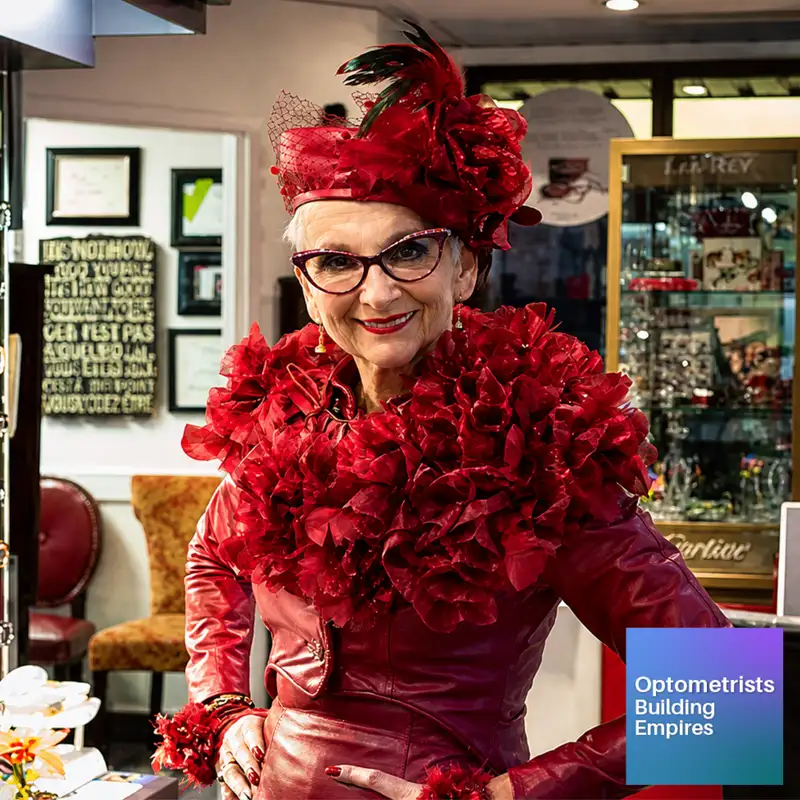
Grit, Legacy, and Giving Back - Diana Mae Monea - Optometrists Building Empires - Episode # 093
OBE - Diana Mae Monea
===
[00:00:00]
Diana Mae Monea: We have it in this business called optometry every single day to make a difference.
And that's why I say I'm still practicing today because I wanna make a difference. And so that's what keeps me going.
So I think that, um, the future and optometry is still bright, but it's different. We're gonna have to deal with things like ai. Where, You know, I can be talking to you, You know, if this is a bot or not.
You know, optometry's got a great, career, a great future, and I really believe that we're in for changes, but those changes are surmountable and I think that if you care, we will never have to dare to be afraid.
This is Optometrist Building Empires, and I'm your host. I'm Kit Patel. Each week we'll explore the journey of practice ownership and leadership in optometry. Join us for insights and strategies from the top minds in our field. This [00:01:00] show is sponsored by my business care team. My business care team helps your office increase revenues, reduce costs, and reduce staffing headaches.
Let's build your empire together.
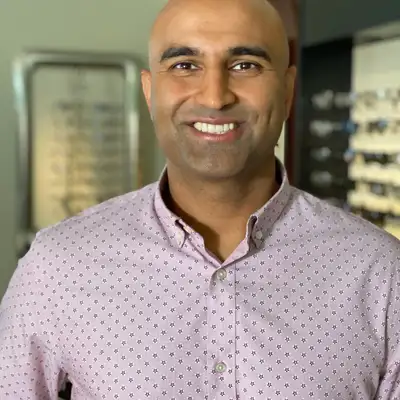
Ankit Patel: Today's guest is someone I'm thrilled to be speaking with, and it's been a year in the making. She's a passionate optometrist for decades of experience in eyecare. She's launched Canada's first optometry website in 1999 and began profiling real case studies online in the year 2000, drawing on a database of over 200 eye exams that she conducted.
Personally, her leadership extends beyond the clinic, having mentored students lecture at universities and joined the Care one telemedicine network to improve access to eye health across Canada. She's also a published author with two books currently published with a third on its way. She's an active member of her community with organizations like not in My City. Last year was a transition period where she finished her master's degree in Human Resource and she went from being owner and optometrist to associate Optometrists [00:02:00] in the practices that she founded, called I Health Centers, which is located in Saskatchewan and Calgary, a of three locations between the lo, between the areas. to please welcome Dr. Diana May mania, Dr. Mania welcome.
Diana Mae Monea: Well, well, thank you very much. first of all, I've done more than 200 eye examinations, more like 200,000, but or more, I don't know, in a period of almost five decades. Um, anyway, it's a pleasure to be here with you today, so thank you for inviting me.
Ankit Patel: Yeah, of course. And with that, the first question we always have is, what was the most important thing that helped you grow your empire?
Diana Mae Monea: Well, I think that pro, probably, fear and perseverance and that I want to really show, um. That anybody, You know, when it's not easy, you gotta get over the obstacles and keep going. And although, there have been many challenges throughout the years, even what it [00:03:00] was when I started in 1978, You know, for women to get, money at a bank, where interest rates were 24% and all you had was your degree and that was it.
Fellow colleagues.
Prepared beyond belief, went to the bank and the banker said your father would've to co-sign a loan. so I mean, how is that fair? So I had to come up with another way of finding a way to get the money and, huge student debt and start my own career because really nobody wanted me. Nobody wanted a woman because basically, she would just have children and then she wouldn't practice full-time.
It would be an economic loss.
Ankit Patel: that's tough. Perseverance. You know, I talked to my wife, she's an optometrist. She technically owns our practices. And so she's a doctor and You know, we talk about that and I couldn't imagine coming up when you did, how much harder it was. So tell me a little [00:04:00] bit about, what made you keep going?
Why, why'd you want to do this then, You know, there's a lot of barriers put in place. What was that driving factor for you?
Diana Mae Monea: Well, I really wanna tell you that, coming from, I think it was probably abject poverty and the only way that you could get anywhere was actually to do it yourself. The only person that you could really count on. I really believe at that point with yourself and really, You know, as time goes on, you realize that if it's to be.
Or to me. And so I had to, reprogram everything. Um, You know, when I got accepted into optometry, there were only three, positions in Saskatchewan available. there were 40 across Canada to get into optometry. I didn't have grade 13, And so I had to do first year of optometry together with grade 13.
And of course, leave, You know, the province that I was at. to go many miles to the other end of the [00:05:00] country. And so, um, You know, um, it was, um, I'm gonna do this. I'm bound, determined to do this. Um, the only person I can believe in is myself. I've gotta do it. And so, I suppose perseverance, grit, resilience and probably stupidity were the factors that drove me there.
Ankit Patel: Yeah. You know the one, some of the common themes I hear are people who grew up with less, less fortunate means, or athletes or a combination of the two. Those, those are folks that are common themes that we hear from guests on the podcast and. curious, You know, you grew several locations, Canada also expanding your reach in other ways. Um, when you were doing all this, You know, what, what'd you run into that you were like, oh, I didn't expect this at all. Right. Some of this stuff you might've expected. Yes. You know, there's quite frankly, some sexism and bias against women as you were growing up. But like, what are some of the things they ran into that you didn't [00:06:00] expect growing your, practices?
Diana Mae Monea: Well, I think the most important thing is that no matter where what you do, it really doesn't matter. The kind of money that you make is giving back to the community. I think that, You know, living life is like, um, You know, opening a bank account. If you keep making deposits, uh that's one thing.
But if you withdraw the money because for yourself, that's another thing. And then you end up bankrupt. So my thing was, is that no matter how much. You did, you always have to give back. And when you gave back, um, it was a much greater feeling than just making the money. And so my, my thing is, is that I think that in this profession of optometry, we have a unique position where we can change the view of people every single day.
And you don't know really. we have the ability to not only improve their sight, but we also have the [00:07:00] ability to see their soul, not to mention all the other diseases that go on inside. And so I think when you can just take a child and a change their direction by virtue of. Improving their vision or giving them a pair of glasses when no one else does.
And, giving back to charity. You know, those moments are incredible. And I remember the case of, wasn't that long ago, maybe a decade or so ago, where a young girl came in, brought off the street, um, by a street worker. She was visibly pregnant due to have her baby in just a, I don't know, maybe a week or so.
She came in with her boyfriend and the care and the, street worker. her prescription, she had no glasses, was something to the tune of minus seven. And so anyway, I said, well, we have to help you out. And so her, we examined her for free, got her a pair of glasses, and her boyfriend took the glasses to [00:08:00] her.
And, I told her the most important thing when you have a child is to make sure that child is examined early in life because vision is genetic. So years go by and I never really thought about it much. And then, probably a couple years or so ago, this girl comes in with this 4-year-old or 5-year-old, something like that, and she says, I don't know if you remember me, but I was on the street, I was homeless, I was pregnant.
And now I wanna tell you that I am a plumber and an electrician, and I have my own business. And she said, I just want to come back and tell you that I brought my child because you told me it was important. And also to thank you. So when you get those moments. We have it in this business called optometry every single day to make a difference.
And that's why I say I'm still practicing today [00:09:00] because I wanna make a difference. And so that's what keeps me going.
Ankit Patel: that's such a cool story. Like, I, like, I like how it's, it's your, it's your why. Right. And that's another thing that we hear is like, hey, that's, that's really cool. cool. I think Simon Sinek, right? You hear these YouTube videos, a lot of people talk about that. and it's gotta help you get over some of those harder times that you went through, from, from a tactical standpoint.
And so I'm gonna blend a little bit of tactical with, with some of the other empathy side too. were some of the hard things that you ran into with the actual growing the business side of things? Like what was tough about that you didn't expect?
Diana Mae Monea: Well, I'll tell you, You know, I, I don't think it's really ever changed. I mean, there are many aspects of it. Running a business is not an easy job, and it's particularly not easy when you're a mother as well and have children. And of course you have a husband as well. And so, um, I think the biggest factor where, first of all, you have to get out there and you have to.
Become visible. You have to get people to come to you to trust you. you have to make sure the [00:10:00] economic picture is there and you have to get the up to date equipment. So you have to be knowledgeable of, well, what is needed. You have to have foresight into what is, anticipate what you need. I've always bought equipment with the idea of not how much money I can make, but how does it really improve the quality of care?
How can I describe, for example, in OCT, we had an O CT long before it was even, really regularly used. 'Cause I want to explain to patient, this is your, retina. This is what a diabetes is doing to you. I'm showing you right now. Candidate, in, a situation where there's no return. And so I really believe that, education is the most important.
So. In running a business, in the tactical side, it is a mishmash of where do the patients come from? How do you develop the practice? How do you buy the equipment? How do you keep [00:11:00] current, how do you make everything pay for itself? And so it's, it's a, it's a real big factor considering you've got insurance.
That doesn't a certain amount insurance, you can be deins insured, which has been a case that we've had in this, province in the country lately. And, so we've had de insurance by healthcare and all of the different factors. And now economically with all the changes that are occurring, You know, people are having a tough time putting food on their plate, paying for the gas And so on.
So how do you manage all of that?
Ankit Patel: so let's talk a little bit about your, your transition. You know, I'll let you share whatever you'd like to share. but can you share with what it was like to go from owning, starting the practice to becoming an associate? and You know, why now? Why not earlier? Why not later?
Yeah, let's, let's start with that. What was it like?
Diana Mae Monea: Well, You know what? Um, there comes a point in your life when you have to make [00:12:00] some decisions and, my husband and I have been looking at a number of things. Should we do, should we sell a corporately? Should we do, private equity? Should we, sell to associates and whatever else? I've had a number of associates throughout the years.
Not everyone wants to be involved in running a business because it's not easy. And, things have changed and, the pressures, economically and in other ways are very, very difficult. So we had looked in a number of different avenues and the process of making decisions about I want to keep the culture the same.
I wanted to keep the, what I'd state the legacy to produce a legacy and continue that. I wanted to not make it into a cookie cut, cutter thing where basically it was this and represents this. I want to keep that, um, what represented myself and to the patients as well. Now, You know, um, the most difficult thing comes, or sometimes [00:13:00] it's like a movie.
You don't know when the scene is gonna change, And so. One moment I'm speaking to you, and the next moment you're no longer here. That is a case with my husband where I was speaking to him and one hour later, really he was deceased because he had, an a, aneurysm. And so that's. Just that quickly, how things can change.
So then everything catapult onto myself because he was the controller of the business for many years, an engineer. And so many of the systems that we set in E rm, EMR And so on had been set up by him And so on And so forth. So all of a sudden I became from. not only a practicing optometrist, but I had to be a controller.
I had to deal with all those different things. It all fell on upon me. And of course, at that point we were more worried that with my daughter, it's a heart condition and a RBC, which is, um, kind of a genetic heart condition, and she has two little kids. So we [00:14:00] had that to deal with as well. So when crisis strikes, You know, it's like a falling set of dominoes where your life changes completely, almost overnight.
So you have two approaches once again, as in starting practice to this a sudden life change. How do you manage it all? And I'm gonna tell you something, the most important thing in this life, and you find out when you're at your very bottom, who's there to pick you up? And I'm gonna say the people, the staff, that.
The associates who were with me, the long-term people that we have had in our business are there and still are. And for that I'm grateful. And for the strangers that came in your life, You know, that you never expected to, to help you. And You know, I, the office was kind of like a funeral and people were saying like, is this a funeral home?
There are so many flowers. It's just really [00:15:00] unbelievable of how people wanna help. And it's unconditional. So I just have to say, um, You know, even the patients, I mean, it's just, it's like I, I really have to feel guilty about how well, and how lovely people have been to me so much that one of my friends is a director in movies and she's actually, um, gonna display a, um.
A movie that she's made of myself and my career, and that's supposed to debut very shortly about the journey. And, and I, and she hasn't shown me this 'cause she wants to surprise me, but No, You know, I, I've been very fortunate and, You know, I really don't even know how to say it. It's just that. Matter.
We look at this world and look at how difficult it is at times, it's amazing how people come all the time, And so I'm a very [00:16:00] person.
Ankit Patel: Thank you for sharing that. I know that's, um, it's been a tough, tough year for you and that could have been easy,
Diana Mae Monea: to go to the other side to run a business and be kind of like this side. It's, it's not easy. It really is not easy. And are you ever prepared for it? The answer is probably no, but for all of us, there is going to be a time when. You have to make that decision and should you make it early? Yes. And so I'm doing a, a little, um, You know, a, a seminar on, on succession and whatever else.
And I think when you start a practice, you get so involved with the practice. With family, with running things, with, You know, changing all the changes that occur, You know, in optometry that are certainly changing right now. And we forget that at some point it's all gonna end. So I think that if I were to give anybody something, having gone through all the hurdles that are there.
You always [00:17:00] should start a practice with the idea of succession. In other words, start something with an end in mind because you never know when it's gonna happen by series of circumstances.
I love practicing. I love my patients. I really don't wanna end it. Do You know what I'm saying? I want to, now, this is a stage in my career where I wanna give back and help other practitioners of all the things that are necessary done, because even though, the world changes, it doesn't really, because things, You know, in my day when I started practicing, interest rates were 24%.
And so, I mean. This is nothing compared to where we were. So, but there are circumstances that are different, right. And the competition is much greater because we didn't have all the, the entities that we have now in terms of competition. I mean, when I was an optometrist, I did everything. It was kind of like a one man show.
I mean, You know, we had articulated lenses. we didn't [00:18:00] have IOL. So, where, You know, people could get. An implant put in and then they could see again. We didn't have that. So, You know, we've got competition on many different levels. It's just.
Ankit Patel: , I like that. Um, And so building on that a little bit, what are you excited about in the future, right? Whether it's yourself or the industry, what are you, what are you excited about? what do you see that's really on the horizon?
Diana Mae Monea: First of all, I would like to see the world in a better place so that there was hope for everyone. I, I really have to say that after COVID things have really changed and you see, because I've seen in fifth generation of patients and still see them. I really wanna say to you this, that my concern for all of us is the anxiety that people have.
Over what's happening and we don't know. We, we, seem to be lost in a [00:19:00] culture that's so anxious written about what tomorrow is gonna bring that we forget to live today. And I think that instead of just what's in it for me, I think we have to look at things differently. That's why I took a master's in human resorts because what is with the workforce today?
I mean, what do you mean? I mean, I'm a baby boomer. If my leg was cut off, I would still show up for work, but it's not the same anymore. And that's a hard thing for me to appreciate. So what did I get out of the Master's of Human Resource? Even though I won three scholarships and whatever else, and I'm an old person.
I did learn one thing. I'm not sure I learned a lot about human resorts, but what I did learn is that all generations can work together. Every generation has something to offer. And can you imagine a world where everybody contributes? Can you imagine what we could actually create? [00:20:00] And we're not competing with each other.
We're just contributing. So for example, if I wanna learn something new about an EMR or something Yeah. Or something like that. Or how to work, uh I don't know, some new digital thing. I don't wanna go and take a class on that. I can just ask. Generation Z one of my grandchildren figure this out and they it faster than I can even think I'm, because my, my generation know how to use it.
So I think that, um, the future and optometry is still bright, but it's different. We're gonna have to deal with things like ai. Where, You know, I can be talking to you, You know, if this is a bot or not.
Ankit Patel: Full disclosure, we are real people.
Yes.
Diana Mae Monea: I was thinking I could make the perfect seminar by just having a bot here, man. But, I'm just gonna say that, um, AI is gonna be the future in my day. and I never thought I'd hear myself ever say my day, because my.[00:21:00]
A daily contact lenses or contact lenses where you could just buy online or not there? it was a paper file, so we had to go from paper to computer files. That was a big source in itself, and a big change. And not everybody converted. Then we had to go to, You know, people were buying online. What do you mean that's a force against us of people buying online?
Yes, it's, And so. Now we're gonna have to deal with AI is a factor and it will be a factor, but how will it be a factor? So, for example, I can have my eyes examined by online, whatever, You know, and, so I can just look in a camera and I can decide what frame I want And so on And so forth. And then I can just order it online.
So, I mean, there are gonna be many, many changes in this, in this industry. Um. [00:22:00] Good or bad, but no matter how you look at it, if you don't embrace it, you will be left behind. So we've got some major changes occurring in optometry and I think that we're gonna have to refocus on, on how we do things, and that's gonna be a big involvement in terms of, education, in terms of economics and in terms of where we're going.
Will we be able to sit at home as optometrist? Will your wife be able to sit at home as an optometrist and, You know, have everything done digitally and then just report in? Well, that would be it. I mean, I don't know. Maybe, and maybe not. Will that be safe? I don't know. Will we have competition where right now we have where, um, the technicians come into a physician's office and do the necessary tests, OCT, all the different tests that we have pre testers do.
[00:23:00] Send it off to an ophthalmologist who then online determines whether or not you have glaucoma or not, and treat you accordingly. Not even seeing you.
Ankit Patel: that's, that used to be the future. Yeah. Remote
exams, especially.
Diana Mae Monea: is, well, insurance is go that way because it's cheaper,
Ankit Patel: part of it too is just access. Yeah. Like it's hard to treat some of these rural areas
Diana Mae Monea: I mean, I've got a kid that's sick with an eye infection. Okay. So I'll just take, I already have patients doing that because I respond. Patients at midnight say, yeah, I'm, You know, rather than gonna er and sitting there for 15 hours and getting everything else, You know, just send me a picture of your kid.
Okay. Yeah. Okay. So yes. Alright, so we'll treat that then. Then you need to come in the office, because I wanna make sure, in fact, that's what it's, so, I mean, yeah, things are really changing and if you don't embrace it. Gonna be left behind. So it's just like if you're still using paper files, well.
Ankit Patel: It's been a while since we converted. Yeah. Um, so, help [00:24:00] me. so, so I'm curious, knowing what You know now, what advice would you give to your younger self coming right out of OD school?
Diana Mae Monea: Well, I, I, I think, the most important thing is to always keep up to date. I really never wanna stop learning. I really believe that learning is a, is a all encompassing thing, not only for your brain cell, of course, at this age, you worry about like, You know, do you have Alzheimer's because I can't remember where my keys are.
And then I just say, well, it's, it's just not an important thing anyway. But, what I'm saying is you wanna keep abreast of what's going on all the time. You wanna keep learning and you wanna be always a step ahead of the game. And most importantly, when you look at purchasing a piece of equipment or something that you're gonna do, don't think about how much money you're gonna make.
Think about how does it benefit the patient. I've always believed that education is the key, so I can sell almost anything. I mean, I can sell. [00:25:00] Whatever. And You know, my sales per patient are pretty high, and they're not because I'm any damn good at it. It's just that I wanna show a patient, this is why you need that progressive.
Oh, You know, that gives you the wide peripheral field of vision, not only because I'm old and You know, I, I can demonstrate it, but because it's going to make a difference in your life about this, this, and this. So when you educate people and it starts from the chair. You know, if I, the optometrist don't believe in what I'm saying, what I'm doing and don't see a need to it, how can I ever convince anyone anyway?
So the most important thing is don't sell.
Ankit Patel: Yeah. No, I like that a lot. Educate, don't sell. It's actually good. and You know, it's interesting, the, the, um. I think you're right. A lot of folks tend to focus just on, oh, I gotta find a disease, or I gotta do this contact. Instead of taking a look at it from, Hey, what's the best for the [00:26:00] patient and how do you educate them and take 'em through that journey and teaching. So you're almost like a teacher with every patient, is what I'm hearing. Is that, is that pretty accurate?
Diana Mae Monea: So, You know, I think you have to love what you do. Like I, I really would've loved to have been a teacher, so maybe in my next life somewhere I would be a teacher. But I, um, I just think that. It's so much fun with people of all different walks of life, You know, and everybody, You know, sometimes myself get really upset and, You know, but people that You know are not exactly nice.
When people are miserable and whatever else you don't know. They've into, or you don't know what they've been through. And so I never really take it personally.
Sometimes I have to say like, what is your issue here today? You get these grumpy old guys and then they're laughing at the end. It's just because, You know, I asked them directly where it's at. I think that you have to be an actor. The in this, in this field. You have to love what you do and you [00:27:00] really have to love the patient, and you wanna make a difference no matter how cranky they get.
If you care,
Ankit Patel: Yeah,
Diana Mae Monea: you'll always be successful.
Ankit Patel: I like that. And, and, um, You know, I'm curious, so if people wanna learn more about you, Diana, where can they reach out to you? Where can they find out more?
Diana Mae Monea: I'm always buzzing around. They can go to my Instagram, I'm there. And of course, You know, our website has it as well, which is, I healthcom.
Ankit Patel: We'll put that in the show notes where people can reach out to you if, if they want to get connected. And so thank you again, Dr. Moya, for being on the show.
Diana Mae Monea: Well, thank you very much for inviting me and I hope, You know, optometry's got a great, career, a great future, and I really believe that we're in for changes, but those changes are surmountable and I think that if you care, we will never have to dare to be afraid.
Ankit Patel: and thank you audience. If you learn something or laughed, just please [00:28:00] share this with a, with a friend or colleague, and make sure to hit the subscribe button so you don't miss an episode. Thank you again, Dr. Moya, for being a guest, and this has been another exciting episode of Optometrist Billing Empires.
See you next time.
That's a wrap on another episode of Optometrists Building Empires. Thanks for joining. For show notes and more Visit Building Empires live. This show is proudly sponsored by my business care team. My business care team was born out of staffing challenges. My wife and I faced together managing multiple optometry locations.
We refined our approach at classic vision care and now offer our expertise dollars. If you're experiencing challenges with staffing and you'd like to set up a discovery call, we'd be happy to help you and connect you with the right resources. We'll see you next time.
Creators and Guests