Creating the Culture - Kyle Maxam - Optometrists Building Empires - Episode # 089
OBE_Kyle Maxam
===
Kyle Maxam: [00:00:00] The reason why we keep growing is because we, we want to keep making a bigger impact. We wanna be able to help more patients
there's kind of this resurgence of enough is enough.
We, we want to, we don't want someone telling us how to take care of our patients. We want to be able to do what's best for them, not what's just best for the bottom line for the corporation.
we being practice owners, we're, we're creating the culture in the workplace. So if we don't like it, it's our own fault
This is Optometrist Building Empires, and I'm your host. I'm Kit Patel. Each week we'll explore the journey of practice ownership and leadership in optometry. Join us for insights and strategies from the top minds in our field. This show is sponsored by my business care team. My business care team helps your office increase revenues, reduce costs, and reduce staffing headaches.
Let's build your empire together.
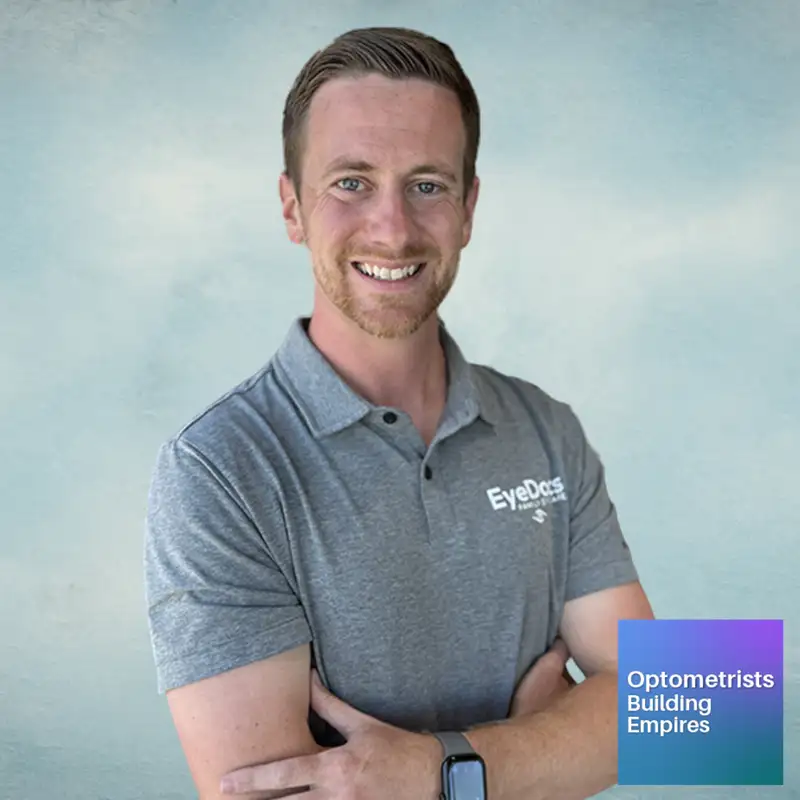
Ankit Patel: Today's guest is someone who I'm excited to sit down with. He traveled to Haiti on humanitarian a mission trips, providing vision screenings, and care to over 1700 patients in need. He took [00:01:00] ownership of an established practice in 2018, carrying forward a legacy of personalized, compassionate eye care in this community.
Outside of his work, he coaches kids, sports teams and stays rooted in the community he serves. He's owner and, uh, at IDocs Family Eyecare, which is two locations in the Dayton, Ohio area. Please welcome Dr. Kyle Maxim. Kyle, welcome.
Kyle Maxam: Hey, thanks for having me on. I appreciate it.
Ankit Patel: Yeah. I'm looking forward to this conversation. And so, uh, what was the most important thing that helped you grow your empire?
Kyle Maxam: Yeah, I'd say the, the most important thing for me would've been, um, just kind of surrounding myself around mentors or, um, just, just good people that I felt like had kind of helped me grow and, and. Get to kind of that next phase of the practice. Um, I come from a kinda sports background. I played college soccer and, You know, a big thing for me was always looking to coaches, valuing their input to kind of help grow and develop and kind of get to that next phase.[00:02:00]
And, um, You know, even from the time we started off in practice looking for the next location or where we were gonna begin practicing, it was important that, uh. You know, finding that mentorship program. So when we were first looking, I went to school out in St. Louis, university of Missouri, St. Louis, and me and my wife, we set up three different interviews with different practices kind of varying from, You know, small practice, um, single doctor, single location to multi-location.
And the big thing that that differentiated the three different visits for us was finding one that the doctor was really looking to help coach and kind of teach. Teach background on the practice. Um, so even though some practices were, um, You know, a little further along in the process and had very impressive metrics for us, it was really about, um, finding somebody who was looking to kind of pass on that information.
Um, the doctor, he, he was two years from retirements and he was looking to kinda not just pass on the practice and just retire, but also wanted to kind of help [00:03:00] us, um, get our, our feet under us and show us the ropes that we could be successful in our next phase.
Ankit Patel: Nice. And so that, uh, that's a really interesting model. So you, you said, so if I heard correctly, you were looking at three different practices to
Kyle Maxam: Mm-hmm.
Ankit Patel: with the one where the doctor was willing to stay on board and coach you.
Kyle Maxam: Yeah.
Ankit Patel: How, much of a difference do you think that made?
Kyle Maxam: Yeah, it, it was huge. Um, so that, that kind of came up as we were first meeting with him was, it wasn't gonna be just a, I come and work for him for two years. That was kind of our, our set timeframe. So we knew going in that, You know, we were planning on taking over the practice eventually. Um, but we, we built in a week, a day that our half day, a week that we could actually meet with him and, and start from the very basics of, You know, reading the p and l.
Um, how do we do payroll? We were still paper records at that point. He was running all of his own payroll by hand, doing all his, his tax reporting. So it was kind of a systematic learning each and every step of running the practice. So we were very intentional about that from the beginning, and then we kind of moved on to frame board [00:04:00] management and running the team and all those, those aspects that you just, you don't hit on in school
Ankit Patel: No, and it is a lot, I imagine. So
Kyle Maxam: Yeah.
Ankit Patel: so as you were growing, as you were learning, um, you run into that you didn't expect?
Kyle Maxam: it was a really slow, gradual process.
You know, he started off, I was only in the practice two days a week. I was working outside the practice at a, a commercial location and then he kind of slowly, gradually stepped outta the practice where by the end of that two years, when I took over, You know, patients didn't even notice anything had changed 'cause he went from less and less time.
But during that time there was a lot of, of ideas that I thought of, of it would be great if we did this in the practice or You know, obviously bringing to paper charts the EHR and. You know, changing some things in the billing. The hardest part was me wanting to do all the, these new things in the practice and then also bringing the team along with me.
Um, so, You know, there, there's a big difference between, um, You know, I think leading a team as well as there is kind of dragging the team along with you. So that was [00:05:00] kind of the learning curve for me initially was kind of. How to, how to put that into practice, how to bring the team along with me and get them engaged, get them bought into where we were wanting to go with the practice.
Um, not just, You know, pulling them along.
Ankit Patel: and so tell me uh, a little bit about some, uh, some things that, know, you tried something that didn't go well, that you thought would work well, maybe some good advice that you got that was like, ah, it wasn't quite right for me.
Kyle Maxam: Yeah. And, and when we, when I took over the practice, so it was in 2018, um, You know, I had had a lot of coaching up till that point in that first year trying to, You know, bring EHR in. We, we were seeing a lot of, of exponential growth during that, that time. It's been growing a lot, but when you're. You're starting at, at the size that we were, where really it probably only, um, it entailed four days a week full-time for a doctor to go into, You know, an associate.
Pretty soon. There's a lot of changes that were kind of new to me that were, You know, beyond what I was. Ready for at that time. So that's when [00:06:00] you, you kinda get this isolated feeling of trying to figure out all the problems on your own. And that's when we actually kind of went for more coaching. Um, we reached out to Aquas Alliance or with Tim Marrigan and, You know, for us that, that was a, a huge step for me 'cause that was able to kind of bring up a lot of the, the, the hr, a lot of the leadership.
Issues I was running into of, You know, I know this is good for the practice, I know this will be good for the patients. How do I help get the team bought in? And, You know, there, there were some things that we run into where. You know, I was always very specific about, or very intentional about the culture that I wanted to build in the practice.
You know, I, I was very in tune with the, uh, practice owner before me and, You know, we had a very similar philosophy and wanting to, to continue where, You know, be a good steward of what he had built here. So he kind of helped, helped guide me through that. Sometimes making tough decisions as far as the personnel goes and, um.
You know, there, there were times where I, I wanted to make changes, but I [00:07:00] didn't because things were going well in the practice and because, um, not wanting to, to rock the boat, but it kind of gave me that confidence of, You know, this is gonna be a good change for the practice. You know, as we were growing, expanding, needing to add new, new staff members, um, it, it, it kind of instilled that confidence in me that?
You know, we have the margin in, in the numbers that this is still gonna be a good move for us and.
As well as, You know, trying to be intentional about how, how we wanted to run the practice. Um, I, I got four kids now, but we, we had a, um, my son was actually born within a couple weeks of me graduating optometry school.
And So. that was always important to me is, You know, I wanted to be at the family dinners.
I wanted to be coaching their practices and, You know, with that, that, that's tough with, with the crazy hours that you might work as a solo practitioner and all the business side of things trying to take care of that So You know, they kind of helped me get intentional about the kind of practice that I'm wanting to build.
And that kinda led to me very early on. Probably before normally [00:08:00] we'd be ready to bring on an associate bringing on a doctor. Um, so that way we could kinda gimme time to, to work on the practice, work on, um, outside of just seeing patients and still kind of have that, that work-life balance that we were shooting for.
Ankit Patel: So let's talk about that a little bit, because I think
Kyle Maxam: Mm-hmm.
Ankit Patel: What a lot of doctors want when they come into practice. They want the lifestyle, they still want the, the income from it as well. they wanna practice, but they may not wanna practice like a full-time doctor.
Kyle Maxam: Right.
Ankit Patel: do You know the rules that people usually give for when you bring on an associate, like how busy you have to be?
Kyle Maxam: Yeah. No, it's definitely, it's scary at first. Um, You know, 'cause again, you're, when you're the sole practitioner, obviously, um. You know, your payroll is much less than what it was. So the margins there, even if we're not, You know, quite as, as busy as I'd like to be at that point. But, You know, bringing an associate doctor, it entailed each time for us and we, we now have three awesome associates at the practice.
Um, but I would always kind of bring my schedule down so I would, I would tighten my [00:09:00] schedule up to allow kind of funnel a lot of our existing patients to our new associate.
Ankit Patel: ~ I didn't mean interrupt,~
~but~
~like~
how,
Kyle Maxam: Yeah.
Ankit Patel: patients did you have on the books on average when you decided to bring a doctor on board?
Kyle Maxam: we started off at, at half hour schedule with our, our, um, schedule, and we kind of moved to 20 every 20 minutes. So full schedule for me is usually 16 patients a day.
Ankit Patel: Were you seeing 16 patients a day booked out like a week or two when you brought
Kyle Maxam: Yeah, about
about two weeks is what I I would start to get anxious, worried about them, You know, possibly looking to go to another practice or trying to get in somewhere quicker. And, and that's kind of been our goal even to today with the two locations is as soon as we went, we were about a month of, consistently a week and a half to two weeks.
That's when we're looking to add in doctor days.
Ankit Patel: I think that's what most people say. Once you get two weeks booked out,
Kyle Maxam: yeah.
Ankit Patel: time to look for another doctor to help expand. So yeah, it's
Kyle Maxam: And it, yeah, and it's kind of funny. We, we, we talk to a lot of doctors or have abouts. It's almost like a badge of honor of we're, we're booked out six months, we're booked out eight months. And, and for us it's always, [00:10:00] we looked at that as a great opportunity in our area. If we see a doctor that's booked out six, eight months, because again, a lot of people just, they don't have the, the patience to, to wait that long to see pa, to see a doctor.
Um. Even if they've been seeing that provider for a long time, You know, something comes up. So we always wanna make sure that we're very available. We are more of a, a small town community, so we wanna make sure that we're, we're accessible to all of our patients and that they can get in a, a timely manner.
Ankit Patel: were you working on when you decided to take step back and work on the business? You mentioned that what, what were you working on, right?
Like what does that look like for you? What does your day look like? Go. You went from going, seeing patients, now you have another doctor. Tell us about that experience, how it felt, just some stories you have from that time and what you were focused on.
Kyle Maxam: when I'm home, I wanna be fully present, so we wanted to try to make sure that, that there was built in time where I could be intentional about looking at ways at, at growing the practice. Um, so for us, there's a lot of things that we, we've done.
We've really, uh. Made a, a cornerstone of our practices growing on building into the community. So it [00:11:00] gives us opportunities to do. Um, we take part in IC clinics where we go into the schools and we do eye exams for the kids, um, that, that don't have access to, to insurance. Um, we do a lot of, You know, different fairs as far as career fairs or health fairs at the schools.
Um. As well as, You know, going in and talking to the kids classrooms, we, we've done where we go into different businesses, different primary care offices, and we have handouts for some of the new specialties that we're, we're bringing into the office, just working on referrals. Um, and I'm definitely more of a, i, I don't do well just kind of sitting still.
Um, I'm always kind of moving and needing to do something and, um. Also not really huge on details. Um, I like more big picture. It allows me to kind of game plan of where do we want the practice to be going, um, what are our goals as well as at this point working with my managers on how do we want to kinda, what, what are our next steps in the practice?
And so kind of just lets me get my head above water to not just [00:12:00] survive.
Ankit Patel: Yeah, I, I, that's interesting. And let's talk a little bit about, um, the transition from one to two. Tell me what changed? How did that feel? What, what happened there?
Kyle Maxam: my wife is actually a, she's a chiropractor. Um, she hasn't been out in practice, but she, she, she's kind of always been my sounding board for here at the practice at IDocs. And, um, we were, again, a intentional about how we, we grew the practice. We, we didn't have her as the office manager 'cause we did want to be able to.
You know, do things outside the practice and not necessarily have it tied to both of us always having to be here. And along with that is, You know, she, she's, uh, been kind of my, um, word of reason for opportunities. Um, I, I would probably have five or six practices if it wasn't for her at this point. You know, we did meet with a lot of different locations or a lot of different doctors where I was excited about it.
I saw a great opportunity and, and as we, You know, sat down and got dinner, discussed it, You know. I really leaned on her. Her trust [00:13:00] of this doesn't feel right, or I think this might not be the right opportunity for us. And we wanted one that still allowed us to kind of keep our, our good work life balance.
Um, where I could still be, You know, home with the kids, I could still, um. Keep my head above water on the two practices and not necessarily have to be working full-time between the two. So we kind of drew a, a parameter, uh, radius around our, our IDocs practice about 20 miles. And I had actually reached out to the doctor that we ended up purchasing the practice from.
Um, I had heard from one of my vendors that they might be getting close to retiring, and at that same time we were adding our dry eye clinic into Brookville. So we kind of, we pumped the brakes as we got things going there. And then we, a year later kind of circled back with him, but we also wanted to make sure we had everything in place for that practice.
Um, so I always hear the stats of,
Ankit Patel: Yeah.
Kyle Maxam: Know, it's gonna be a lot harder than it. Then you'd expect opening the second location, you're gonna spend a lot more time. You're, you're, You know, all those, all those things that go along with it. Um, you [00:14:00] lose a lot of the staff from the new equation. So we, we knew going in that the staff there was looking to retire with the doctor.
The doctor was 75 ready to, to, to hang it up and be done. So we actually took our, our lab manager, our. Lead optician here in Brookville. We, we talked with her. She was excited about the new opportunity. Um, she's phenomenal with people. Great. A great leader and we had her become the office manager at the new location.
So she knew about six months ahead of time that she'd be running this location. She was able to work with my office manager in Brookville to, to get ready, learn all the ins and outs, all the paperwork, all the things that, that she does. And then we actually hired someone who, who was right there in the Germantown community and started them in our Brookville office about six months early.
So we had our whole staff, our team in place. And while we did our build out for the new location, um, the doctor was gracious enough to close up a month before we actually took over. Purchasing the practice and we did our build outs. We brought [00:15:00] in new equipment so that really everything matched our Brookville location.
We had all the same equipment. We had a team that was familiar with how our culture is here at, at IDocs in Brookville. And so when we opened up day one, You know, we had a great team in place that I trusted. I knew they, they knew what we were about and we were able to even bring teammates from one office to the other without.
Losing a beat. Our doctors had the same EHR, they had the same equipment. So that was really important to us. Is it to be seamless and not be a, a huge distance between the two practices?
Ankit Patel: Yeah, that's pretty smart actually. It's an interesting strategy. Retiring doctor, using existing staff, have the
Kyle Maxam: Mm-hmm.
Ankit Patel: similar to your first office, right?
Kyle Maxam: Yeah.
Ankit Patel: How, how are you dealing with staffing challenges at the moment,
Kyle Maxam: You know, starting the second location, um, getting Brookville up and running it, it's far enough removed that we had kind of forgotten about all the difficulties early on when, You know, we started off in, in Brookville, we had. Three employees. So you had somebody call off sick, you lose 33% of your, your employees.
Um, so you're, you're.
[00:16:00] shorthanded. I can remember the days of working with my, my office manager. Do we need to reschedule patients, You know, trying to figure that out. Where now in Brookville we have 15 team, uh, 15 team members where somebody's sick. It works better when we're all here, but we can easily kind of cover for each other And help out.
So now that we're seeing that, in Germantown, You know, starting off at, at a smaller group. We were intentional with the people that we're bringing in. Now they're all hired knowing that they may have to go between the two offices. So we have a handful of teammates that are, they're cross-trained, that they can help out in the optical, they can help out as a tech, and, and they know if somebody gets called off in, in Brookville or in Germantown, they may go down there and help out.
Ankit Patel: can you touch on that a little bit? Because I think some people might be hearing this and saying, wow, 20 minutes, 20 miles away, I could never get my staff to go that far.
Kyle Maxam: Yeah,
Ankit Patel: Like what is it that you do differently culturally, that people gravitate towards your office?
Kyle Maxam: yeah. and it was being really slow and very intentional on How we, hire our team members. so we've gone through the hiring process and now [00:17:00] indeed, you, just get A huge influx of, people applying. We'll get 4 or 500 people within a couple weeks and it's just being patient.
You know, we're, being a small town, it's kind of, it's a unicorn to find someone who's already trained in the position you're hiring for that's got a good culture fit that matches what we're about, what our mission is at the office. So we, tend to go off of personality. We go for people who are hardworking, that work well with teams and have a great personality.
So for us, it, it's being patient. We've had times where we're, we're a month in and we're. You know, me and my office manager will be joking. We'll be like, man, are we ever gonna find somebody? Are we gonna, You know, do we need to start cutting the schedule? Do we need to start doing this or that? And it's, um, just being patient and waiting for the right people to come in.
So we, every time we found the right fits, um, people who are mission oriented with us, who, who wanna, um, there to help [00:18:00] patients, that they work well with teammates and, You know. You know, we've even had times where, You know, we, we've had them show up at the office in Brookville last minute. Someone calls off, they'll go down to Germantown for the morning, come back to Brookville, and, and they just know how our patients always come first.
Ankit Patel: So I'm gonna ask an interesting question
Kyle Maxam: Yeah. Yeah.
Ankit Patel: me about when, um, you hired someone and there was a false positive. You thought they're a good cultural fit and they ended up not being, what happened? How'd you work through that?
Kyle Maxam: Yeah. And, and we've had very few over the years, thinking back of a teammate, that didn't work out. It was because of performance. Um, it, it was almost always if, if something didn't work out, it was usually how they interacted with the team. Um, and it's tough. I, I like to say I'm always really quick to, to, um.
You know, make, make the needed adjustments. And sometimes we, we keep team members around maybe a little longer than we should, hoping. Again, we're in a small town, so a lot of the, the teammates that we have, they're, they're in our [00:19:00] community. My kids might go to school with 'em, and it, it could be tough. Um.
But again, it, it ultimately comes down to the reason why we keep growing is because we, we want to keep making a bigger impact. We wanna be able to help more patients and it, it's really cool now when we get together, um, team events. We do quarterly outings, we're getting ready to go ax throwing with the team, and we get both offices together just to see.
It's like a family reunion. They all really enjoy, genuinely enjoy hanging out with each other, um, catching back up. And, You know, we're, we're here to take good care of our patients, but we're here to provide a great. A great culture and a great place for our staff to work. Um, they're well taken care of. We genuinely care about 'em.
And part of that is if, if there's someone here that's making it difficult for them to, to do their job, to take care of our patients, or difficult for them to, uh. Not just be excited to go to work, it's our job to, to fix that. So we have made those decisions. Um, You know, I think we're, we're getting better and better at that, as well as just better at not, You know, running into that in the [00:20:00] first place, making an emphasis on how we make the hire versus having to fix it later.
Ankit Patel: I like that. Um, so let's shift gears a little bit. What are you most excited about? For two things, I'm gonna ask you this question about your business and about the industry. So I'll let you decide where you wanna start. What are you most excited about for your business and for the industry?
Kyle Maxam: I'd say for the industry, um, especially in our, our field and our, our specific area we saw all over the last five or 10 years, this, this big move of a lot of practices, optometry and ophthalmology, all going to private equity. We saw our biggest referral source for ophthalmology get bought up by actually an op optometry private equity group.
And we saw a lot of our favorite surgeons that we referred to. Leaving the practice going elsewhere or retiring early. It, it's been kind of cool over the last few years. A lot of these providers, they're starting to come back and open up private practices and, You know, we're, we're excited as we're expanding and we're, we're seeing other providers, there's kind of this resurgence of enough is enough.
We, we want to, we [00:21:00] don't want someone telling us how to take care of our patients. We want to be able to do what's best for them, not what's just best for the bottom line for the corporation. So we're kind of excited to see that that resurgence of, of. Of entrepreneurship and ownership and, You know, getting back to what's most important for the patients.
And then for our practice, it, it's, um, I'd say really jumping into our, our specialties. Um, so we, we've kind of rebranded our, I I mentioned before we brought in Germantown, we had just opened up our dry eye clinics. We, we branded it dry eye docs, so we had brought in IPL, um, radio frequency as well as low level light.
And so it, it's really taken off over the last year we're, we're starting to see a lot more patients and get more. Referrals from the outside from that, and as we brought in Germantown, we added a new associate who has a. Uh, strong interest in sclerals and specialty contacts, which the rest of us at, at the practice would happy if we didn't see any more of 'em.
So we're, we're kind of, You know, branding her as, as You know, specialty lens docs and, You know, she's been, [00:22:00] been great going out into the community, talking to providers about what she does and, You know, we're happy to send her all of our specialty fittings. So.
Ankit Patel: Yeah.
Kyle Maxam: Again, being small town, we don't want people to have to travel a long way.
We wanna be that answer for as much as we can and You know, be able to, to provide those different opportunities is great.
Ankit Patel: Love it it's interesting 'cause you have a unique way of looking at things. You, people seem important to
Kyle Maxam: Mm-hmm.
Ankit Patel: patients are important, very focused on the service. Can you share with me a story, Kyle, that kind of made you who you are today? Like I'm curious, like it could have been something when you were much younger, but something formative that you were like, yeah, You know what?
This is why I do what I do, and this is why I think the way I think.
Kyle Maxam: so I actually, my, my freshman year in undergrad, I was actually a business major, a business marketing major, and it was actually hearing a speaker talking about doing mission trips, um, eye exams over in, in, uh, Haiti. That, that got me interested in optometry. I really, honestly, had not been to an eye doctor very often growing up.
And, um. But I had started to [00:23:00] kind of feel drawn to whether it was nonprofit business or something, just, just more of a direct impact helping people than just in the business field. Um, I had thought about nonprofit business, but You know, I, I went and reached out to our, um, family Optometrists growing up.
Um, spent a couple hours talking with him and thankfully made, made the decision that summer to, to switch from my sophomore year into biology. Um, so, You know, as we were going through optometry school, once I got into there, they had opportunities to go to Haiti and do these mission trips, which I, I think.
it would be, I definitely encourage any, any students in school before going out into the field and working to go on one of these kind of trips to just see the impact that you have on.
And, and just to see the need worldwide, we kind of take for granted how, how great everything is here in the US and
Ankit Patel: Yeah.
Kyle Maxam: You know, that was a, a big part of being able to help out. And now that we're able to do that in our local community, doing these IC programs with our local school districts.
Ankit Patel: yeah. So tell me more about that program and if people are interested, how could they get more involved with something like [00:24:00] that?
Kyle Maxam: I mean the group, it was SBOs. Um, so we actually partnered with a couple of the, uh, professors. Um, and I wanna say it was actually through. Um, one of the state organizations over on the east coast, but we would take, there were six of us students, and actually my second year, normally third and fourth years is when you're able to go on these SBOs trips.
Um, but I was able to go my second year, which. That's that year you're starting to learn a lot of your, your clinical skills, your endoscopy ophthalmoscopy. And when you're doing that on 1700 eyes, it, I felt like it really helped me kind of hone in on a lot of my optometry skills very early on. But, You know, just to be able to see, um, going from the process of.
Checking the vision, just their acuities looking at the health of the eyes. You know, having the, the, the talks with them about if we're seeing, we saw lots of glaucoma while we're there, as well as just a lot of patients that were needing cataract surgery. There was cataract surgeons that would come in a couple weeks after we, we identified who was in the most [00:25:00] need and they would come do these surgeries for 'em.
Um, but even just, You know, seeing the glasses at the end, and it wasn't always a, a perfect prescription. Um. You know, I know for us now in private practice and a lot of the, the associates that have joined our, our practice that first year, You know, you overplus a patient by a quarter and You know, they, it, it throws 'em off.
Where here, the prescriptions, it's in the vicinity of the right prescription. 'cause You know, we're going off of glasses that were donated from, from previous patients. But just seeing them light up, how much of an impact, how important that is to them. You know, people who Nope. maybe couldn't go to work, couldn't, You know, interact in their community, are now able to, You know, to fully do so.
Ankit Patel: That's awesome. And now you're still going on these trips. I know it's Haiti's probably not the right spot to go to
Kyle Maxam: Yeah. we haven't yet. Um, and that's definitely something that I would like to, to, especially as my kids are starting to get older, that'd be something to, to kinda get them involved with. Um, You know, we talked about we're, we're fairly very for family oriented, and our kids are, are huge. Huge fans of IOCs.
Um, they, they have, You know, my, [00:26:00] my 4-year-old son, his IDocs t-shirts, his favorite outfit that he wears to school. And we're intentional of when I go to work of Daddy's going to help people, I'm not going to work. Um, it, it, it's, there's value in what we do. We're helping people and we want them to see that as they're growing up.
It's not a place that, uh, I'm away from them. It's a place that we're able to, to help and make an impact.
Ankit Patel: Uh, that's really good. I like that a yeah. '
Cause You know, my kids are getting up there in age too. We're thinking, okay, we need to start doing some of these things too. Now they're getting older,
Kyle Maxam: Absolutely.
Ankit Patel: what advice would you give to your younger self coming right out of OD school? You
Kyle Maxam: yeah,
Ankit Patel: on the way, you had a lot,
Kyle Maxam: yeah,
Ankit Patel: advice would you give to your younger self knowing what You know now?
Kyle Maxam: It's become almost a, an inside joke in the office, You know? Uh, ebbs and flows. Um, for me, I, I'm kind of go, go, go. I always want to be growing. I always want the practice to be at its peak performance, and it, it was actually one of the pieces of advice that the, the, the doctor I bought the practice from here in Brookville was, You know, sometimes, sometimes God slows things down for you for a [00:27:00] reason and, and take advantage of that.
It might be you need to work on some processes in the office, or you need to fin something, but it. Knowing that when things do slow down, whether it's we're adding a new doctor, I'm pulling my schedule back. 'cause I always get anxious about when I'm not in the clinic as much. Take advantage of that time.
Um, don't get anxious, don't get ahead of yourself. And then when things are, You know, moving a a thousand miles an hour, you take advantage of that. Um, just knowing that there'll, there'll be moments where things do slow down.
Ankit Patel: I like that. Uh, You know, it is almost like, You know, stop and smell of roses occasionally,
Kyle Maxam: Exactly. Yeah.
Ankit Patel: Kyle, we usually give people, uh, room for a shout out here. So like, is there any, anyone particular that you're like, You know what, I like this person. I follow this person. I like this podcast. Any kind of neat resources or people you follow or just people that have helped you along the way?
Anyone you wanna shout out? Uh, or to say thank you to.
Kyle Maxam: Yeah. Um, so Tim Marrigan with ACOs Advisors. Um, we, like I said, we, we brought ACOs on and I've been working with him since [00:28:00] probably 2019. So we're, we're going on six or seven years and. You to have somebody in, in your corner who, who knows the background of your practice, that can, You know, give you good advice and as well as sometimes it's just a, a sounding board when you're frustrated about something.
But he, he's been instrumental in helping us grow to where we are. Um, along the way, depending on what we had going on, what our, what our, our next steps were, we're looking at, You know, I did bring on IOC and, You know, we, we've worked with Nathan Hayes and Steve Argo at times, You know, getting on Vice when we were looking at different practice acquisitions.
Um, as well as Dr. James Dickey was the, the doctor I bought the practice in IOCs from, um, in Brookville. And, You know, he was a huge foundation for, for where I am today. Um, he was a serial entrepreneur. He, he's probably opened five or six practices. Um, he really enjoyed the starting the practices and, and That's been really helpful in, in Germantown.
I was much more enjoyed the kind of growing and developing the practices.
Ankit Patel: That's awesome. Uh, so if people wanna reach out to you, [00:29:00] Kyle, where, where can they find you?
Kyle Maxam: I'm on uh, LinkedIn, um, at Kyle Maxim as well as, um, you can always reach me by email. It's probably the easiest. It's kyle maxim dot od@gmail.com.
Ankit Patel: All right. And we'll put that in the, uh, show notes for people to get in touch with you and put the links as well for your, for your, uh, website and, and LinkedIn and social. Yeah, appreciate it.
Dr. Maxim, thanks again for being on the show.
Kyle Maxam: Yeah. Well, thanks for having me. It's been fun.
Ankit Patel: my biggest takeaway, I loved the, I'm not going to work, I'm going to help people.
Kyle Maxam: Mm-hmm.
Ankit Patel: Uh, I think that that's the core of the message I heard throughout the entire conversation is taking care of people, whether it's your staff, your patients, your people you're buying the practice from, and they're taking care of you too.
Kyle Maxam: we being practice owners, we're, we're creating the culture in the workplace. So if we don't like it, it's our own fault where we're going to work or office. So, You know, we wanna make sure that this is a place that we enjoy going as well as, as the rest of our team. And it, it's worked out well.
Ankit Patel: I love it. I'm gonna, I'm gonna, I'm gonna steal that one if that's okay.
Kyle Maxam: Yeah, absolutely.
Ankit Patel: And thank you [00:30:00] audience. If you learn something or laugh, please share the podcast with a friend. Uh, make sure to hit the subscribe button so you never miss an episode. If you see the meeting link in the show notes and you book a meeting, I'll send you a free copy of my book.
Optometry Redefine. Uh, thank you again, Kyle, for being on this show, and this has been another exciting episode of Optometrists Building Empires. We'll see you next time.
That's a wrap on another episode of Optometrists Building Empires. Thanks for joining. For show notes and more Visit Building Empires live. This show is proudly sponsored by my business care team. My business care team was born out of staffing challenges. My wife and I faced together managing multiple optometry locations.
We refined our approach at classic vision care and now offer our expertise dollars. If you're experiencing challenges with staffing and you'd like to set up a discovery call, we'd be happy to help you and connect you with the right resources. We'll see you next time.
Creators and Guests