Copying Other Practices Is Holding You Back - Erich Mattei - Optometrists Building Empires - # 080
OBE_Erich Mattei
===
Erich Mattei: [00:00:00] I'm thrilled to share with you there's this new interest in PRI or new, a renewed interest in private practice that for a few years was maybe waning a little bit.
tying back to, uh, to this question of what have I observed are some of the biggest pitfalls that folks run into? And it's simply not taking the time devote to the process, to, to really doing it for themselves.
technology and social media has done Alon of amazing things to connect people, but it's also done Alon of, um, not amazing things in confusing people
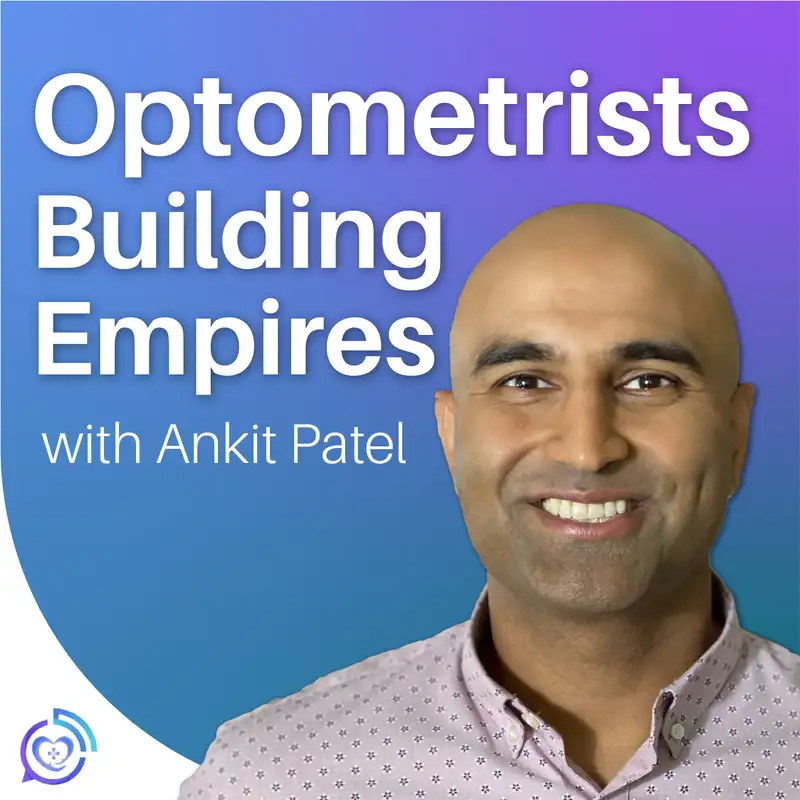
This is Optometrist Building Empires, and I'm your host. I'm Kit Patel. Each week we'll explore the journey of practice ownership and leadership in optometry. Join us for insights and strategies from the top minds in our field. This show is sponsored by my business care team. My business care team helps your office increase revenues, reduce costs, and [00:01:00] reduce staffing headaches.
Let's build your empire together.
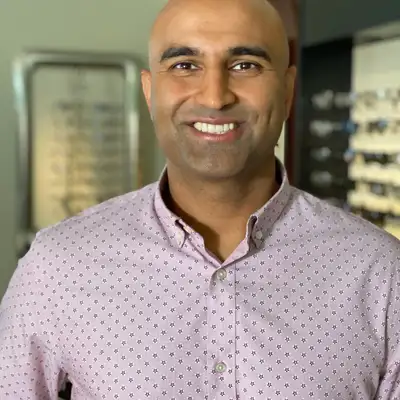
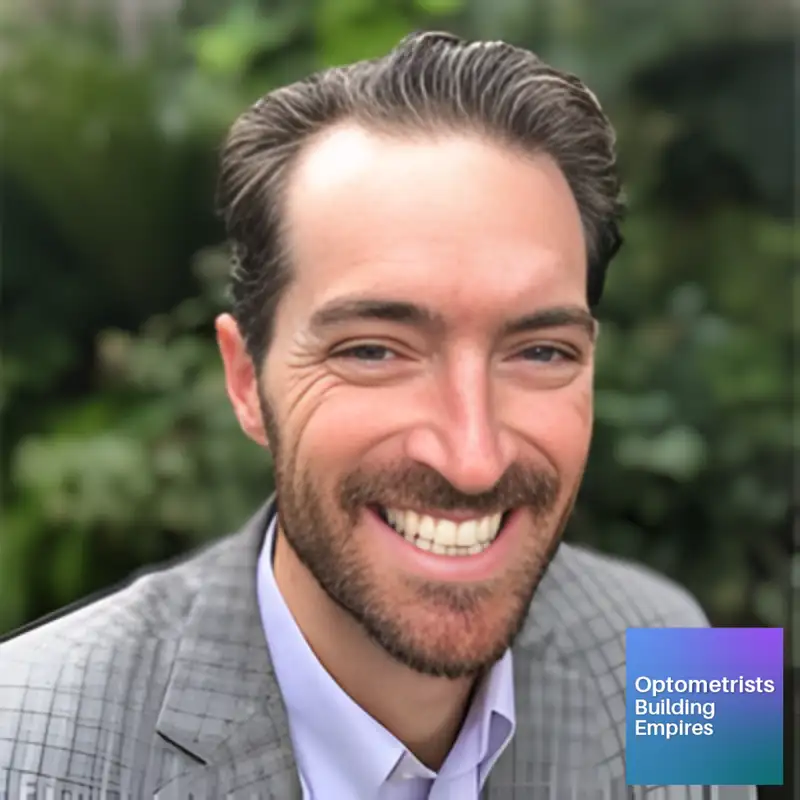
Ankit Patel: Today's guest is someone I'm thrilled to introduce. He's nationally recognized thought leader, CE educator, and trusted strategic advisor and keynote speaker. With nearly two decades of experience, he is a champion of independent healthcare and collaborative leadership, helping to build sustainable people-centered business models in optometry.
He's authored multiple eBooks and dozens of influential articles on profitability, practice acquisition, financial forecasting, and strategic growth. In review of Optometric Business, eyes on Eyecare and other publications, he's President and Chief Vision Officer of aino. Please welcome Eric Matea. Eric welcome.
Erich Mattei: And Keith, thank you so much for having me here. Very much looking forward to our conversation.
Ankit Patel: Yeah, man. It's been, it's been a, a long time coming. I've, I've been following you for a while. We've been meeting and I'm excited to have this conversation 'cause you have a unique perspective and that you see Alon of folks in [00:02:00] Alon of different stages of growth with that are in optometry. So with that, what is the most important thing that helped you grow your specific empire?
Erich Mattei: That, that, that's, that's a big And Keith, now I would say, You know, if it was one thing, it's courage. But when I say courage here, I think it's important to consider what does courage consist of. And if you think about it, it's kind of three pillars. You know, the first of these is purpose or vision, the why. And we'll unpack in this conversation the why behind what I do and the work we do within aos. But certainly having that, that vision at the forefront, that purpose number two is process. can have the greatest, the grandest vision. You can have the, the most sincere purpose and why driven behind your motives. But without the processes, you're not gonna really progress all that much. And then that third area [00:03:00] is perseverance. And I know you and I had some recent conversations around just this world of entrepreneurship and whether it's, You know, the work that you guys are doing and my B care, the work we're doing at Credos, or the doctors that we are here to serve. Perseverance is absolutely a part of entrepreneurship and growing businesses. So I would say, You know, if it was, if you were to ask that, it's a hard question to answer, right? But the one thing that really, that really has made a difference in us, um, getting our creds on the map and growing, it ties back to courage and the purpose, the process and perseverance collectively that position us to have the courage to make it happen.
Ankit Patel: Hm. Gotcha. I like that. And as, as far as, um. I am gonna spin this question for you a little bit because you work with Alon of Optometrists. What do you see as some of the things that make your most successful practices successful? Like, can you share a couple of [00:04:00] stories?
Erich Mattei: Oh wow. I share a couple. How
Ankit Patel: probably more than a couple.
Erich Mattei: as a matter of fact and ke I, I think I'd like to take a moment and look at this in the context of where a practice is in their journey. Because, You know, the way we look at, at the, the business of, of private practice optometry is, You know, it's one practice.
Sure it's going to evolve through these different phases of lifecycle, but at the end of the day, it is still one practice providing the same general scope of services in and retailing products. following the same financial benchmarks, exposed to the same competition across the marketplace. So again. We're looking at these one things that make it happen for the practice. I'd like us to take a moment and look at this as far as stage of the practice. So if we'll start with the emerging practice owners. I think the first one I want to give a shout out on is a, is a practice, uh, that we had the opportunity to cold start with, um, a [00:05:00] number of years ago.
As a matter of fact, this is a really cool practice. One of our very first cold starts that we did, um, that is Ti Eyecare down in Tampa, Florida. As a matter of fact, I recently had the opportunity to go visit. Dr. Anne and Dr. Nick ti at their office, and uh, it was amazing to reflect on the last three years and what this journey has been for them. So if you were to say what was the one thing for them that really was the shift commitment to building the team, right? Because this husband, wife, optometry duo duo amazing doctors, and they had this amazing vision for the practice. But as we have discussed so many times before anke, there's a, there's Alon that goes from having the, this vision, this idea of what we wanna do to then making it happen. And particularly in private practice, it's imperative that, that the practice build the team of professional support around them. So if we're looking from a cold start standpoint. I would say [00:06:00] building that team of advisors and professionals to see you through has got to be one of the most critical steps of that process. You know, similarly, if we look across the aisle of our emerging practice owners, we have doctors that are cold starting. We also have doctors that are acquiring practice. And, uh, we had an opportunity to work with an amazing practice up in the northeast. Um, eyes on Litchfield, Dr. Tabitha Linsky, acquiring a practice from Dr.
Thomasina Sedaris, and an amazing journey we got to be a part of. I would say, You know, the big, the big piece for them was taking this boutique independent practice. And allowing the new practice owner to put their spin on it in a sustainable manner. So, You know, the key piece here for doctors that are acquiring practices that are, want to go in and make their change is yet have absolutely got to construct the plan. [00:07:00] And perhaps we'll unpack more of that in this conversation. 'cause there are a few really key points that I think it's important our, our, our viewers, um, are aware of here because. Where we look at all of these practices that are for sale and let's face it, and Keith, there are Alon of practices on the market in any, just about any market you go to, there are, there are doctors that are looking to retire, that are looking for that next generation to, to acquire their practice. Well, in so doing, what's going to happen is that these doctors buying these practices don't wanna keep these things operating the way they were from back in the nineties or early two thousands. Many of these emerging practice owners wanna. newer, modern ways of practicing optometry, modern workflows, maybe make some changes in the optical. So I would say a key to success for doctors that are buying the fixer upper practice and gonna, You know, really relaunch it under their own. It's absolutely imperative that you construct the plan and it's done in a, in a financially feasible manner as well.
Ankit Patel: I
like that.[00:08:00]
Erich Mattei: Examples of some keys to success for the emerging practice centers.
Again, those looking to cold start or acquire the practice. Build your team and be sure you're constructing a solid sound plan around which we're gonna go and, and execute and make it happen.
Ankit Patel: And, and let's build on that a little bit. Uh, let's talk about some different stages that you might be heading in, hitting into. So you talked a little bit about the startup and the AC versus acquisition stages. Uh, I can also see, uh, let's just call it, um, expand beyond your hiring your first doctor stage.
Uh, and then if you want to go multi-location, if you want multiple locations. So can you kind of talk about those? Three stages starting off either acquiring or buying or, or, uh, cold start expanding internally with just more doctors. Uh, and the third stage might be expanding to multiple locations. Uh, how do you, what do you see are things that are common pitfalls that people run into that you, they may not [00:09:00] expect?
And you can take that question however you want. That's a big question to chew on.
Erich Mattei: yeah. And, and Keith, You know, and we, we can unpack that in a few different ways. I think first and foremost is. As, as a doctor, know what you want to do. You know, like technology and social media has done Alon of amazing things to connect people, but it's also done Alon of, um, not amazing things in confusing people because there's so much just noise and information being tossed out there that's really difficult to gauge what to believe.
But moreover than that. It's difficult to understand what's truly best for your unique situation. You know, I know you guys are up in metro Atlanta. I'm down here in Metro New Orleans, two amazing cities, pretty strong football rivalries, but we'll leave that alone. Uh, but two amazing cities down here in the southeast and yet two radically [00:10:00] different worlds. And actually I can say that with, with a, with a whole lot of emphasis because we've actually done cold starts and have been working with growth practices in both of these markets. So we see firsthand the differences in the geospatial and competitive market dynamics. Marketplace. Who is that community surrounding the practice? What type of care are they in need of, and what type of optical goods may, may they, may they be looking for? So I would say, You know, some of these common pitfalls sometimes we find doctors running into is where they're almost kind of maybe adopting someone else's narrative for their, for their own Go into the online community asking a generic question. I mean, think of any one of these generic questions. And maybe I'll toss this back to you, Anki. I mean, look, I know you guys have now grown. Y'all have a two location practice
Ankit Patel: Yeah,
Erich Mattei: up there in Atlanta.
Ankit Patel: correct. Yeah.
Erich Mattei: But, but
Ankit Patel: Um.
Erich Mattei: When you've gone into a community, consider [00:11:00] a piece of advice you would've seen in a community had you applied it in your practice.
It would've been an absolute disaster.
Ankit Patel: Yeah, we actually did that almost a couple of times. Um, and it was interesting 'cause it wasn't just from the community, it was also from other groups of Optometrists and other people who have had success because their market supported a certain way of practicing. And so understanding the difference of knowing what applies to me versus doesn't.
So one example was we had a brought in a consultant and, and she said, You know what? You need to be more of a volume shop. You gotta lower your prices. This is what you gotta do. I was like, that's not our model. We're more high-end boutique and I think that's what we're gonna stay at. And so if we had taken our advice, we gotta shifted our entire business model.
Uh, it would've probably taken us a while to pivot to that model and would've really hurt. And You know, this, this business, we bought an existing practice. Uh, this is our second location, and it would've, it was around for 20, 30 years prior to that and using the same model. So I was like, You know, it's a, it's a significant thing to retrain our entire patient base on, Hey, we're, this is what we are [00:12:00] now.
So that was one thing that came up, or asking the community, Hey, uh, do you want, um, You know, uh, I don't think people understand the, like, the value of an exam, right? I think we asked them one time, Hey, would you wanna warranty on. Would you want a subscription for your glasses or not? Um, and those don't really work, right?
And so that, that was kinda interesting. But like we've also asked community questions like, Hey, what do you, what do you want, uh, from your eye doctor? What do you want it to feel like? Well, I just wanted to come in and get my prescription and get out and like, make it as smooth as possible. It's like, oh, okay, I understand that, but you're not our right patient.
Right? Our patient values the experience, it values the health aspect. They value all that for us. Now, if we were a Medicaid office or more high volume where we couldn't do that because of financials, then we'd have a different model. But for us, that's what we found is understanding the people who we do work with versus people who we don't.
Erich Mattei: Yeah. Yeah. And, and keep see, like, and that's, that's just one example of how many countless, I mean, dare I say, perhaps even like thousands of these examples per week. Going [00:13:00] on across groups, across communities, within Alliance, by groups, whatever the case may be, wherever there comes to be, kind of this, this gathering of Alon of folks, they're like, oh, we're both Optometrists, and if it's working for you, then it must mean it's gonna work for me.
That can't be further from the truth. You know, it's kinda like raising kids and I know you're a parent. I'm a parent, right? I mean, you gotta really adapt your parenting to the child. There's the same vision of what you want to do as a parent to raise them, but you realize the, the, the strategy that you're going to use with the how you're going to implement these parental approaches with each is gonna be different.
So, so again, tying back to, uh, to this question of what have I observed are some of the biggest pitfalls that folks run into? And it's simply not taking the time devote to the process, to, to really doing it for themselves. And that's where, You know, we get into, obviously Aino has our way of doing it, everybody's got different ways of doing it.
But the [00:14:00] most important thing is, is that you tie it back to you and purpose. And then creating the plan around, around that. So like a really good example here, and I'll share with you actually a success story around that. So we got a practice, Dr. Tyson Allard, out in Oklahoma. True vision. Uh, true vision optometric out in Oklahoma.
I've known Dr. Allard for a number of years. Amazing doctor, amazing people. We actually have done some, some things with his team as well, but in the context of this. And what Dr. Allard wanted to do. It's actually quite brilliant if you ask me. And we're coming to work with a number of doctors in the Midwest that are, that are doing this. You know, Anke we're coming to discover now in, in rural markets, they're coming to be these, um, some folks will call them like optometry deserts or eyecare deserts, where you will have one provider a very large rural population where [00:15:00] maybe. Years back, you either, you may have had, You know, just more of these providers, more dispersed in these rural markets.
So as you're seeing doctors that are retiring and they're struggling to find some kid to move from the big city out there to take over the practice, where I see opportunity for these entrepreneurial rural docs. You wanna take it to the next level? What's going on? One or two towns over, and what is that?
Doctor's exit plan. fast forward in the case of Dr. Allard, and we're looking at this in the context of an opportunity to a, to acquire a practice. Um, and in so doing, creating a, you ask me a beautiful exit for the retiring doctor that we've acquired the second location from, and then creating this amazing opportunity to recruit a young doctor. Who may have an interest in [00:16:00] ownership, who were really wanting to pull in and, and, and create something, something amazing out of. So where this ties back to this question of, You know, the, the, the pitfalls and such is that it wasn't until we had the opportunity to really dig into this data. Assess the practice as is, assess the practice in the context of the vision that Dr.
Allard had for it and the direction of of it going, but then also all of the other analytics that are vital elements to making a profitable practice. And we may unpack some of those later in this conversation as well. Um, but particularly when you start to look below the surface and you marry the purpose and vision for the practice with the appropriate analytics to put together. An appropriate associate doctor program to bring in this doctor in a way that they're gonna be handsomely [00:17:00] compensated for what they are doing, uh, but also given this opportunity to now be a part of a private practice in a way that I think we're now seeing. More and more doctors are looking for these opportunities in private practice.
And it may not always be this big fat salary and paying off student loans, I tell you, and I think You know as well as I do, and Keith, when they're, when they're flashing the big fat salary and they're gonna pay off your student loans, don't think you're not gonna be working than you've ever worked for the next 10 years to do that. We wonder how and why we're seeing so many doctors burn out. Right? Um, that's another kettle efficient to itself. That really applies to why we do what we do in Aino. so as it were, as it were, getting back to this whole, You know, pitfalls that doctors at times run into and how to, how to navigate around those. hit [00:18:00] pause, you take a step back, you focus on your business. Focusing on your business with the right analytics and the right team, you'll absolutely be able to put together a win-win a win-win plan.
Ankit Patel: so if I am, if I'm a, uh, And so, uh, uh, what I wanna do is I wanna provide, make sure folks listening, say like, Hey, I wanna build my empire. Uh, what are some questions that they can ask that might tune them into the right areas to focus in their practice? They're thinking, Hey, I want to grow, but I'm not sure where to start.
Based off your perspective, what are some things that they could ask themselves Okay. That, that might point them in the right direction.
Erich Mattei: Yeah, so, um, ties back to analytics.
Ankit Patel: Okay.
Erich Mattei: There's two realms of analytics. There's, there's the hard analytics and the soft analytics. The hard analytics are easy. Um,
Ankit Patel: Uh, that's funny. I just reflect a second. That's hilarious. That's a oxymoron. The heart is easy. I like it. Okay.
Erich Mattei: easy. The hard analytics are easy, at least if you ask me. Um, because why? Well, we do business [00:19:00] consulting, so we are living in the hard analytics all day every day, which is what QuickBooks. Looking at these p and Ls, looking at the cash flow, actually going through the business. It's operations, production, performance.
What's actually going on with the conversion, with the patient flow with conversions across the practice and any, any number of hard analytics and keep hard analytics here is defined as something we can like quantify, but there's this whole world of soft analytics. at times seems to be overlooked. And if you ask me, it's the soft analytics that actually really matter.
Ankit Patel: Yeah, so say more. What, what is an example of a soft analytic?
Erich Mattei: A soft analytic. A soft analytic is something you've observed about a patient experience in your practice, the likes of, which may not be totally a downward spiral, but nonetheless, something that you observe. [00:20:00] That you're like, I don't want this going on in my business. That is not an accurate representation of how I operate my practice.
Now, mind you, Aino, we are looking at the hard data so we can see the money going in and out. We can see the patient count, how many converted in the obstacle, how many bought contacts, how many did the dry eye, You know, we can see all the hard stuff. But what you can't see was what I just mentioned, the fact that you're observing these other things going on in your business. That we
Ankit Patel: Yep.
Erich Mattei: Quantify in the hard, but nonetheless, it's your business. So I, we refer to those as soft analytics. So these are anything that, that ties back to representation of the, of the business and purpose and vision of the business. So as it pertains to how to tackle, Hey, I want to grow, where do I start? If you're starting at [00:21:00] hard analytics, that's gonna shine a light at a number of different things. We can look at it through the standpoint of financial benchmarking, which we do monthly with all of our clients. So I mean, our practices who work with a credos, they know exactly where they are in their numbers every month. we're more tuned into their financials than their CPA is. which is, which is appropriate, right? 'cause CPAs are about tax and tax strategy. CPAs are not about day-to-day, week to week, month to month cash flow. That's more in ops, You know, financial, financial type role. Um, in the context of that, where do I start?
We look at hard analytics. The numbers are what they are. We've got some amazing tools we have built to drill and identify exactly where those pain points are. But then there's this whole area of soft analytics. And it's really fascinating, Keith, because in our experience in a, and as we're recording this, we're, we're gonna be celebrating our five-year anniversary in a, in a few months. Um, in so [00:22:00] doing, we've worked with hundreds of Optometrists across North America. So we have now Alon of data, Alon of Alon of, um, Alon of practices in our sample size. And I gotta say it's probably about a 50 50 split. Between doctors who are, it's clear that we look at hard analytics and we can identify all the things wrong. It's about 50%, but then we have another 50% that it's, it's these soft things that are the pain points. It's the soft things that are keeping 'em up at night.
Ankit Patel: Yeah. You know, it's interesting, um, I, I actually heard am so, I used to be a hard metric guy only until I heard something. Uh, Amazon does this actually. Uh, and I think you were kind of saying the same thing. Amazon, um, Jeff Bezos, uh, and Andy, uh, which is Angie Jassy, I think is the new CEO. But anyways, what they said was, um, look, when, when.
Anecdotes differ from data, believe the anecdotes. So, You know, I, I know this happens [00:23:00] Alon, at least it did with us. Like, oh look, but our numbers are fine. You know, we're in range. But I'm like, yeah, but this one patient experience is off, but yeah, but this thing shouldn't be on this board this long. There's something wrong there.
Those always point to something bigger, right? It's like, well, yeah, it seems like it's fine, but the patient said this one thing that I can read between the lines, um, is that kinda what you're saying with the soft.
Erich Mattei: abs. And look, and that that is, and keep, that's actually like one example
Ankit Patel: Hmm.
Erich Mattei: But that's a really, really good example because. That's the stuff that, that for, for a chunk of practices out there. Those are the things that a doctor reaching out to aos.
Ankit Patel: Yeah.
Erich Mattei: May be they're buying a new car every five years.
They're going on nice trips. They're paying themself a nice salary. They got the vacation home. What's wrong? It's the soft analytics. Sure, the money's coming through, but this isn't what I want in my business. Uh, dare I say, it kind of ties back to what we were mentioning [00:24:00] earlier about, about younger Optometrists being, being, You know, being attracted to, to, to big dollars. Okay? A hard analytic is what you're gonna get a big salary, and you might even get your student loans paid off depending on who you're gonna go and, and, and work for. But what's the soft, the quality of life is not what you're gonna want. I believe it's also being reflected in the data. There's Alon of really great studies out there around, uh, doctor burnout, I'm not talking about studies here that are just confined to optometry or even eye care as a whole in ke I'm speaking here of. The latest stats across all of healthcare. So these are studies coming out of the University of Chicago, uh, uc, Berkeley, Stanford, these healthcare think tanks. These are economists that have committed their entire career to studying healthcare, and what they are now showing is this massive fallout [00:25:00] that we have experienced in our healthcare system here in the US as a result of this corporatization consolidation of healthcare and what
Ankit Patel: Hmm.
Erich Mattei: Here. that doctors, we know that physician burnout is high and continues to climb. We know the cost of care continues to climb. We know that the overall quality of care in the US is, is kind of going down the drain. But when we look in private practice, our doctors experience less burnout. The cost of care to patients in the system is lower, and the quality of care and patient experience is radically higher. So when we, when we look at this stuff, that's where you come to see the soft analytics and the hard analytics. Really like blowing each other up because what are we seeing? You had a bunch of doctors that, look, we're not gonna be able to see Doctor. We're not gonna be able to monitor Doctor burnout and some sort of analytic you're running or analytic or [00:26:00] Creo is running. No Doctor burnout analytics are gonna come from the economist. That are doing these massive surveys of doctors, and again, I'm not talking just about optometry. This is so much bigger than just optometry, right?
Ankit Patel: Yeah.
Erich Mattei: So through that lens, see again where the soft and the hard, it's vitally important that we have those in balance because the hard may be there.
Oh, I'm making a great, oh my gosh, this salary is unheard of. The soft analytic is what? I'm miserable. I'm on the verge of burnout. I barely see my family, all of the things. And in private practice, and I'm not saying there aren't hard days in private practice. I know you could probably, you could probably give me some lessons, right?
Of what you guys experience. Um, not that there aren't ups and peaks and valleys in private practice, but at the end of the day, that rate of [00:27:00] doctor burnout. Is radically lower as is the rate of patient churn Alon of other things that well have us realize that we're doing great things helping doctors in aina.
Ankit Patel: Yeah. That's awesome. I, and I wanna pivot just a little bit. What do you, um, what are you most excited about in the industry coming up, right? Like, there's Alon on the horizon, you have a unique perspective. What are you excited about?
Erich Mattei: Yeah. Um, I'll tell you what, what I am most excited about in the industry from a, uh, from a provider side, is what this up and coming generation of doctors are, are up to they think and the impacts they're gonna have on society, You know, and key one of these. cool things that I've gotten the opportunity to do here over my career is I work very closely with the American Optometric Association, the A OA, and specifically with the Center for Independent Practice and now the new Independent Practice [00:28:00] Institute. And through working with the A OA and these organizations within the A OAI get the opportunity to go into optometry schools and teach third and fourth years. About business and while oftentimes these workshops are are general business because not everybody wants to go into private practice. I get it.
And I'll say this also, not everybody's necessarily cut out for private practice, but with the right team, anybody can succeed. I will say that, and I know that's something you and I have talked about.
Ankit Patel: Yeah.
Erich Mattei: Because with the right tools, technology, I know what you guys are doing with, with my business care team, et cetera, et cetera. I'm most excited about from a provider side is the vision that these young and up and coming doctors have on how they're gonna impact healthcare. Because they have seen all of these ills, all the pain, administrative burden, care people in hr, finance. [00:29:00] You know, career goals, all of these things.
So when I go into the schools and I do these workshops with the students, I'm thrilled to share with you there's this new interest in PRI or new, a renewed interest in private practice that for a few years was maybe waning a little bit.
Ankit Patel: Hmm.
Erich Mattei: Happened is that private equity came into healthcare.
Again, y'all, I'm not talking just optometry here, I'm talking all of healthcare. We
Ankit Patel: Mm-hmm.
Erich Mattei: To start looking at optometry as being part of a broader healthcare ecosystem. in the context of this, private equity came into healthcare in like 2013. It didn't come into eyecare until more like 2015. was in industry at the time working with a global leader in vision and eyecare, so I was boots on the ground going in and out of offices. So I saw firsthand, I witnessed. Private equity comes in and, and the [00:30:00] impact it has on things. So if we go back in time, everybody's interested in private equity. Why? Well, retiring doctors were interested in private equity because they can make Alon of money selling their business. then younger doctors were kind of excited about private equity because now they were gonna start making a salary bigger than the private Optometrists would've paid them prior. But now we're seeing the backlash. We're seeing the fallout, as I shared with those studies about burnout, cost of care, and quality of
Ankit Patel: Mm-hmm.
Erich Mattei: But what I'm really excited about this next generation of doctors is that they too are seeing it. They are realizing that when they're shown the big dollars and even the big dollars with will pay off your tuition more, more. More and more folks are realizing, okay, yeah, that's Alon of money, but that's not what I signed up for. That's not why I went to optometry school. That's not the scope of care that I'm looking to provide my patients. It's not how I wanna serve my community. All of the things. [00:31:00] So that's what I'm most excited about from a provider side, is this renewed interest in private practice, and whether that's with the emerging practice owner. Some of those that I shared with you, You know, Dr. Riann and Nick ti down in Tampa, or any number, I mean, so many practices. We, we've, we've cold started. Um, or even fast forward and just think of more the enterprising practice owner still has a long runway ahead of them, like Dr. Tyson Allard, who said, You know what, I'm, I've got one thriving practice.
I understand this doctor. Two towns over is ready to retire. Let me see if I can now have two thriving practices. So from a provider side, it's very exciting to see this renewed interest in practice ownership
Ankit Patel: Yeah, I like that. Yeah.
Erich Mattei: from a, from a technology side. I believe now we are in the golden age of utilizing technology to delight our patients, to [00:32:00] serve our team in workflows and to grow profitability, but only if we do it the right way. Because I do believe right now unfortunately, Alon of practices perhaps are finding themselves being a bit practice poor. I call it, it's like being house poor. Are you familiar with the term house poor in keep
Ankit Patel: Yeah. Yeah. I have, uh, it's like cash rich or vice versa. Right. It's a
Erich Mattei: Yeah. Like you have this, this mad, this a insane house, but you barely have anything in it because all your money's going to cover in the mortgage.
Ankit Patel: all, yeah, it's all tied in the capital. Yeah.
Erich Mattei: So, so now we look at, at a practice and we consider practice for, to our listeners out there, how many of you have a piece of equipment that isn't paying for itself? How many of you have more than one piece of equipment that's not paying for itself? And Keith, it is not uncommon for a practice [00:33:00] to be paying two, three, $4,000 a month of equipment for leases, for equipment payments when meanwhile that equipment is like not even covering the note on the equipment.
Ankit Patel: Yeah.
Erich Mattei: Another example, and I know this is something you and I have had Alon of conversations about. This is something I think is really impressive of what you guys have done in, in, uh, my B Care is subscriptions,
Ankit Patel: Mm-hmm.
Erich Mattei: We're so quick to find a fix that we'll go sign on because an influencer said sign on. And then before we know, we go down this list and then we look up and we have all of these subscriptions that are just not being utilized. So, uh, so what, what I'm most excited about on the horizon is the fact that we're living in this golden age of technology. And that there's so many amazing things this technology can do to further enhance the patient experience and delivery [00:34:00] of care, to further streamline and optimize our workflows and to further bolster the profitability of the practice.
But the watch out here is that it's gotta be done in the right way, and that's where you can see some of these themes of this conversation start to weave together. Because a doctor went to the big trade show. With a strategic plan to make an investment in a piece of equipment that they had already previously determined they're wanting to incorporate in, and they've already created all of the flows, processes, strategy, pricing, everything. you invest in the equipment, let's get the same cash flow. But what happens all too often is it's the opposite of that.
Ankit Patel: Mm-hmm.
Erich Mattei: It's marketed everywhere. Because we know these companies have big pockets and they're, they, they have Alon of money they can spend on marketing. It's being marketed everywhere. Doctors are making these purchases, and then if we make the purchase, then we're gonna [00:35:00] try to make the plan and create the pricing and train
Ankit Patel: Yeah. The Field of Dreams method, right? Build. They will come.
Erich Mattei: That's
Ankit Patel: That's a thought. Yeah.
Erich Mattei: Going
Ankit Patel: Yeah,
Erich Mattei: hell. Six months goes by before you can even pitch it to a patient.
Ankit Patel: Yeah,
Erich Mattei: you're six months in to paying the note and now you're deeper in the hole, which makes your break even that much further.
Ankit Patel: yeah. And even like, uh, what I see Alon of pattern is like, there, there's a bump at the first and then you sort of forget about it 'cause life happens and all these other things happen. So not being focused strategically on that. We actually had the same problem with, uh, ipls when we first started. Even though we were well aware of it.
I, You know, we started off by doing half an IPLA week, and now we have four. Um, but, uh, and, And so the, or more, but the reason why was because we just didn't focus on it. And then finally I told, uh, You know, the, the interesting thing was, was that part of the soft skills, my wife was the doctor, right? And so we had another doctor and said, okay, look, uh, if you want all these nice things, this is what we kind of have to have financially to make it work.
If you can do this, then sure, we can do. Uh, And so that's exactly what she did. She took that on, took it as a challenge and said, okay, let's figure out [00:36:00] how to bring the value to the patient, how to bring awareness. How do we present this better? How do we make sure that the patients are getting Alon from it?
And now we have, You know, we do it pretty regularly. So, um, you're right, the plan and implementation has to be there before you make a capital purchase. So, um, so curious, Eric, You know, you're a really cool entrepreneur, interesting story. Can you share with us something, a story that made you who you are today?
Erich Mattei: Yeah. Um, wow. A Alon of things come to mind from, from different phases of my life, right? Whether it's, um. child, during my teenage years, during my cycling career, I was a very competitive cyclist in my late teens and early twenties. Um, but I think it's most appropriate to bring it into kind of more, a more modern time.
And something that really impacted me on this journey of developing and launching a Kino and in Keep it was simply the fact that others saw it in me. Others saw it in me, saw what [00:37:00] Passion. Saw the insight, saw the impact, saw the loyalty, saw the commitment, all those things. And, um, to put it in context for you, by the way, what was it? was, um, You know, I've been around the industry for a number of years and, uh, had some doctors that I had become really great friends with and we were doing something, uh, after hours, having some after hours social time. They simply shared with me, Hey Eric, dude. If you could bring the insight and impact across the whole scope of a practice the way you do in a few of these niched areas, you should really consider business consulting.
Or have you ever considered business consulting? And, um, it's crazy to think anke because at the time it was just a statement. Um, that have come to know me know that. something doesn't resonate with me, it's fine. You, and you may not ever convince me, but if it hits me even just a little bit, look [00:38:00] out because I'm willing to cook something up out of it, make something pretty amazing. Um, and that's what the Ccinos journey has been. And that's where You know, the gratitude to those doctors who they themselves just perhaps even said it casually.
Ankit Patel: Hmm.
Erich Mattei: It came from somewhere, You know? And, and I, and I think here, You know, the, the, the, the message to the message to our listeners out there being to consider across your career when folks have said something, maybe paid a nice compliment. Maybe taking that compliment though, and even challenged you out of that compliment, have they challenged you off that compliment? You got the goods. So no matter where you are, emerging practice owner looking at Cold Start or or purchase a practice, You know doctor in a growing phase looking to really maximize that growth potential.
Or a doctor looking to transition and [00:39:00] exit the business. Consider where others have paid you a compliment and challenged you. And consider that that's perhaps where some of these hard analytics and soft analytics are really coming together in you, the person and the entrepreneur.
Ankit Patel: I like that. Thank you for sharing that. I think that's awesome story. if people wanna reach out to you, where can they find you and connect with you?
Erich Mattei: Yeah, so, um, look, find me on LinkedIn. Please do, go ahead and, and shoot me a little connection on LinkedIn. Uh, Eric mate, E-R-I-C-H-M-A-T-T-E-I. You're also welcome to head on over to aos.com. Um, you can connect with me through that, or you can also just shoot me an email directly, eric@aos.com and, uh, reach out and, um, would love to hear from you.
Ankit Patel: Awesome. And we'll, we'll put those all in the show notes for, for people too, so they don't have to write it down frantically if they're driving. Uh, well e Eric, thank you again for being a guest on the show.
Erich Mattei: Thank you so much for [00:40:00] having me.
Ankit Patel: Yeah. And, and I really love some of the lessons you shared specifically about, uh, hey, make sure that the, the hard metrics are easy. The easy, the soft metrics are hard. And that was such a cool insight, like, You know what? You gotta pay more attention to those sometimes. I really, I'm gonna take that to heart for sure and implement that for myself and, and thank you audience.
And if you learn something or laugh or please share the podcast with a friend and make sure you hit the subscribe button so you never miss an episode. And if you use the link in the show notes and book a meeting, I'll send you a free copy of my book, optometry Redefined. Thank you again, Eric, for being a guest on this show.
This has been another exciting episode of Optometrist Building Empires. We'll see you next time.
That's a wrap on another episode of Optometrists Building Empires. Thanks for joining. For show notes and more Visit Building Empires live. This show is proudly sponsored by my business care team. My business care team was born out of staffing challenges. My wife and I faced together managing multiple optometry [00:41:00] locations.
We refined our approach at classic vision care and now offer our expertise dollars. If you're experiencing challenges with staffing and you'd like to set up a discovery call, we'd be happy to help you and connect you with the right resources. We'll see you next time.
Creators and Guests