Building a Modern Practice - Justin Nguyen & Alyssa Pack - Optometrists Building Empires - Ep # 087
OBE_Justin Nguyen and Alyssa Pack
===
Justin Nguyen and Alyssa Pack: [00:00:00] We've had our fair share of just people that were not a good fit.
Outside of optometry, everyone's heard of RayBan Metas and You know, now the new Oakley glasses. So I think a lot of technology companies are starting to understand how they can, You know, use wearables in the eyewear space
Sometimes you can shoot for the, top and you can learn and grow a little bit more along the way without, feeling like you have to dim your light.
This is Optometrist Building Empires, and I'm your host. I'm Kit Patel. Each week we'll explore the journey of practice ownership and leadership in optometry. Join us for insights and strategies from the top minds in our field. This show is sponsored by my business care team. My business care team helps your office increase revenues, reduce costs, and reduce staffing headaches.
Let's build your empire together.
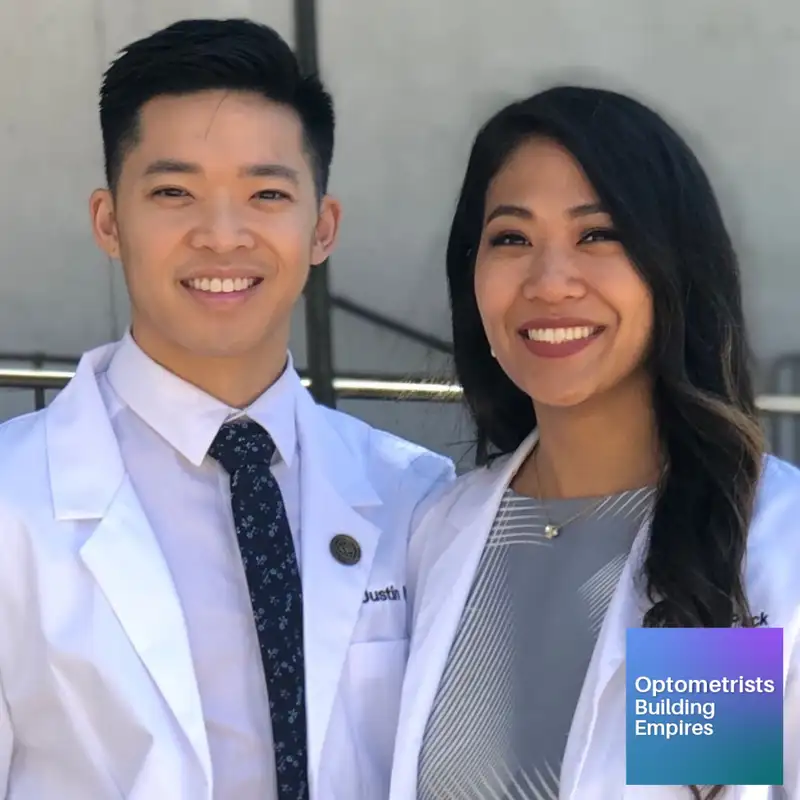
Ankit Patel: \today's guest are a powerful duo in the iCare world. Uh, he's a dedicated clinician who brings a refined blend of clinical excellence, personalized care, and genuine passion for [00:01:00] patient wellbeing. strengthened his training through diverse clinical experiences through a sports vision externship, supporting major league baseball, spring training camps in Florida and Arizona.
He received the San Diego County Optometric Society, young OD of the Year 2024. Today he serves on the board of San Diego County Optometric Society, contributing his leadership to the future of eyecare in his community. She's a highly accomplished optometrist leader and myopia management advocate whose passion for eyecare is both professional and beyond per deeply personal, she received the Marshall b Ketchum Distinguished Alumni recent graduate award in 2023.
Today, she's a prominent voice in the San Diego Optometric community, serving on the board of the San Diego County Optometric Association, acting as the San Diego Optometric DVAs Ambassador and advising on the board of Logics, GPT. [00:02:00] They are co-owners of Eyecare at the Cove Optometry. Please welcome doctors Alyssa p and Justin Nguyen.
Guys welcome.
Justin Nguyen and Alyssa Pack: Thank you so much. Thank you. We're happy to be here. Yes.
.
Ankit Patel: Well it's fun interviewing, uh, couples. 'cause I know you all my, my wife is also in the business, but I'm not a doctor. She is. So it's kind of, it's fun seeing that different dynamic. So, um, with that, since you guys are building a business together, I'm curious, what was the most important thing that helped you all grow your empire?
Justin Nguyen and Alyssa Pack: Yeah, it's uh, most important thing now that we're kind of entering year four, I would. Say that it's like having a, a positive mindset and just having that priority to continue to develop I think psychology is important mindset, thinking about not just working, or seeing patients, but also like growing the practice and building that part too,
Ankit Patel: Yeah, we'll get into that a little bit more.
Justin Nguyen and Alyssa Pack: You know?
Ankit Patel: What do You think?
Justin Nguyen and Alyssa Pack: Yeah. I think it's really about building a community, a community within, um. Our area of La Jolla as a whole, um, building a [00:03:00] community within our patient base, building a community, and a, uh, a team within our office itself. Um, so we, we really love, um, reaching out to our local community. Um, and we, we really think that, You know, by building a family network within our own practice, that's really helped us to, to really skyrocket in terms of our growth
Ankit Patel: Let's dig into that a little bit. So, uh, building that family and the mindset, um, so gimme an example or stories where, uh, and I'll let you start Justin. How mindset made a difference in your practice that you had to make a tough decision? kind of relied on that mindset to get you through it.
Justin Nguyen and Alyssa Pack: Yeah, sure. As I just reflect on how my. Mindset was when we first opened for the first two years. It was, it was very stressful. I'm not gonna sugarcoat it, You know, 'cause a lot of these things we don't learn in school. And, um, I think ha like, figuring out how to manage that stress, manage the emotions just ultimately allows you to [00:04:00] overcome the obstacles that come with ownership.
Uh, whether that's like managing your staff, having the majority of your staff call out, those are some examples where in the beginning you're like, oh my gosh, You know, you feel like the, the world's crashing down sometimes. But then you look back and it's like, well, we're gonna, we're gonna manage, we're gonna go get through it.
And every, everything that might seem negative is ultimately an opportunity to learn from, to learn from your, like whether mistakes or trying to improve systems. So having that optimism, I guess,
Ankit Patel: Do you all, did you all start cold? Okay.
Justin Nguyen and Alyssa Pack: it wasn't a cold start, but like a warm start.
I mean, when we started as brand new staff for all of us, so, uh, we didn't like in inherit any of the staff. Um, and You know, we started with two kind of part-time employees.
Ankit Patel: Okay.
Justin Nguyen and Alyssa Pack: Uh, which is like one full-time equivalent.
Ankit Patel: Yeah.
Justin Nguyen and Alyssa Pack: And he really learned how to do everything, You know, uh, be optician, front desk, uh, doctor, all at the same time.
And, um, it's definitely [00:05:00] a very, You know, big learning and Growing experience.
Ankit Patel: Yeah, I, I, yeah, I remember those days as well when my, it was just my wife and I, I would Do everything and we'd see patients, You know, 10, 12 patients a day. It was a lot of work. yeah. and, And so, uh, uh, Alyssa, what, what, um. what about you? You said family. Uh, say more about that, but you said more about like, of approaching a community, not say I, I, I think family is my word, but like tell me more about how that helped you grow your business.
Justin Nguyen and Alyssa Pack: I think family, You know, is a part of it too because again, we're growing a family within our, our practice as well. Um, but in terms of community, we. Um, started to get involved in the local La Jolla community. So we did things like, uh, uh, go to the local farmer's market and booth there. Um, we, You know, passed out things like, uh, lens cloth cleaners and spray bottles and artificial tears, You know, just to get our name out there.
we volunteered at something else called the La Jolla Art and Wine Festival. So it was another great event where we ka boo and You know, really just get our name out [00:06:00] there. Um, and You know, something that we are kind of in the works and hopefully trying to do is work, work with our local rotary programs so we have something to, to donate to for the community, um, just so we can.
You know, get our names out there, but also to give back because, we really know that, or we've seen that the Lalla La Jolla community has been, uh, gracious to us and and supporting us. So we wanna give back to them too.
Ankit Patel: It sounds like that's really been a big driver of your growth, is that community involvement tell, can you gimme some specifics? Anything you can remember from a number of perspective. Like how did it help your growth? What? What was the most effective way you grew your business? Because I think a lot of times people come in and they say, I'm just gonna pay for SEO, online advertising, all that stuff.
We've also found that boots on the ground is most effective. But can you share with us your stories on like specifically if you can share any kind of numbers and how you grew and why that was so important to your growth?
Justin Nguyen and Alyssa Pack: I mean, yeah, I think from a growth perspective, like our first [00:07:00] year. I guess if we, we just talk, talk revenue for now, but, or even number of patients, um, they probably coincide, but like on average we've grown about, I think 30 to 40%, well probably 30% year over year on average.
Um, And so that also probably means seeing 30% more patients. I don't have the exact number. I know last year we saw I think maybe 606 to 700 new, new patients.
Ankit Patel: In addition to all the ones that came back.
Justin Nguyen and Alyssa Pack: Yeah, a lot of 'em came back as well, which is really nice. Um, so, You know, it's hard to say whether our, our boots on the ground stuff, like, we didn't necessarily track
that, but we just, we do feel like now that we.
Um, we sort of like planted the seed. I remember in the beginning we would walk door to door to all the businesses around, and sometimes you'll, you'll meet somebody who was like, oh, yeah, You know, you knocked on my door a few years ago and here I am,
You know, I've had that a few times. Like, [00:08:00] oh, great. You know, so they didn't come right away, but then they, they came a little bit later.
So all those little things I think have just helped. And then they refer, they had a good experience, so they re referred their friends and family. Um, I would say another number that I think reflects our efforts is like our, our ratings or like the reviews. You know, I'm, I'm pretty proud to say that we went from like zero to like over a hundred in, in just like three years.
Um. All organic, You know? Mm-hmm. And just, yeah. 'cause we just try to let people know, You know, we're, we're kind of like, um, a newer business And so, um, we'd love your feedback kind of thing. Mm-hmm.
And we, we, do incentivize our staff to, to help us with our reviews as well. So, um, it definitely helps with,
um, increasing that number.
Yeah. But a lot of patients do say that they do find us from our, our good Google Review ratings. Yeah.
Ankit Patel: that's great. Yeah, that's really popular and I know that those reviews do make a difference with like ranking [00:09:00] and You know, if you're the first one that comes up. So that's really smart of you all to stay on top of it.
Justin Nguyen and Alyssa Pack: Mm-hmm.
Ankit Patel: As you're growing your business, what'd you run into that you didn't expect? .
Justin Nguyen and Alyssa Pack: Sure. Yeah. Um, I think things that we didn't expect, Hmm. I. Outside of patient care, it's like, oh, now that we have this building to take care, even though, You know, we are leasing, but we live in an old building. So something that comes top of mind is just issues with plumbing is we had, we had a flood and leakage like.
Two times a year, so maybe six times. Uh, and I think it's 'cause we're right next to the beach, so there's just a lot of like corrosion in the pipes and all that stuff. So, uh, that's one thing I didn't expect. Um, especially the frequency of these things happening.
Aside from that, I mean, You know, the staff, I think staffing woes like the, the unpredictability
.
Ankit Patel: I know that you're not the only ones experiencing that throughout the country, so. what about you? What, what? What'd you run to that didn't expect?
Justin Nguyen and Alyssa Pack: I [00:10:00] think, You know, I think we talk about this a lot in, uh, starting any type of business, but just the lack of knowledge just going into it is, You know, really having to bootstrap, You know, stay up extra nice to figure out how to set things up, how to deal with insurance and what companies to use. Mm-hmm.
Um, we've really leaned in, thankfully, heavily to, You know, different groups. Um. And, and mentors and advice to be able to, to get all this information. And, and thankfully we've had good friends and family who are also in the business to help guide and navigate us through just figuring out, You know, what steps to take or who to ask.
Ankit Patel: . Yeah, I love that, love that insight. Um, so, so. Why, why do this?
Right. Especially together. Right? Because I mean, there's so many different ways you guys could have done it. One person does a regular job, another one just does a business. Why jump both in together with this? what made you wanna do that
Justin Nguyen and Alyssa Pack: I think I knew I always wanted to go into some sort of a private practice, um, and. When the opportunity come up, came up where this [00:11:00] practice was for sale, we, we said, okay, You know, how can we, how can we not jump on it? Um, so
Ankit Patel: So.
Justin Nguyen and Alyssa Pack: Think ultimately we've seen other, You know, people do it before us.
So, um, my parents are actually both Optometrists who worked in a business together. Uh, so we saw that they could do it and, You know, we thought that, hey, we have different skills in different areas that really compliment each other. At this point, I don't think I could imagine doing it by myself. So I'm really glad that I have a partner to help me build this practice together.
Of course, it, comes with its own set of challenges. we, see each other at work. We have maybe some arguments with work and then we bring it home. You know, by all means I'm sure You know, it comes with its own set of challenges. but I think we're, stronger together. We're, great clinicians.
Separate, but we're even better business partners together.
Ankit Patel: I like that. Justin, how about you? What is your perspective on why do it together.
Justin Nguyen and Alyssa Pack: Yeah. You know, [00:12:00] interestingly enough, I share the story sometimes, but for me, I, when I was in optometry school, I, I actually wasn't really thinking about private practice. I wasn't sure if I would ever have one or I wasn't like, at the top of my list of like, priorities. So what's interesting is that, You know, when this opportunity arose in, uh, three years ago, um, we were both working at our, at our, uh, full-time jobs.
And we're just like, oh, should we just, You know, do this? And then seeing that her parents did it and everything, we're like, yeah, let's do this together. And I've, it's funny 'cause I've grown to actually really enjoy the business side of things. She was the one who like ultimately wanted to practice much more than I did in the beginning.
I think he really, he really loved or found a passion Yeah. For digging into the numbers and iterating and proving and, and I think that's where he found his true joy for optometry. Mm-hmm. Uh, is, is like within the business side of it all.
Ankit Patel: Yeah.
good. That's, that's, it's always good to be able to, You know, enjoy what you do. 'cause I, like you had mentioned, it's, it, it gets tough sometimes, so you get, you [00:13:00] get, uh, you got a lot of challenges.
Justin Nguyen and Alyssa Pack: Yeah. Yes.
Ankit Patel: You, you touched on a little bit. Uh, tell us a little bit more about how you're dealing with staffing challenges and maybe, well, let's start with there, let's start with staffing challenges.
How are you guys kind of working through that, navigating that in, in the current environment?
Justin Nguyen and Alyssa Pack: Yeah. Yeah, absolutely. Um, because I, in the, in the beginning as I mentioned, it was like just having only two people with people calling out. Also, like the quality when in the beginning we weren't really sure, we didn't refine our hiring process really well. Um, so we would just kind of hire without deeply looking at more, maybe interviewing more candidates kind of thing.
So we've had our fair share of just people that were not a good fit.
So in the beginning it was like that, finding the right people. And then as the years went on, it's like once we do find them and now we, we, we found them, which is great. Now it's like putting them in the right seats, figuring out should they. All just be [00:14:00] cross-trained or, um, should we now start having just like a dedicated optician where that's all you do, right.
And a dedicated pretest, or now that we have more people on our team, um, 'cause now we have, uh, like four or five, five people. Mm-hmm. Not full-time, but maybe three to four or full-time equivalents. So now we, we've. Managed to shift from everybody being cross-trained to now you have your focus. Um, but some of the challenges is training, uh, making sure that you're like, retain the information.
Uh, sometimes it, the biggest challenge is while you're seeing patients like in between, they're, they're waiting to out at your door to ask you a question because they don't have that autonomy yet, or like kind of the. They're thinking like, what would I, You know, if I can't, uh, see Dr. Noy or Dr. P, what would I do?
You know? So we're
trying To train them to be more independent and stuff like that, and empower them ultimately. Mm-hmm.
Yeah.
Ankit Patel: that a lot. Um, anything specific, like, can you tell us something specific that might work well for you that has worked or maybe [00:15:00] something you could try that didn't work,
Justin Nguyen and Alyssa Pack: I do wanna talk about actually, um. My BA because I think that's been a great success that we've found in our practice so far. Um, so for listeners who maybe don't know exactly, um, my Bcat is, is actually your company that we work with,
You guys train, uh, a virtual assistant, usually in a different country. Our virtual assistant is from the Philippines, and she's answering all of our phones all day long. Um, the great part about it is that we didn't have to train her. Um, basically almost at all. We, we gave you our training playbook and, You know, she learned some of the things, um, that we usually do in our office.
Basically follows our protocol, which we love because I know every office does things a little bit differently. Um, and it's a great way for us to manage our patient or our staff because if someone calls out, then we still have someone to, You know, say, answer the phones and people aren't juggling having to see patients you.
That walk in and then answer the phones [00:16:00] at the same time. So we think that's been amazing. We also do have a virtual scribe as well, so she also is, um, from South America, uh, in Brazil. And, You know, same thing. You know, she just offers that extra person or body in the room that can help with managing flow, patient, um, patient load.
And we really think that it, it's been. Amazingly beneficial, uh, in our practice, especially when, You know, one or even two people call out, we can still manage a full case stay without feeling overloaded.
Ankit Patel: Yeah, that's actually,
Yeah, that, I think that helps so much. So, uh, what about, what about insurance? Uh, how are you guys dealing with the insurance? What's your strategy around revenue management? Because, You know, costs are going up, but insurance is not paying more. Uh, And so how, how do you all manage that?
Justin Nguyen and Alyssa Pack: Yeah. So, uh, we take the VSP and imed as far as vision and medical is just Medicare. Um, that's the only one. Um, so I [00:17:00] think in the beginning it was, it was definitely a struggle to learn about that stuff. But once you do, once, um, You know, Alyssa mentioned like the, we made like a playbook that I think now is probably 300 pages.
But the, I, the, the idea is just to have this. Written, SOP, so that when we're training, we don't have to constantly verbalize what we need to do. We have like some videos, some just kind of, um, manuals that we can instantly give to our new team member about here's how insurance works. Here's, uh, like line by line kind of like, here's what this means.
Um, and then over time with just practice, you start to get the hang of it. So, um. Yeah, I think it just takes time to, to learn it and dissect it and then give it to your team. Right. And, and I think on that note also too, I think one of the most important things with insurance is making sure that you're actually maximizing it.
Um, so I know a lot of offices,
Ankit Patel: Yeah.
Justin Nguyen and Alyssa Pack: You [00:18:00] know, do the normal VSP, um, and IMED for, for regular medical or for regular vision insurance. Um, it's also important to note that VSP has things like, um, essential eye care or essential medical care. So knowing that you can bill medical through your vision insurance, uh, for certain things with VSP is uh, something that's been also key.
Um, and also making sure that we're actually getting proper reimbursement. So we do make sure we have someone that helps us go through all of our, um. Our insurance, You know, chargebacks and um, uh, what we call EOBs. So explanation of benefits to make sure that everything that we are billing out we're actually getting paid for.
Especially when it comes to things like scleral contact lenses, which can be, You know, another great revenue source. So I think when it comes to insurance, it's, You know, knowing how to utilize it, making sure that you're getting paid for it. Um. And then also too, knowing that there are things outside of insurance based, uh, coverage that we can get paid for.[00:19:00]
Um, like specialty care, myopia management, um, and, You know, dry eye, things like that. So being able to work also around insurances is the, the key in making sure that we, we have some success.
Ankit Patel: Sense.
Justin Nguyen and Alyssa Pack: Yeah.
Ankit Patel: Like that.
Justin Nguyen and Alyssa Pack: And I also wanna say too, like these insurance have their manuals. It's always available. So it's like you kind of, I remember in the beginning I took the time to read almost all of it page by page to to get a better understanding and then.
Uploading those manuals into like our Google Drive to tell a staff like, Hey, if you have a question, try to like open up the manual control find, see if you can figure out this thing first. Before You know, you kind of ask us. And then we also even tell 'em, well, maybe chat chief C can help too. If they can help read the manual and, and give, get you a head start.
Otherwise, of course, calling them is also helpful. Sorry.
Ankit Patel: Yeah.
Justin Nguyen and Alyssa Pack: Calling like VSP or imed, their phone line, their customer service, and see if they can help, You know? [00:20:00] Um, and I think you, you asked a question about myopia management. Is that right?
Like.
Ankit Patel: well, just in general, like how are you kind of growing the business and dealing with that? And I think you brought up myopia management is one of the ones that you look to. So I'm guessing you guys offer are doing specialty type services Like.
myopia management as well.
Justin Nguyen and Alyssa Pack: Yeah, yeah, absolutely. So, You know, those are, those are specialty services, so we, that's kind of outside of insurance and we, we just, we're just really transparent with patients, like trying to help them understand that. Um, like this is a specialty service that we we're doing a lot of like testing that goes beyond just like your routine exam.
Um. And ultimately we're just trying to help help your child, You know,
um, fight myopia and redu, um, reduce that progression as much as we can. Yeah. Um, mm-hmm. Myopia management is definitely something that we've leaned into. And what we do, we offer all services. So, um atropine, eye drops. Um, the FDA proof Stella lenses now Ortho k soft [00:21:00] lenses. Mm-hmm. Um, so I know, You know, when providers choose to, to go in on myopia management, we always just recommend, You know, really, You know, go all in, make sure that you're offering all services and can, can treat the patient appropriately.
Ankit Patel: Okay.
Excellent. Um, and let's, let's talk about the future a little bit. are you most excited about for your offices and for the industry? And you can start with ever whatever direction you want to go with that one.
Justin Nguyen and Alyssa Pack: I'm excited about like, there's always something new, uh, whether it's the new technology or a new specialty. Um. Like, for example, like we, we recently brought in neuro lens last year, and uh, we've seen that it's been helping a lot of our patients. So like with the binocular vision side. So, yeah, that's a good question.
I think just broadly that there's, there's always something new and exciting, um, whether it's equipment or, or again, new, even new developments in myopia such as Stella, You know, being FDA approved. So [00:22:00] continuing to do those things. It's nice 'cause. Um, You know, it, it's, I, we enjoy, You know, the refractive and routine side, but it's really nice to do the, the specialty stuff and help patients in a different way.
Sclerals is another example. It's really fulfilling when you, when you like, You know, help somebody with keratoconus, that's always great. You just feel good inside. Um, so yeah, hopefully that's, You know, answers the question.
Yeah.
Ankit Patel: That's, that's, You know, it's, there's a lot of people are excited about,
Justin Nguyen and Alyssa Pack: Yeah. I think I'm more excited about the technology within the spaces itself. So, um, I'm thinking about AI and healthcare, how we can make. Things more personalized to each patient. Um, we're, I'm working with, um, OCU Logics, which is again, kind of an AI company within the optometry, ophthalmology space.
And we think by bringing in, You know, more technology, more AI to analyze each patient patient data, we can really di You know, narrow in on [00:23:00] specific care for each patient instead of broad treatment. Um, that may work for the masses, but may not work for you. So I think as we, we continue to improve this technology, we can get more and more focus on each individual patient.
Um, and I'm also excited about kind of the wearable space. I
think, You know, outside of optometry, everyone's heard of RayBan Metas and You know, now the new Oakley glasses. So I think a lot of technology companies are starting to understand how they can, You know, use wearables in the eyewear space and.
We're kind of in the bridge and we're in the middle of that. So those are two things that I'm excited about for future of optometry.
Ankit Patel: Those are great insights, and I'm gonna shift gears a little bit. Um, I'm gonna ask each one of you this question separately, uh, maybe it's a, maybe it's the same story, I don't know, but can you share a story that made you who you are today?
It could have been when you were much younger, could have
Justin Nguyen and Alyssa Pack: Hmm
Ankit Patel: older. Uh, but something that was really impactful to you that says like, yeah, this is one of the reasons why I am the way I am right now.
Justin Nguyen and Alyssa Pack: I think I [00:24:00] shared earlier that both of my parents are Optometrists,
so I kind of always grew up in this, in this space and in this sphere, and, um.
When I was actually in fifth grade, I started to notice that, or actually I think my teacher noticed that I started to have blurry vision. 'cause one of the funny things about having Optometrists as parents is that they probably didn't check my eyes as much as we recommend checking other people's eyes.
Um. So, You know, they brought me into the office. Of course they checked my eyes and they realized, Ooh, she is nearsighted. Um, she needs her first pair of glasses. And so, You know, I've got my first pair of glasses and my dad was kind of one of an ear, you was an earlier adopter to something called orthokeratology, um, or the hard lenses that you sleep in at nighttime.
And so at around probably the age of nine, he decided, okay, You know, let's try this out. Let's put on this lens on her eye. he started me in Orthokeratology and I just thought it was, You know, the bee's knees. I thought it was amazing. I put on the [00:25:00] lenses, I sleep in them, I wake 'em up, wake up, I take off the lenses and I still have clear vision.
So it completely changed up, You know, how I felt, You know, I, I got to take off the glasses. I felt like I was, You know, having a glow up. Um. My friends, You know, ask, You know, Hey, where are your glasses? You know, I'm like, oh, I don't need them anymore. And so it was a total transformation and I just thought that it was such a significant part of me growing up and, uh, experiencing, You know, how eyes can really shape how you feel and how you project yourself
onto the world. And. You know, since that experience, I've always felt that, You know, hey, You know, if that's how I felt growing up, maybe I can do that for other people as well, You know, in my career. So it was a significant part of me becoming an optometrist. And I always look back at the experience and, You know, I'm so grateful that my dad was an early adopter and kind of change my, my perspective.
Ankit Patel: That's awesome. Yeah, that's a really cool story. I was, you must have been really on the cutting edge there.
Justin Nguyen and Alyssa Pack: I think Ortho [00:26:00] K has been out there for a while.
Um, but definitely not as mainstream as when he first started.
Ankit Patel: so, Justin, do you have a story you want to share beyond what got you into
Justin Nguyen and Alyssa Pack: Oh
Sure. Because I mean, the question was kind of like. Like what made you kind of who you are as a
person? And it got me thinking about just, I think Alyssa can maybe attest like I'm somebody who enjoys like personal development and just challenging yourself. And I, I think, uh, although I don't know why, what really necessarily sparked that, but I think that's.
Ever since I was like little, I enjoyed challenging myself, whether it's with sports in high school or, um, now, now I'm like really into like running marathons and stuff and trying to beat that. But I think, um, it's, it all kind of relates in a way to like the, like optometry and private practice ownership.
'cause it is, it is challenging and it's kind of cool to be able to learn about yourself and, uh, just overcome these challenges. [00:27:00] Through by, by learning these new things in the business and ultimately growing, growing it. So, uh, yeah, you're growing the business and you're growing as a person,
Ankit Patel: I like that. Uh, so now if you, if you all were to look back and give your, let's say it's about a
a
week after You graduated OD school, what advice would you give to your younger selves .
Justin Nguyen and Alyssa Pack: Yeah, I think, one of the things that I would, tell myself is, You know, don't be afraid to step into these larger leadership roles, and positions. I think growing up as kind of a shy kid, I would take some leadership positions, but I would never be, the president. I would never choose to be the top spot.
I would, You know, maybe try to, become a vice president or, a commissioner it still helped to grow your leadership capabilities, but. Sometimes you can shoot for the, top and you can learn and grow a little bit more along the way [00:28:00] without, feeling like you have to dim your light.
Ankit Patel: that's actually a really good insight, uh, appreciate you sharing that. What about you, Justin? What would you give your younger self?
Justin Nguyen and Alyssa Pack: Um, so right out od school, I would
Ankit Patel: Um.
Justin Nguyen and Alyssa Pack: I was. At that age, I was often stressed about like just the future and what my career will look like. But then you start to realize like it, you kind of got a long career ahead of you, so just make sure to just stop and be present in the moment and just remember that you have time to kind of think about things and weigh different options.
And the second one is to just. and this goes to, uh, just people who are graduating, is to make sure that you kind of put yourselves in situations where you have some opportunities that are presented to you, whether that's like networking with people because you never know what, uh, whether you meet somebody or, or, uh, through different networks such as joining the society, um, that you'll get a lot of like new opportunities that you can find, like whether it's your dream job or, or something like that.
Ankit Patel: I like That's good insights from both of y'all. Uh, So.
so if people wanna get in touch with [00:29:00] you all, where can they find you?
Justin Nguyen and Alyssa Pack: We could just share our, uh, our
work email, I suppose,
Ankit Patel: Yeah.
Justin Nguyen and Alyssa Pack: Office at icare@thecove.com. Um, and they can also find us on Instagram at iCare at the Cove. we're always open to, You know, chatting with, with new docs and especially if those, are wanting to start a new practice, uh, we love to, to help out and give
some advice.
Ankit Patel: Well, good, good. Well, Dr. Nin and Dr. P, thank you so much for being on the show.
Justin Nguyen and Alyssa Pack: Thank you so much. Thank you for having us.
This was wonderful,
Ankit Patel: Some of my takeaways from This is the community. It makes a big difference in terms of how you build a practice, especially a new one,
Justin Nguyen and Alyssa Pack: Mm-hmm.
Ankit Patel: And. You know, just learning to adapt with the punches.
Justin Nguyen and Alyssa Pack: Yeah.
Ankit Patel: There's gonna be things you didn't even expect that comes up. And it is sort of like unknown, un known unknowns, right?
You know, something's gonna happen, you just don't know what it is. so there really good insights I got from this conversation. and thank you audience. If you learn something and laugh, share with the podcast with a friend. [00:30:00] And if you subscribe, you won't ever miss an episode. Uh, and if you see a meeting link in the show notes, if you sign up for a meeting, I'll be happy to send you my, a copy of my book, optometry Redefined. Thank you again, Dr. Uh, pack and Dr. NN for being on the show. This has been another exciting episode of Autonomous Building Empires. We'll see you.
next time.
That's a wrap on another episode of Optometrists Building Empires. Thanks for joining. For show notes and more Visit Building Empires live. This show is proudly sponsored by my business care team. My business care team was born out of staffing challenges. My wife and I faced together managing multiple optometry locations.
We refined our approach at classic vision care and now offer our expertise dollars. If you're experiencing challenges with staffing and you'd like to set up a discovery call, we'd be happy to help you and connect you with the right resources. We'll see you next time.
Creators and Guests