1% Better Everyday - Erika Morrow - Optometrists Building Empires - Episode # 088
OBE_Erika Morrow
===
Erika Morrow: [00:00:00] I grew up in poverty. I am the only one of my mom's children that went to college. And um, my brother always tells me, is enough ever gonna be enough? And I'm like, never. I mean, like, if I could be 1% better tomorrow, why would I not?
always tell my team, if you've spent less than 10 minutes on the phone, you haven't
Okay.
Job.
I changed everybody to a four day work week. cause I found that if somebody worked over 36 hours in a week, that they called out the next week.
This is Optometrist Building Empires, and I'm your host. I'm Kit Patel. Each week we'll explore the journey of practice ownership and leadership in optometry. Join us for insights and strategies from the top minds in our field. This show is sponsored by my business care team. My business care team helps your office increase revenues, reduce costs, and reduce staffing headaches.
Let's build your empire together.
Ankit: Today's guest is someone I'm thrilled to have on the show today.
She's an accomplished eyecare professional who combines clinical excellence with a distinctive approach [00:01:00] to eyewear and patient experience. Her clinical training included an externship in ocular disease at the Tuska Luca VA Medical Center, and a primary eye care rotation at a private practice in Birmingham, Alabama, where she was recognized as an outstanding clinician in ocular disease.
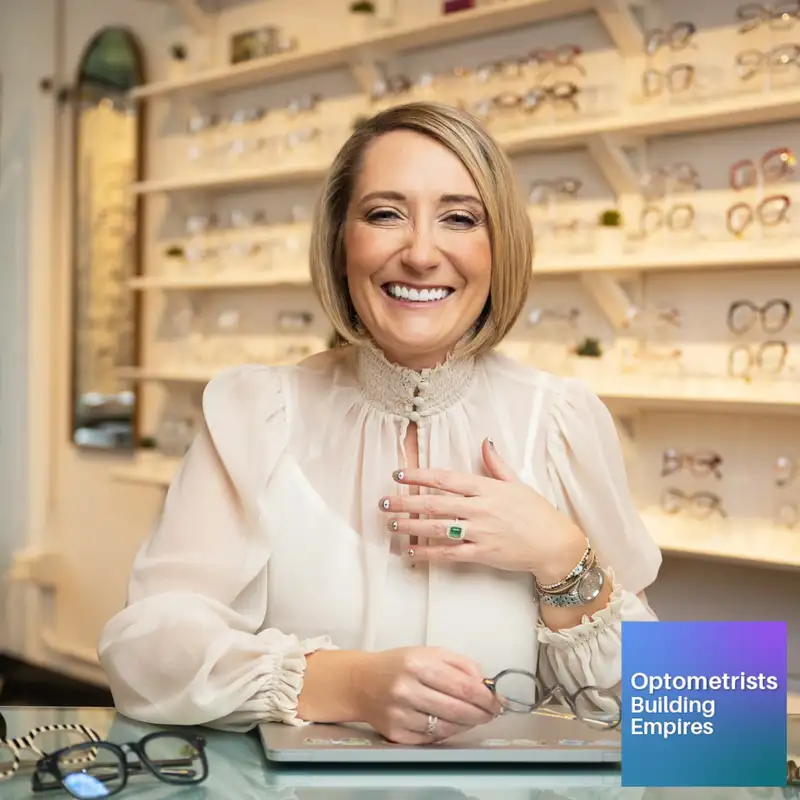
Her current practice is built on the belief that exceptional vision, care, and personal expression should go hand in hand. She's owner optometrist at Foresight Unique Eye Care. Please welcome Dr. Erica Morrow. Erica, welcome.
Erika Morrow: Welcome. Thanks
Ankit: Yeah, I, I'm excited. I, I was just saying before we started, I love your glasses.
Those are, those are cool looking. Uh, so for those not on the video, you should check out the YouTube video. They look really cool. Uh, so, You know, I love your perspective on how you run your practice with that. What was the most important thing that helped you grow your empire in your practice?
Erika Morrow: So when I opened Foresight, the most important thing I think for me was scouting out an area that a need and then trying to do every single [00:02:00] thing different. In comparison to what was surrounding the area. And so then, um, from there I just looked for ways to be different and provide different experience from my decor to the products I carry to the patient's experience from start to finish. Um, some of that includes like my, um, patient relaxation area is literally a nine foot sofa. And, um. A little hutch that I had repainted, that was my mother-in-law's wedding gift. And You know, just a lot of touches that make it personal, but not like a clinical
Ankit: What did you decide to keep the same or what'd you change and you were like, I don't like this, I'm gonna keep it like everyone else. Was there anything like that? Uh, or was every It is truly everything different.
Erika Morrow: I definitely wanted to, um, I didn't want patients to feel like a number at my practice. I wanted them to feel like we were building a relationship and creating a connection. And by doing that. I have really grown and kind of saturated my community. There's not a lot of places you'll go where [00:03:00] people don't know my name or know ForSight and I've done that because I've created a, an environment where people feel comfortable, like on Reddit, somebody said, I just wanna go here and drink tea on the sofa. So that's how I knew I made it different.
Ankit: That's awesome reddit when you, when people on Reddit like you, you've made it. That's, I don't know if You know about that yet. Um, it, it's a tough, that's a tough audience. Uh, And so question, let, so let's, let's, let's, let's go from this a different perspective. Let's say I'm a brand new patient. I, how am I gonna find you?
What's the most likely path for me to get to where you are? Am I gonna meet you in the community? Am I gonna be, is it gonna be word of mouth? Is it gonna be looking up my insurance? What's a typical way people find you? Let's start with that and I'm kind of walk you through the, I want to walk through the experience.
Erika Morrow: I definitely think word of mouth is probably one of
Ankit: Okay
Erika Morrow: um, ways that people find us. Um, and then from there, my social media. Um, people come across us on social media and they're like, your social media is so fun. Um, so I'd say that. And then we do do some advertising with Google Ads just to make sure that people find us
Ankit: Yeah. And, And so tell me a little bit [00:04:00] more, uh, the social media. Do you all manage it? Is there something particular way that you manage it? We had another guest on it from Canada who's really good at it and heard lessons were, be personable and just try to have a unique voice, but just be you. What, what do you, what do you do?
That's, that's maybe your secret sauce.
Erika Morrow: I used to outsource it and I did that for a long time. And then I started to hire creative people or people that were more interested in being creative with social media. And so now we just run it entirely from the office. But the girls love to do funny stuff and when they do funny stuff, it really, um.
It creates a lot of traction and then people really do love to see the doctor. So when I go on there or my associate doctors on there, um, we get a lot of engagement that way too. We do try to keep it pretty lighthearted. We don't do a ton of like really heavy education because mean, in social media, You know, and when we do something that has a little bit of education to it, you get a lot of know-it-alls that follow in the comments.
So it's one of those things that we just try to keep it pretty [00:05:00] lighthearted and, um, make people
Ankit: I am pretty sure everyone listening has patience like that so they can empathize. So I, I love that. So word of mouth, some social, some paid ads. Uh, and now let's say, okay, I see you, uh, I want to see Dr. Morrow. I'm going to. Pick up the phone, maybe go to the website, book an appointment. Um, I'm gonna, I'm, is there anything unique or different you do on the phones or is it standard like, Hey, let's get you in, tell me about the phone experience.
Is there anything different there?
Erika Morrow: So I always tell my team, if you've spent less than 10 minutes on the phone, you haven't
Okay.
Job. So, um, I think really getting to know what that person needs, building trust in relationship, being someone more than just saying, how can I help you? Um, I think that. Has really set us apart. Um, we do have online scheduling and we do get, I would probably say 30% of our patients schedule online, um, new and existing patients. Um, but if they schedule online, they still go through what we call an eyewear discovery call. And, um, we kind of just talked to them about, okay, how did you [00:06:00] find us? What are your needs? What's happening right now? Because a lot of people, they're like, we had one the other day and there's like, well, I noticed I can't really see out of this area.
And I think my vision's just blurry. Like after we were on the phone for about four minutes and it's like, well that's probably not something we should wait for. Let's see if we can get you in sooner. So, I really think it really comes to building up relationship the phone and creating that discovery where you can see how you can better help
Ankit: So you're almost first of all, I like how you look called a guest. Uh, and, and then second off, so you're actually almost doing an intake process on the phone. Yeah, a little bit. So.
Erika Morrow: a little bit. We asked them where they went previously, why they didn't return, what type of eyewear they wear, how did they hear about us. Um. Uh, what's their biggest problem right now? If we could solve one thing today, what would it be? Um, and then, You know, it goes from there. So insurance questions or, um, okay, that sounds like a medical problem.
What's your medical insurance? You know, but after you've kind of learned more about the guest and you're using their name and you're creating that [00:07:00] relationship,
Ankit: let's say, okay, you do the intake and there's the intake. So is it could be the same call or it could be a secondary call. Let's say they're busy. They're like, okay, we're gonna do a quick check in call with you before you come in. Um, And so you do the intake, uh, or what, what do you call it?
You just call it uh, uh, optical consult.
Erika Morrow: discovery, just like how, how, how can we help you? So like I wear, discovery is kind of like a term that I use through a company that I, um, kind of do a lot of coaching. I, I receive coaching from, it's called Optical
Ankit: Oh, yeah.
Erika Morrow: And so that's one of those things that is kind of built into their whole system and we've definitely adapt, adapted that, and it's helped us grow a
Ankit: I like that. Okay. And, and as far as, uh, so that happens when they come and then they come in, um, is that what happens next? After they make the appointment, they come in. Okay. And then when they come in, how does that ex walk me through as I was a patient, walk me through how I would go through the entire process.
Erika Morrow: So when you come through the door, you should be immediately greeted by anyone that's within 10 feet of you. Um, hey, good morning. How are you? Come on up to the front [00:08:00] desk. The, the, um, patient care coordinators are instructed to stand when someone comes in and then they just, how are, how's your drive?
What was, You know, how's the weather? Is it, did you find everything? Okay? Just trying to find one question to get. The attention off of I'm here to check in. Right? Um, and then we present a router to the patient once we've made it through that introduction part, to be as transparent as possible with our fees and our, um, their expected payments upfront. which I think is really beneficial as a consumer. And also too, so You know immediately if your guys are on the wrong page. And really it doesn't happen a whole lot, but you do occasionally get that where through the eyewear discovery, we, we weren't able to tease that out of them, but at least at chicken, before we get them back at the doctor they have, that's very transparent for them.
Ankit: And do you, just curious, do you take Managed care or is it all a self pay?
Erika Morrow: no, we are not self-paced, so I do, I accept vision, service, plan and imed. And [00:09:00] then we're on all of the medical plans, not any state okay.
Ankit: And, and you're located for the audience. Where are you located again? Savannah, Georgia. Okay. Yeah. And, And so, um, uh, as far as your, as. Check-in process. I love how you do that. And, and I want everyone to keep in mind that this is with managed care. So the 20, $40, $50 reimbursements. Right? So, um, when, when you give them the fee transparency, what do you put on there?
Just their like, Hey, here's your contribution for your exam. Here's your, uh, because I mean, the glasses piece can get confusing. They're not really gonna know what they're gonna spend till the end. How do you manage that with the transparency? How do you, how do they not say like, well, you told me it was only gonna be this upfront.
Right. How does that work?
Erika Morrow: Yeah, so on the router we list what it is for the exam. What it is for contact lenses and then what it is for retinal imaging at my office, retinal imaging is
Ankit: Correct. Yeah.
Erika Morrow: Um, And so, um, if they really, at six and a half years in, we don't have a lot of people that [00:10:00] ask about it. Um. then when it comes to spectacles, we have a little box down there that talks about you, your benefits available.
It will say available, or it will say the date it's available, but we try not to highlight when it's not available because we
Ankit: Yeah.
Erika Morrow: Know, prompt pay things that that allow them to still utilize their lens benefit or whatever. But we just kind of focus on how can we help them today with what's available. And then after the exam, we do a handoff, and that's when the optician takes the patient and then goes through that process. Um, through the optical with them and then a pricing guide
and, and
Ankit: Post exam, correct. Gotcha. Okay.
So I, I'm lo by the way, I'm,
I'm taking notes for myself on this too, uh, as we're talking. I love, I love what you're sharing. This is, this is actually brilliant stuff. This is actually unique. So I haven't heard this experience for most people that we've had on the podcast. Um, And so let's, let's go into the tech side.
Now. They, they've come in. Anything you, you unique about the workup? Any questions that you ask that are unique? Any procedures besides making, uh, fundus mandatory? I think that's more of a common trend [00:11:00] that we're seeing now that the retinal imaging is very mandatory.
Erika Morrow: so my technician, they're always like, hi, I'm Lillian. I'm, whether Dr. Morrow or Dr. Keller's technician, I'm gonna, I'm gonna get you started today before the doctor, um, takes over. And they're like, okay, great. So then they start, we do an auto refraction, um, eyecare, tonometry, and then the opta, then they go into the exam room and in there they'll. Run through the, um, health questionnaire, ask 'em about their eyes. Where did they, where did they go before? How come they didn't go there again, I think, I think when you find out why somebody didn't return somewhere, you learn how to be a better provider yourself. Um, And so when my technician captures that information, they didn't like that doctor because it felt busy.
They didn't like that doctor because they didn't listen. And so then it just. Reminds me as a provider, how could I do that differently? And so they ask about that. And then how often do you sleep in your contacts? Um, how often are you replacing your lenses? What solution do you use? I mean, just things that I don't think get
Ankit: Hmm.
Erika Morrow: A lot. Um, and [00:12:00] to me they're really important questions. You know, if someone's like, oh yeah, my eyes are dry and they're using the Kirkland brand saline, oftentimes you can fix their problem
Ankit: Yeah.
Erika Morrow: One thing,
Ankit: That, that's, that's, that's brilliant. 'cause you're the devil's in the details. Right? And so if you're seeing, And so now, now we're done with the, uh, teching, and then they go to the doctor.
Erika Morrow: Yeah, so then the technician will page the doctor. We use Weave in my office. So we use it for patient communication and then we use the chat feature to page the doctors. Um, or if I'm in my office, my technician will just come and give me a quick rundown real quick. Um, and then I go in, I introduce myself. Typically I shake their hand if they're open to it, and then I wash my hands and then I sit down and, and just start chatting with them a little bit. If they're existing patients, typically we have something to talk about if they're new patients, and I try to figure out one thing I can learn about them so that it helps me remember them. Um, and then I ask 'em how they're used, their eyes, what's, You know, if they could fix one thing, what would that one thing be? And, um, I kind of focus on that and then kind of expand from [00:13:00] there. because You know, people come in all my, I want my visions blurry, my eyes are really dry, my and that. And then you get to the appointment and you're like, here's your prescription.
But you're like, oh crap. You know, did we address their five things? and I'll remind my technician, You know, if it gets too heavy medical or they're talking about things that are like. not routine. Oh, You know what? This sounds like a medical portion of the appointment. So what we're gonna do is, I'm, I'm gonna run this by Dr.
Morrow, but what's possible is this appointment's gonna switch into a medical exam. You're still gonna get great care, but we're gonna do a couple extra things, but it will be billed to your medical insurance. So she kind of puts that on the front end, and then when I come in, it's an easier conversation to say, oh yeah, this medical thing's happening, or This is going on and, and then I can spend more time or. Hey, listen, today we're just gonna focus on your routine checkup. We're gonna make sure you're seeing your best, but then we're gonna bring you back to bring up some of your medical
Ankit: Yeah.
Erika Morrow: Going on. I just wanna make sure that, You know, we're taking care of what we need to today without keeping you
Ankit: Yeah.
Erika Morrow: When you focus on the patient and you, you acknowledge that, You know, they just drove there. I'm in a [00:14:00] downtown area where parking's tough. We wanna make sure that their time isn't running out on their parking meter, You know? all of it, I think, just comes from asking little questions
Ankit: I love that. And you're in a pretty competitive environment, right? So I imagine there's a lot of competition near you, so you have to really make it a good experience and make it worthwhile. Especially if I'm paying the parking to pay for an exam. That's, that's a lot, right? And so, yeah, absolutely.
Better be. Yeah, I, I wanna make sure it's great. Um, now with, with that, uh, going back a little bit now, I'm, I'm more curious for myself here in your, in your super, your, your traveler or your super bill, or the, uh, not, what'd you call it? Sorry. Um, router. Sorry? Router. Router. Uh, yeah. Everyone's got a different, slightly different name for router's.
A common name too. Do you put the medical pricing in there too, if you've got, or do you leave that out?
Mm-hmm.
Erika Morrow: They come in, they're required to send their insurance, their medical insurance card, and if we need their vision card, obviously you typically just know what you need to pull up a vision program. Um, but that's required for them to check in. And if they don't have a medical card, my team is, puts an alert on their account that says, [00:15:00] outof network for medical or medical's not accepted or AM better
Ankit: Got you.
Yeah. And that's, uh, for those who know end better is a state plan here in Georgia, so yeah. Um, the, and, and, okay, so now they're with, with you. Um, before, before you, they got to your chair, before the doctor got paged. Is there a handoff between the tech and the doctor that happens behind the scenes?
Erika Morrow: sometimes my technician will come in, particularly if it's something that just requires a little more, Hey, Dr. Mara, just be aware of this. Or, Hey, so And so referred this patient, so just maybe acknowledge that. But, um, a referral source is required in my office before I ever enter the room. And if it's not there, I'm always like, guys, there's no referral reason. Um, because I feel like that's a really easy way to just communicate with the patient about something different than
Ankit: Gotcha. Oh, you heard, I, I hear you. You know, Mr. Smith sent you in. Appreciate you coming in. Yeah. Love that.
Erika Morrow: And I have an exceptional memory. I don't. I don't know why. My husband is always like, how do you remember this stuff? But I have a really, really good sense of remembering people. Um, And so I typically can always strike a conversation about who referred them or how they [00:16:00] heard about us. it's a magazine or if it's, You know, an ad.
Then I say, oh yeah, what'd you think about that dress? Or What'd you think about those glasses? Or, Hey, that's so cool that you found us there,
Ankit: Nice. I like that. And is there, uh, anything special or different that you do in your exam that other doctors may not do? Or not as common practice.
Erika Morrow: people always say, I've never had an eye exam like this before, and is all I'm doing is what we all should be doing. I don't, it's so weird when people tell me that. I say, oh, okay, well that makes, You know, but I don't, I don't do anything that's crazy. We do all of the normal cover tests, NPC, um. And then when I come into the refraction, I do the refraction. I always check a near point refraction no matter what, no matter how old they are. Um, and then if I have anybody that's like double whenever I first open both eyes in their forter, then I'll throw in some wristy prism just to make sure that it's not like a foria that I broke down, or if it's truly something that 'cause people who have double vision don't ever describe double vision.
It's blurry vision. So, You know, I, [00:17:00] I've gotten a lot of prism that way and I've actually gotten a lot of, um, my most, my most loyal clients from just fixing diplopia, which has been
Ankit: Interesting
Erika Morrow: and I move into the exam. I always do a 90 doctor exam of the posterior pole and the nerve. Then I move into, um, so let me back up one second.
So, after I'm done with the refraction, I immediately talk about their vision. You know, um, this is what your vision could be. This is where it was. This is. You know, the improvement that we'll make, I talk about it in steps or dollars. I'll say, oh, it changed by a dollar's worth of prescription or 50 cents worth of prescription.
And then, I'll talk. If they've never worn progressives, I educate on that. Or I also do a lot of anti-fatigue lenses. So I talk about that, especially with digital device users. And then I say, all right, great. We got you seeing your very best. Now we're gonna move into the health part of the exam. And so then I do the health part exam.
And, um, after that I say, all right, I walk 'em through an eye, uh, an anatomy of the eye, and then I, let's pull up the images together, and then I put it in 3D mode, and then [00:18:00] we review the back of the eye
Ankit: I like that I I think there's a lot of little subtle things that it would be, um, get lost in the details, I think. 'cause like it's, You know, I think you're right. It, it's. But, uh, I don't think that the, all those steps happen in every single exam. 'cause it's like, oh, I got another patient in the room waiting for me and two more in the lobby, so I gotta keep moving.
Right. Uh, And so it's an interesting perspective. I like, uh, just by doing everything that you, that you're taught to do, people are like, I've never had to throw such a thorough exam. I love that. Um, and, and after that, is there a handoff in the chair that's pretty common, or how does it, how do they go to the next step, whether it's contact lens purchase or optical or both?
Erika Morrow: my goal is to have a hundred percent of patients have an optical styling appointment. It's just a handoff that I do. It's a goal that I say, okay, every single time I have someone that's done, they're gonna get their glasses tuned in, tuned up and adjusted. Or they're going to review contact lens pricing, or they're gonna have a, uh, optical styling. And so I, I'll say, oh, I'm gonna page someone into the exam room. So you're gonna set door open here in just a moment. And then, um, when the. [00:19:00] person comes into the room, the optician comes into the room, I say, oh, this is so And so. They met us through whatever. And then, um, here's what I found today with their prescription.
This is what I think would be best for their visual needs. If you could learn a little bit more about how they use their eyes every day, and then since you're a lens expert, help 'em pick a design. I was telling them that there's 2000 progressive designs on the market, so I know that you are an expert here, so you can help 'em choose the best one for how they use their eyes.
And then my opticians are trained to. Immediately start asking about the patient, not like, come with me and have a seat in this chair and we're gonna do this. Oh, hey, how are you? How was your exam today? I'm Marielle, I'm gonna walk you up to the front. Can I get you something to drink? Um, and then, um, we're gonna have a seat right here.
And then it just goes from there. And really in the optical session session, you should be there for at least 20 minutes or you didn't ask enough questions, in my
Ankit: Hmm.
are they, are they talking and chatting for, for that period before they do selection, or is it a combination just for the feel of where the patient is?
Is that.
Erika Morrow: Yeah, some of 'em do. I feel like if you [00:20:00] put the patients like, You know, I have one optician that I feel like does really, really well of ignoring that. If there's somebody that seems apprehensive, but I have another one that kind of fixates on it. Well, they seemed apprehensive. I'm like, well, that could be just their personality, right?
Ankit: Hmm.
Erika Morrow: I'm not super, whenever I go into a sales environment, I'm not very chatty. But if you get me talking. It's very easy,
Ankit: No.
Erika Morrow: Um, so they all start by asking 'em questions and then they review their vision plan. If they have a vision plan, or they'll talk about what foresight. We have a foresight vision plan.
So they'll talk about that with them and then say, oh, your current glasses, what do you love most? Um, and then they'll kind of tell 'em, oh, I don't like nose pads, or, I like the plastic, or, I don't love this. Oh, okay. There's this really great. a collection that we carry and we'd love to just try a few on.
I'm gonna grab a few real quick. Can I get you anything, um, before I step away? Nope. Alright, great. So then they pick a few frames, they bring 'em on a presentation tray, and then they allow the patient to start trying them on.
Ankit: I like that. Let's say they come in, they buy, uh, anything [00:21:00] special in the checkout process. Is that where you ask 'em for referrals or do You know a friend or how does, where, where does that happen there, or tell me about the checkout. Is anything special there?
Erika Morrow: Yeah, I feel like, um, in the exam room I always. always say,
Ankit: I.
Erika Morrow: So And so thanks for the referral. So I think it comes more from the doctor.
Ankit: So now they've checked out, they purchased their glasses.
Tell me about follow up and what happens between, uh, they check out and pick up and then pick up till they come back next year. How do you treat that?
Erika Morrow: So if they purchase glasses, they're immediately put on the schedule for what we call an optical dispensing appointment. Oh, we're gonna go ahead and schedule you for three weeks out. If your glasses come in sooner, we'll get that rescheduled sooner. But we love for you to have an appointment where we can just make sure they fit that you're seeing great. Um, and that we get you everything you need. To, um, appreciate your new glasses or, um, have, make sure no issues are arise. And then they come in for their optical dispensing appointment. They're offered, they're asked what they like to drink. So when they get their, the drinks ready for them, the dispensing trays all set up for 'em. And then, um. [00:22:00] They'll come in for that. And then we always ask 'em for a photo. So at whenever we're telling them their dispensing appointment, we love to show our patients in their eyewear. We'd love to capture you if you feel up to it. When you come in. We'd love to photograph you in your new frames 'cause they look so good, or I love that color on you, or whatever it is.
They just try to find one thing to compliment them on. And I think that's it. And then from there, we do send newsletters. We send a newsletter out via email every other week. Um, And so they're kind of tied into our community engagement. We do a ton for the community. Um, I donated almost $20,000 to pro local, um, nonprofits and we're constantly volunteering and sponsoring different things.
So we include that and then if we get new products or whatever, we also talk about that there.
Ankit: Gotcha. I like that. Um. Then let, let's talk about a little bit about the, uh, feeling. You mentioned a couple things of how your office feels. Your glasses are really cool. So I imagine you have a different [00:23:00] feel and look in your office. I imagine folks can go to your website and see, I'm sure, but kind of describe how it feels walking into your office, how people dress, any smells, any looks.
Yeah. Talk to me about that. I, I, I, I love the process. Let's talk about how it feels in your office.
Erika Morrow: I think it feels like. High end, a little boutique-ish. Um, and then. We use the pure volcano scent that's used at like anthropology. So we have little diffusers kind of throughout the office. Some people are very against that. Um, like online you'll see people that I have yet in six, six and a half years to have someone complain about it. So that's been nice. Um. do have fresh orchids. So I have a person in the community that takes care of my orchids at the office and he always keeps our arrangement looking blooming and, and happy and healthy. Um, we have someone that does our front window displays, so different seasons, she'll come and do a whole painting on the front windows, and that's been a really great thing that we added back in 2025, early 2025. And [00:24:00] then I feel like, I don't know, I just feel like our office doesn't, any, everyone that walks in is just like, your office is so beautiful. I never, have been to a doctor's office like this
Ankit: Yeah,
Erika Morrow: I have chandeliers. I don't have lighting, like I don't have strip lighting. So all my lighting is chandeliers or, um, pendant lighting.
Um, I have really, like, this is a real tree, but like I, in my exam room, so I have fake
Ankit: fair enough.
Erika Morrow: Um, just to bring in a little bit of
Ankit: Some color. Yeah.
Erika Morrow: the room.
Ankit: I love that. And, and let, let's talk a little bit about some of the challenges you might have had. So as you're building this practice, what is something you ran into that you didn't, that you didn't expect?
Erika Morrow: I feel like every day you kind of learn something new about business part of it, so I didn't realize that you pay tax when you purchase something, then you pay property tax on it every year. So I think that part has been the hardest part for me is just wrapping my head around my different tax bills. Then you have a federal tax bill, a state tax bill, a county tax bill, and then a city tax bill. So every time one comes, I'm like, [00:25:00] is this real? Do I pay this? How do I calculate it? But obviously having an accountant that much easier. So I think that's probably been the hardest part for me, is just learning that business part of it when it comes to taxes and, and that kind of stuff.
Ankit: now you also, you have a second doctor, correct. Is it just you and the o as ownership or is the doctor a partner with you? Just you. Okay,
I'm great at sharing fair enough. Um, how, how do you make sure the experience is just as good with the other, other doctors, other staff members?
Erika Morrow: So it just requires constant coaching. I mean, I'll, I'll listen to phone calls or I'll have a patient make a little comment and I'll say, I'm gonna see how that went, or. Patients feel very open about reaching out to me. 'cause they see me out at the restaurants, they see me out at the bar, they see me out at the music, live music things going on in town.
So they have no problem connecting with me as a person and say, Hey, Dr. Morrow, this happened whenever I, I did this. I'm like, oh, let me look into that. Let me make sure that we follow up on that. and I, one thing I think that is really cool that [00:26:00] we do, um, and my staff is really involved in it as well, is we have something, I don't know if you've ever read the book, unreasonable Hospitality.
Ankit: heard of it. Tell me a little more about it.
Erika Morrow: Unreasonable Hospitality is about this restaurant group. There's a, a show on Netflix, I think called The
Ankit: Oh yeah. Yeah.
Erika Morrow: might be, yeah, so it's kind of based on that book with unreasonable hospitality where you just listen to people. So sometimes we'll get people that complain that the parking was problematic or I drove here to see Dr.
Morrow from, I used to practice about an hour and a half away. And so if they, if my staff hears that, they'll add their name to the Unreasonable Hospitality, um, matrix that we have, and then I'll send them an iTunes gift card so your drive can be easier next time. Or, Hey, here's a gift card to the local coffee shop.
So when you come in, you can pick up a, a coffee for your way out for the drive home, or, Hey, thanks for dealing with the parking. We apologize. We're so honored that you're here. Um, send, like, if someone tells me it's their birthday or their anniversary, I'm gonna run my 10th marathon or. just anything.
I take little notes and I'll [00:27:00] send them a handwritten card and sometimes I'll include a gift and sometimes I just, Hey, I'm just cheering for you, kind of thing.
Ankit: that's actually a really cool idea, the the Unreasonable Hospitality list that.
Erika Morrow: it's a great book. I mean, there's so many things that you can implement into your everyday life, but in, if you own a business and just connection with people, like how could you. a difference for that person's day. Um, and honestly, that's just what I do every day. Like, how could I make someone else feel better?
And because of that, people take care of me. 'cause I take care of them, You know?
Ankit: Yeah, it, it's almost like you're putting care in the healthcare right there. So I like it. Um, and, and, uh, as far as, uh, current challenges, what are some of the things you're facing now? I know folks around the country are facing staffing challenges. Uh, is that something you're facing or have you've been able to apply your same methods to the staffing side as well?
Erika Morrow: my staff is incredible. I don't know. I, I am very lucky. I mean, I, I definitely feel like I compensate my team really, really well. One of the things that I changed three years ago is I changed everybody to a four day work week. 'cause I found that if somebody worked over [00:28:00] 36 hours in a week, that they called out the next week. And it was something that I tracked very consistently. I was like, why does this happen? You know, I have a headache. I don't feel good. Um, my stomach hurts. Oh, I have this for my pet. And I was like, You know what? I'm not, I don't work Monday through Friday. Why should they work Monday through Friday? So I changed it so that they're, um, Monday through Thursday or Tuesday through Friday, I have two employees that like to have a midday week off.
So they mon do Monday, Tuesday, off Wednesday, and then work Thursday, Friday. Um, I see patients three days a week and my associate doctor sees patients three days a week. We don't work weekends. Um, but we do start early at seven 30 and then we end at six.
Ankit: Gotcha. I like that. And You know, that's not the, you, you're actually the first person I hear to say that, that that's actually made a huge difference in terms of staff stability.
Erika Morrow: Oh my gosh, it's incredible. Like I honestly, I get to the end of the year, I'm like, you guys have PTO, you
Ankit: They're like, we're, we're good. We have three day weekends. What's the point? Yeah, that's. I like it. And, and as far as, um, what are you [00:29:00] excited about for both your practices? Let's start with your practices first and then the industry. So what are you excited about for your practices over the next 3, 4, 5, 6, 7 years?
Erika Morrow: one thing I'm really excited for this year is I'm actually gonna do an optical
Ankit: Hmm.
Erika Morrow: So I'm gonna, used a company out of the UK who's really, really into retail. So, um, like kind of. like Hermes and the experience that you get when you go into a high-end, Louis Vuitton or something like that.
And so they helped me redesign my optical space. So in November I'm gonna start that project. and then from there we're gonna switch to an entirely styling experience. So you can't come in and try on glasses, but you can be styled. Um, And so right now we really do probably 85% styling, but you get that occasional patient says, I just wanna look.
Ankit: Yeah.
Erika Morrow: And I typically find those people don't do well with what we offer because we're there to communicate, we're there to build a
Ankit: Hmm.
Erika Morrow: And if you're that way, you're just not a great fit. You're not gonna like what we we do or how we do it. And so I'm really looking forward to that. [00:30:00] Um, I'm really excited to work less. At the office
Ankit: Yeah.
Erika Morrow: Patients. So in January, I worked nine days In February, I worked 10 days and I'm like, okay, well how can I work less? So I think over the next five years I'd like to be running my practice but not
Ankit: Well, I think, I think you hit on it, right? Empires are built several different ways. We've had people that have like 20 locations, right? Uh, we've had people with like, You know, 10 doctors in one location, especially like aesthetics and things like that. Um, and like yourself, like, hey, I want to have a great, unique experience and a good lifestyle.
That's my empire, right? I love how you framed that. Um, so, so what are you excited about in the industry?
Erika Morrow: I just think optical. I mean, I think if we can do, You know, with all these practices being gobbled up by private equity and people looking for more numbers, people are truly looking for that one-on-one experience. They're looking for that care. They're looking for that, and it's, and we're not talking, You know, I get people that come all the way from like farm town out in the middle of. Met her in Ella l [00:31:00] Georgia and they're like, this is so cool. I feel so good coming here. I'm so thankful for you. You're the best I've ever seen. And think that's what optometry needs to look forward to, is just that people want that connection. They don't want to be a number in healthcare in general. I mean, I, I went to the doctor this morning and I was like, oh my God, if they just did two things different, I wouldn't be sitting here
Ankit: Yeah.
Erika Morrow: You know?
Ankit: I like that. And You know, optometry, one of the reasons I like it so much, I'm not a doctor. My wife is, uh, but I like it because you could practice so many different ways. If you wanna focus on heavy medical rural care and just be healthcare access point, you can do that. If you wanna be a unique boutique, uh, location with a unique experience, you can do that in the industry.
So, so many levers you could pull on based off your personality and what you like. Yeah. And so with that, I'm curious, I'm gonna shift gears a little bit. Can you share with us a story that was formative to you? So it made Erika into who she is today. Could have been when you were much younger, could have been more recent, but a formative story that you could share.
Erika Morrow: [00:32:00] So I'm one of eight
Ankit: Oh, wow.
Erika Morrow: Um, I grew up in poverty. I am the only one of my mom's children that went to college. And um, my brother always tells me, is enough ever gonna be enough? And I'm like, never. I mean, like, if I could be 1% better tomorrow, why would I not? You know? And I've met so many people in my lifetime that I'd always say, I never wanna be like them.
Or I'd meet people that say, wow, they have this figured out. What could I learn from them? And so, um, I've met some people along the way, um, one of which was like a, a foster family. I was in foster care when I was younger, and I just followed that couple through their life, through social media and we've stayed connected.
And it's like, wow, okay, so if you pour into this type of thing, you can get some so much more back from it. And I think honestly, just my life experiences have been. The reason that I'm, I do what I do every day. Um, I don't necessarily chase the money, but it's been really rewarding because financially [00:33:00] it's my, my office has obviously taken very good care of
Ankit: Yeah, I hear that more often than not, I have like ex, like more than three siblings, right? Or two siblings and more than three kids. Uh, I imagine it was, it was, it was interesting growing up in that environment with, with, with a lot of competition and, uh, must been fun.
Erika Morrow: I always wonder what people did when they didn't have more than a couple siblings nagging at each other all day long. So what'd you
Ankit: That's funny. That's funny. And, And so, um, I'm, I'm curious if you had to give yourself advice, uh, let's say, let's go back to when you first graduated from OD school. What advice would you give yourself knowing what You know?
Erika Morrow: Don't ever change your idea of what you have for something else. So whenever I first went to open, I, um, used a consulting firm and they're like, you have to do this, you have to do that, you have to do this. And I, there's a couple things that I caved on and I regretted it the whole time that it happened.
And I was just disappointed in myself that I was okay to say no for some things. But I didn't say no to some things that were actually more [00:34:00] impactful that. I feel like kind of startled a little bit of my growth, but I mean, I've grown exit really, really, really fast. So I can't be too hard on myself, but I do wish I would've stepped back and said, Nope, I'm not doing that.
Thank you. Anyway, and, and
Ankit: Interesting. Anything you wanna share? Like the things that they said that you were like, no, I shouldn't have done that, or,
Erika Morrow: Um, so Vision
Ankit: yeah.
Erika Morrow: Um, I don't carry any. products. I do business with independent laboratories as much as possible. Um, vision care plans, obviously you have to use some certain products, but, um, frame collections, you have to carry ribbon. I'm like, I'm not carrying re that's the silliest thing I've ever heard, and there's no way that's happening, You know?
Um, and then, but the biggest thing was joining all of the vision plans, so then it was. Months of stuff trying to unravel, and I don't know why, but people that have Davis Vision and Spectera, they just tend to be like, like their plan. So it was just something that I had to unravel after the first nine months to a year.
And then I finally got off of those and I [00:35:00] stayed on vision, service plan and imed because I do do specialty contacts and medical reimbursement for that is very impactful. It makes me feel really good to give someone sight. So I do that. So it's really truly joining every vision plan and vision source. I was paying Vision Source $4,000 a month at the end of the, for the last year and a half that I was with them.
And it was just so much money that I was like, wow, I could do so much for my
Ankit: Yeah.
Erika Morrow: You know,
Ankit: Yeah. That's almost another person that's, that is another person's salary at least.
Erika Morrow: hundred percent. When I saw that line item at the end of the year, I was like, oh
Ankit: And if you're not using their products, it's like, ah, it's not as much of an advantage. Yeah,
Erika Morrow: And they're like, well, you get this rebate. I was like, my, rebate with Johnson and Johnson is a million times
Ankit: yeah,
yeah. And You know, I, I think You know, nothing, nothing. Um, I, I think there is a place for Vision Source folks. Um, but I think you hit on the head. I love the insight of if you have a vision stick with it. It can be, it can work in this industry, right? If you don't, You know, if, if you're not sure or not married to it.
Yeah. I think that's a great path for a lot of people. A lot of people have really good success. I know a [00:36:00] lot of actually high end practices that are significantly, uh, larger than most, that are built on vision source. Um, which, so it can be done, but I, you, you're right, it's gotta be your path. I, I love that insight.
Uh, so if people wanna reach out to you, Erika, what can they find you?
Erika Morrow: social media is probably the best way. Foresite, I, so F-O-R-S-I-G-H-T-E-Y-E. and then my website's foresite i.net. we're in Savannah, Georgia. My practice is called Foresite, unique
Ankit: I love it and we'll put that into the show notes and I, I always like to have a quick shout out section. Is there anyone that it was really influential to you in the industry? That you wanna say, Hey, let I, I'd like to shout out this person or that person. If you can think of anyone that might be like, oh yeah, this person was really helpful to me.
Or I really fo I like this person that I follow on social media or podcast or whatever. Any other resources or insight or any other people that you'd like?
Erika Morrow: I listened to 2020 Money a lot. Um, whenever I was like out of optometry school and trying to figure out finances, like what's the best way to do that? So 2020 Money was [00:37:00] great. Power practice was a wonderful resource when I was driving. Um, and then, um. Books, but for people, Tom Arnold, who is a scleral lens fitter, he is retired now, but he was definitely somebody I looked up to, um, as I was kind of becoming an expert in scleral lens fitting. Um, and then when it comes to Optical Optical Success Academy, Connor Haney has literally changed my practice.
Ankit: Perfect. We'll put these in the, we'll, we'll, uh, uh, You know, people can kind of reach out to those folks too. It's always interesting to see where people get their insights. Um, I, I like a lot of those as well. So thank you for sharing and, and thank you Dr. Morrow for being a guest on the show.
Erika Morrow: Yeah, thank you for offering. Um, Ryan referred me over and he is like, okay, you should do this. I said, okay. I'm happy to do it.
Ankit: Yeah, it, it was a great, great referral for sure.
Erika Morrow: You made it very easy,
Ankit: Yeah, it, it was fantastic. And, uh, You know, one, one of my biggest takeaways from today is it's okay to, uh, buck the trend. Make every part of your experience unique and different because people will notice, [00:38:00] um, every, everything from the little details of asking questions consistently across the board, like how and asking the right type of question like.
Uh, how often do you wear your contacts at night? Not do you wear your contacts at night? Right? Little subtle changes like that, uh, along with which, You know, Hey, we know your favorite drink, we're gonna have it ready for you when you come. Pick up your glasses. Um, everyone gets the optical consultation. I like my calls to be long, not short.
Uh, those are all really good insights that I think that, okay, this is if you really want to differentiate, just almost think opposite of the standard, and you could possibly differentiate there.
Erika Morrow: Yeah, I love it. I hope it's helpful
Ankit: Yeah, Yeah, that's fantastic. Uh, and thank you audience. If you learn something or laughed, please share the podcast with a friend and if you subscribe, you'll never miss an episode. And if you see the link in the show notes, uh, to book a meeting, I'll send you a free copy of my book, optometry Redefined. Thank you again.
Erika Morrow: Oh, cool. Check it
Ankit: absolutely. And thank you, uh, Dr. Morrow for [00:39:00] being a guest on the show. And this has been another exciting episode of Optometrists Building Empires. We'll see you next time.
That's a wrap on another episode of Optometrists Building Empires. Thanks for joining. For show notes and more Visit Building Empires live. This show is proudly sponsored by my business care team. My business care team was born out of staffing challenges. My wife and I faced together managing multiple optometry locations.
We refined our approach at classic vision care and now offer our expertise dollars. If you're experiencing challenges with staffing and you'd like to set up a discovery call, we'd be happy to help you and connect you with the right resources. We'll see you next time.
Creators and Guests